
Last updated September 20, 2026
Full 25-point door and opener safety check with every visit - springs, cables, rollers, tracks, and your LiftMaster or Chamberlain opener included
You get a price before we start. It does not change when the truck arrives.
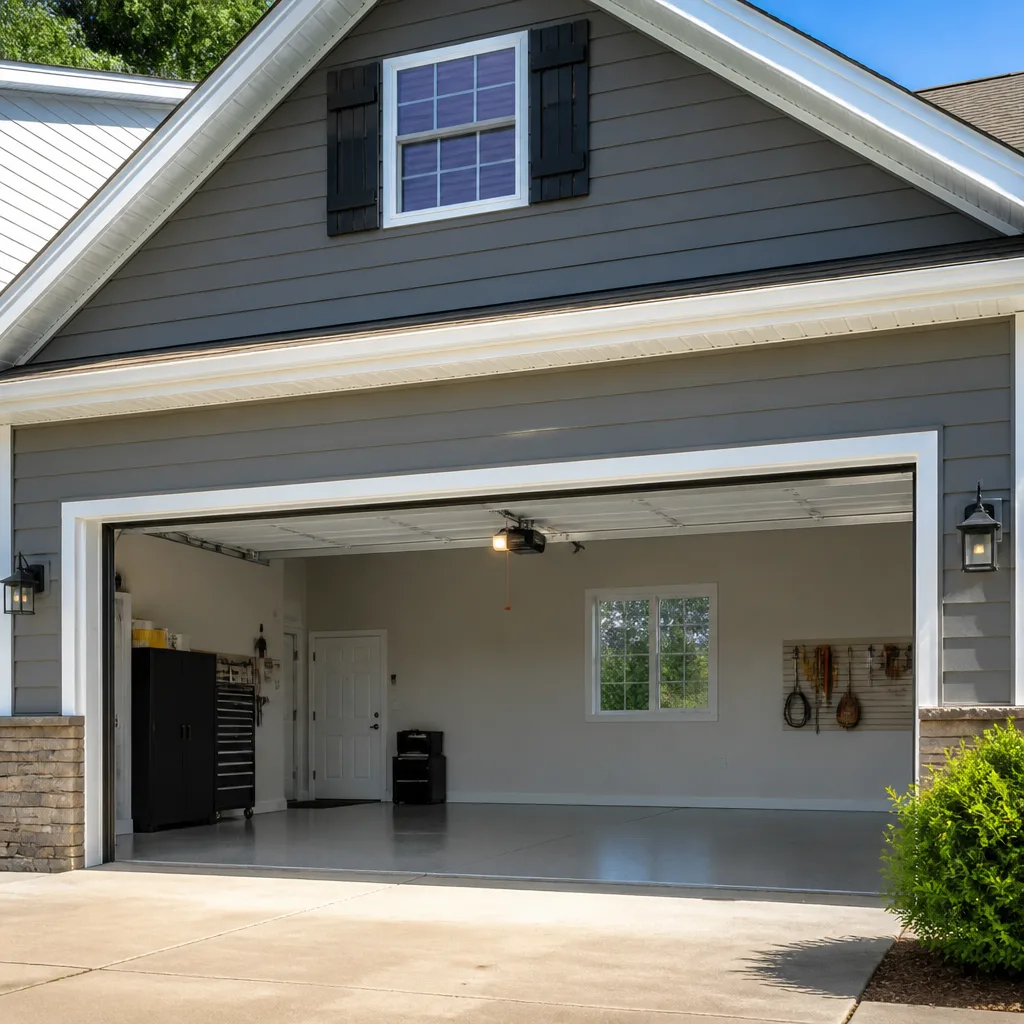
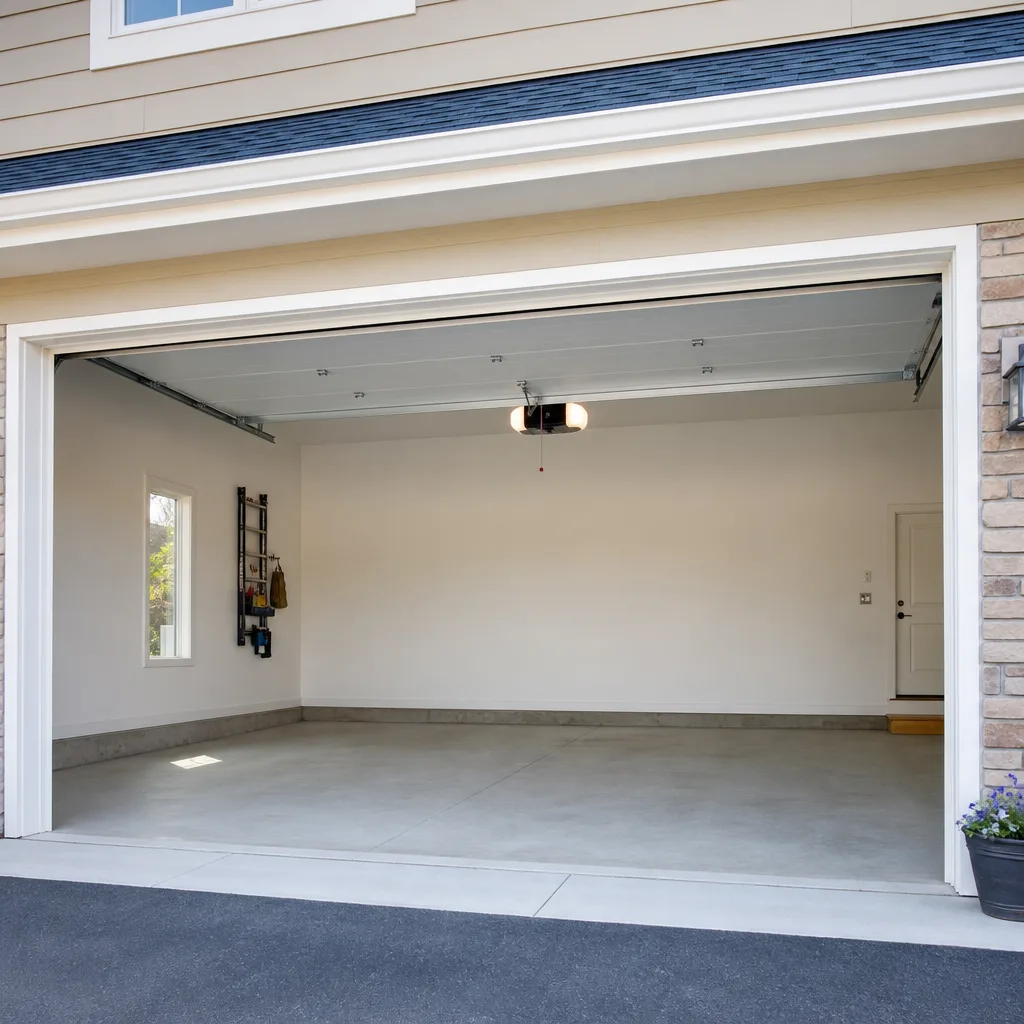
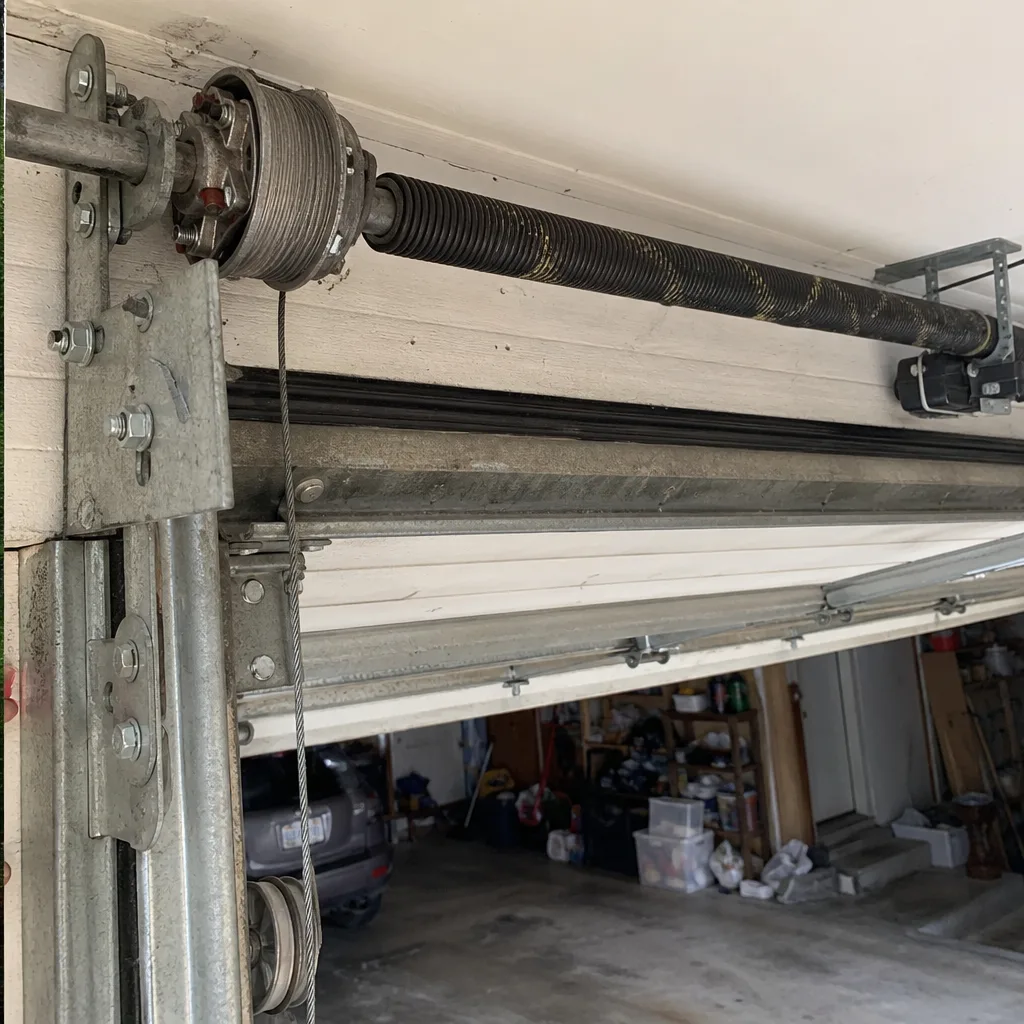 Before
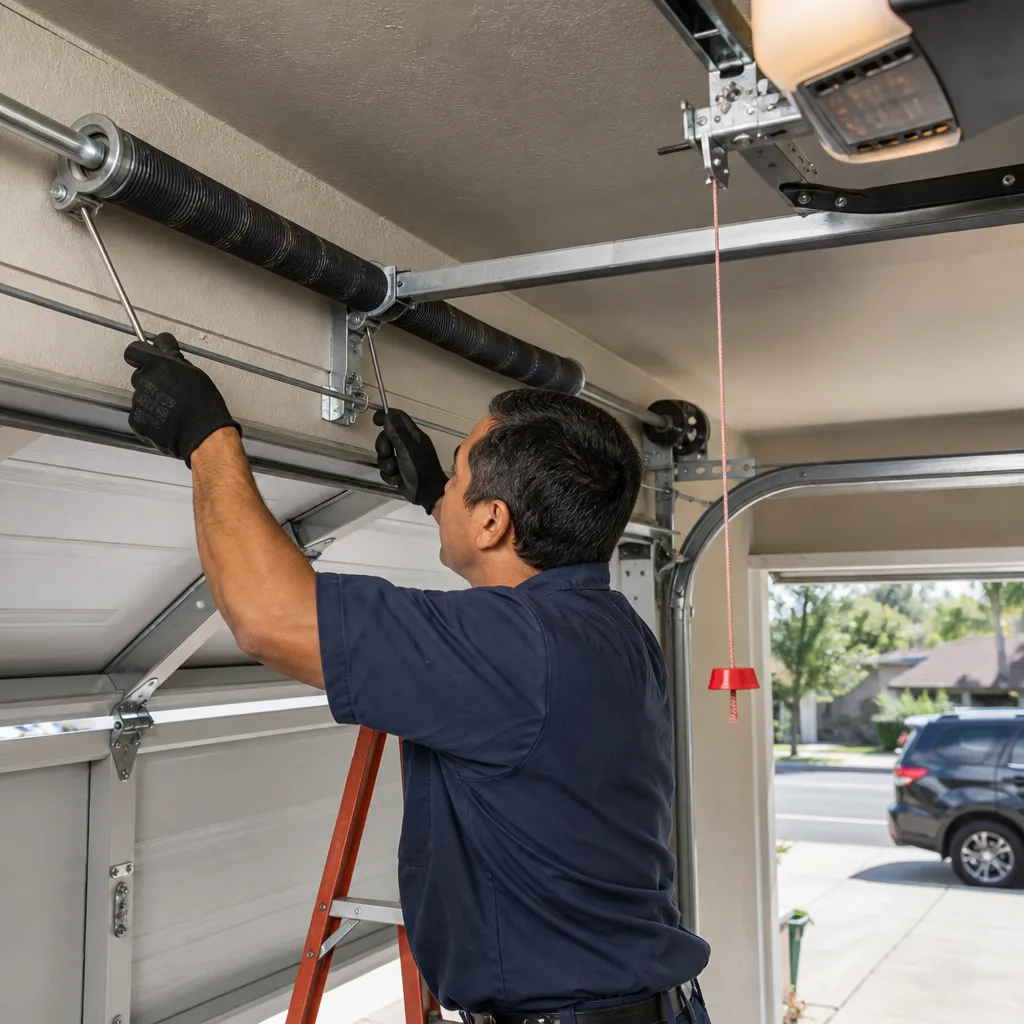 After
After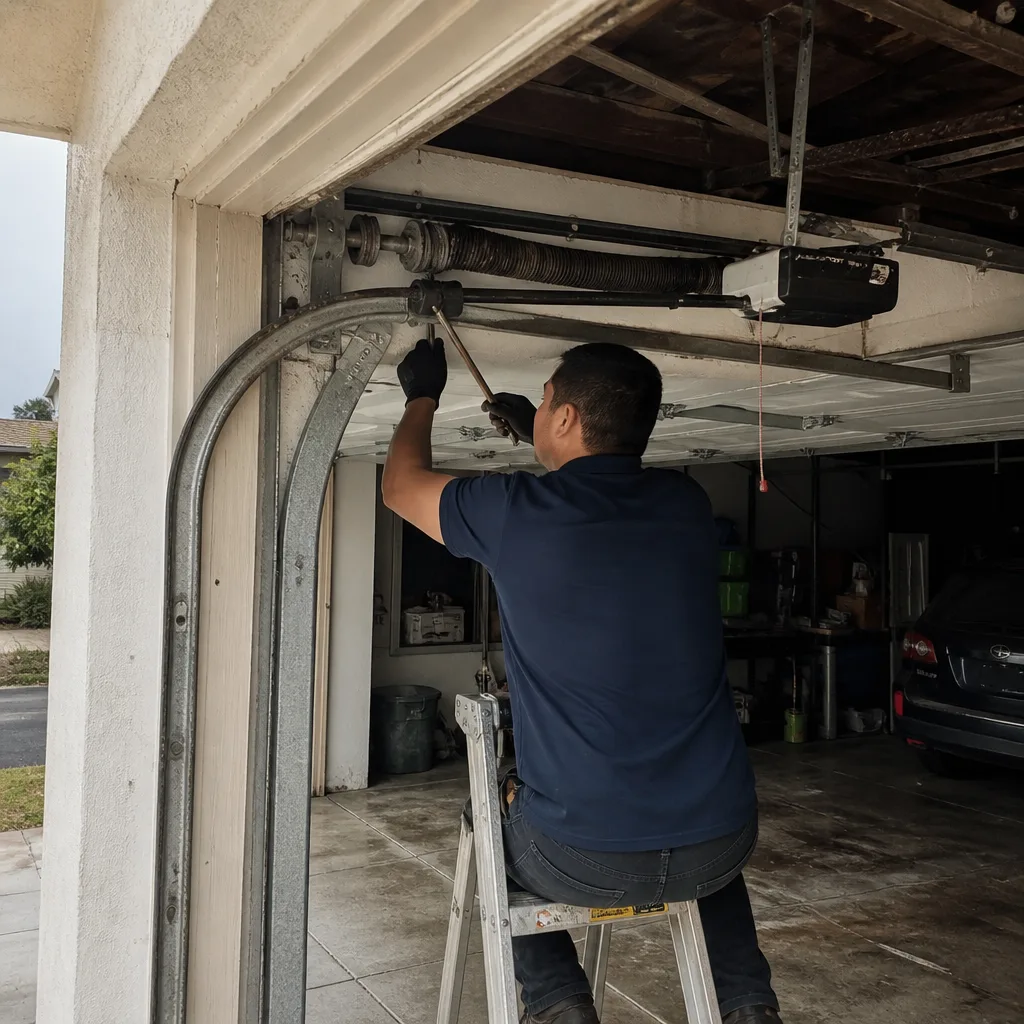 Before
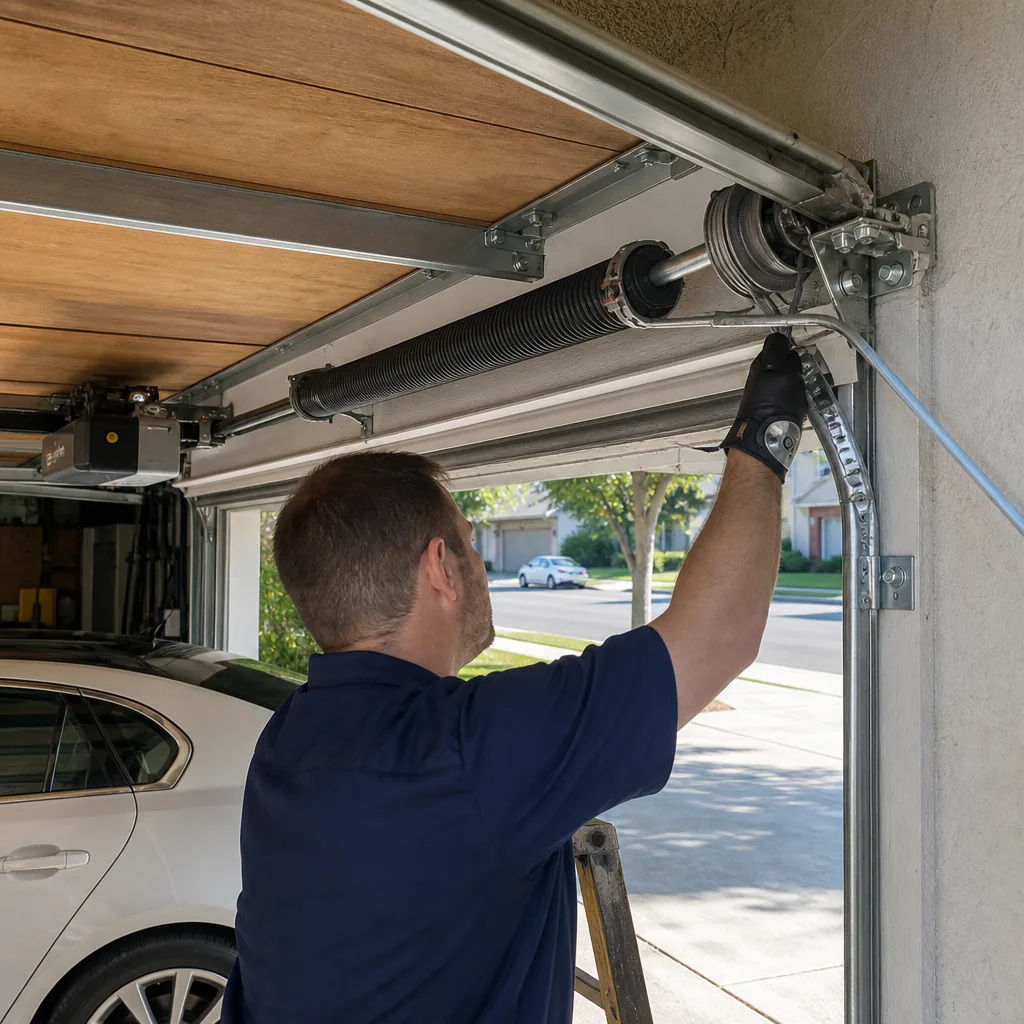 After
After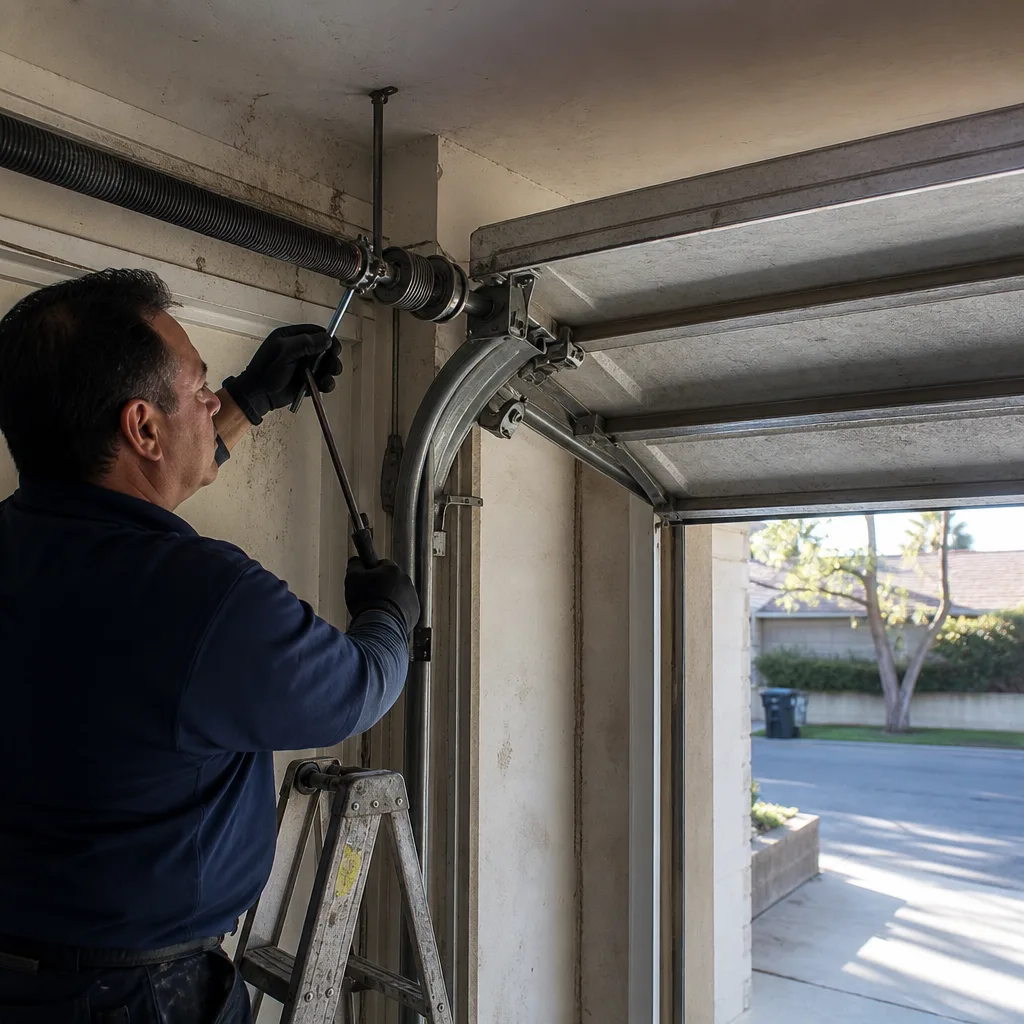 Before
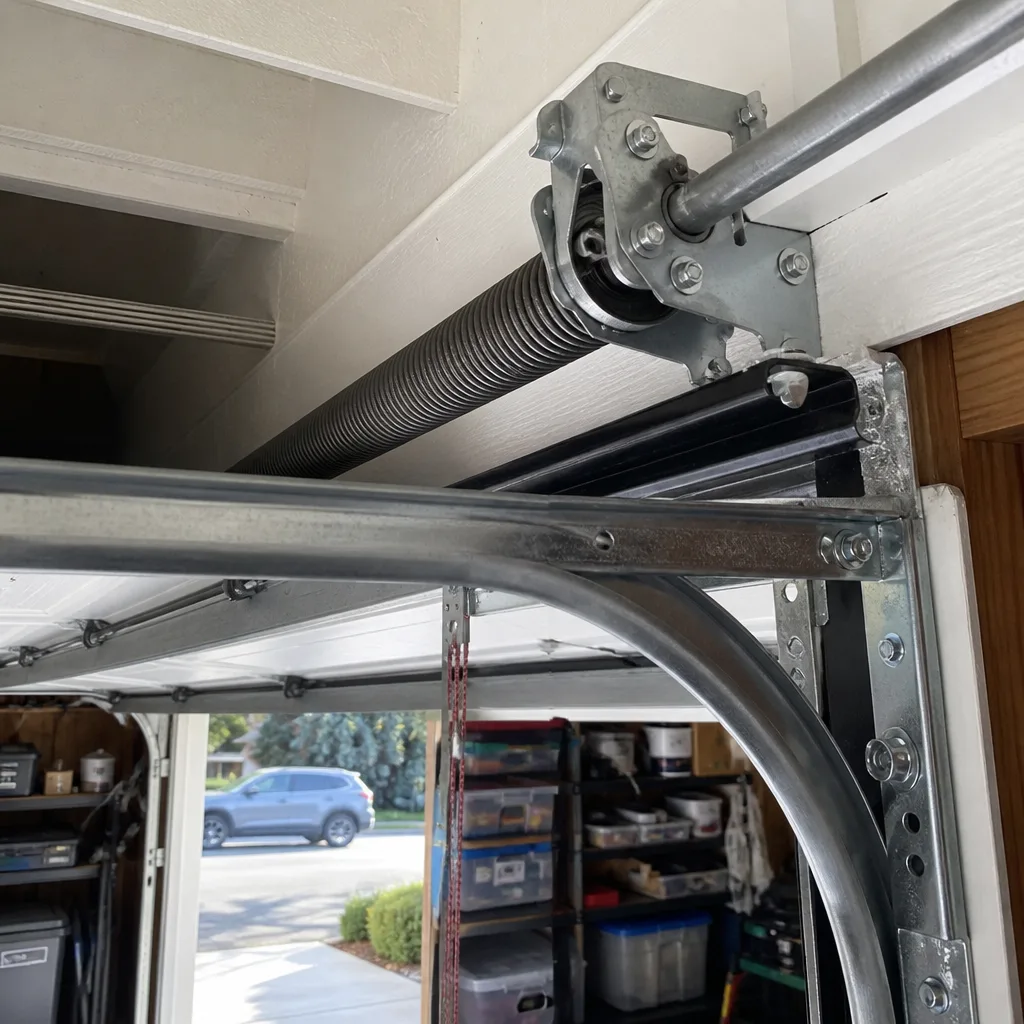 After
AfterSeasonal Garage Door Care for Pasadena: Year-Round Homeowner’s Guide
Pasadena recorded 43 days above 95°F in 2023 and a low of 28°F the following January. That 82-degree swing happens to the same torsion spring, and the spring’s steel doesn’t get a vote on the timing. The result is a predictable maintenance rhythm that most Pasadena homeowners never learn until a spring fractures on the coldest morning of the year or a roller seizes during a 110°F Santa Ana event. This guide breaks the year into four service windows, names the exact components that fail in each, and tells you what a pre-season inspection should cost in writing before you spend a dollar. For a deeper dive into planning your project, see our Garage Door Cost Breakdown: The Pasadena Homeowner’s Reference for 2026.
Quick Answer
Seasonal garage door care in Pasadena means treating the calendar in four windows: summer heat hardening and flat-spotting nylon rollers, autumn Santa Ana winds grinding grit into seals, early winter cold snaps fracturing torsion springs, and spring temperature swings throwing off door balance. A written pre-season inspection should run $89 to $149 in Pasadena, and the three highest-failure items - torsion springs, nylon rollers, and bottom seals - account for roughly 70% of the seasonal repair calls we see year after year.
Table of Contents
- Summer Heat (May-September): Roller Flat-Spotting and Rail Expansion
- Santa Ana Event Checklist (September-November): Grit, Heat Sinks, and Cycle Rates
- Fall Transition (October-November): The Highest-Risk Window for Torsion Spring Fracture
- Winter Cold (December-February): Freeze-Point Lubrication and Seal Stiffness
- Spring Reset (March-April): Balance, Cable Drums, and the Compression Gap Test
- What Each Seasonal Task Should Cost in Pasadena, in Writing
- Common Mistakes to Avoid
- When to Call a Professional
- Frequently Asked Questions
- The Bottom Line
BeforeAfterSummer Heat (May-September): Roller Flat-Spotting and Rail Expansion
Pasadena’s summer does something most people don’t connect to their garage door: sustained heat above 90°F softens the nylon inserts inside garage door rollers. The steel ball bearings inside the roller stay round, but the nylon wheel that rides the track loses dimensional stability. When a door sits closed through a 105°F afternoon, the nylon compresses under the door’s weight at the contact point. Repeated across weeks of heat, that compression becomes permanent. The roller doesn’t roll anymore - it slides, which is why we hear Pasadena homeowners describe a “scrubbing” or “dragging” sound from the track.
The visual sign is flat-spotting: an obvious flat facet on the roller wheel where it contacts the track. Once flat-spotting is visible, the roller is done. It will not round itself out. A flat-spotted roller drags the door, which yanks unevenly on the cables, which changes how the door sits on the bottom seal. One failing roller creates a chain of uneven wear that hits the cable drums and the opener’s traveller carriage.
The summer inspection sequence we recommend is simple and takes about ten minutes:
- Close the door fully.
- Wipe the inside face of each vertical track with a dry rag to remove the summer’s dust and pollen film.
- Look at each roller where it meets the track. Run your thumb over the nylon surface. If you feel a flat facet instead of a continuous curve, the roller needs replacement.
- Open the door halfway and release it in manual mode. A balanced door holds position. A door that creeps downward has a spring tension problem, not just a roller problem.
- Listen for a high-pitched squeal during the next full open-close cycle - that’s usually dry bearings in a roller that’s about to seize.
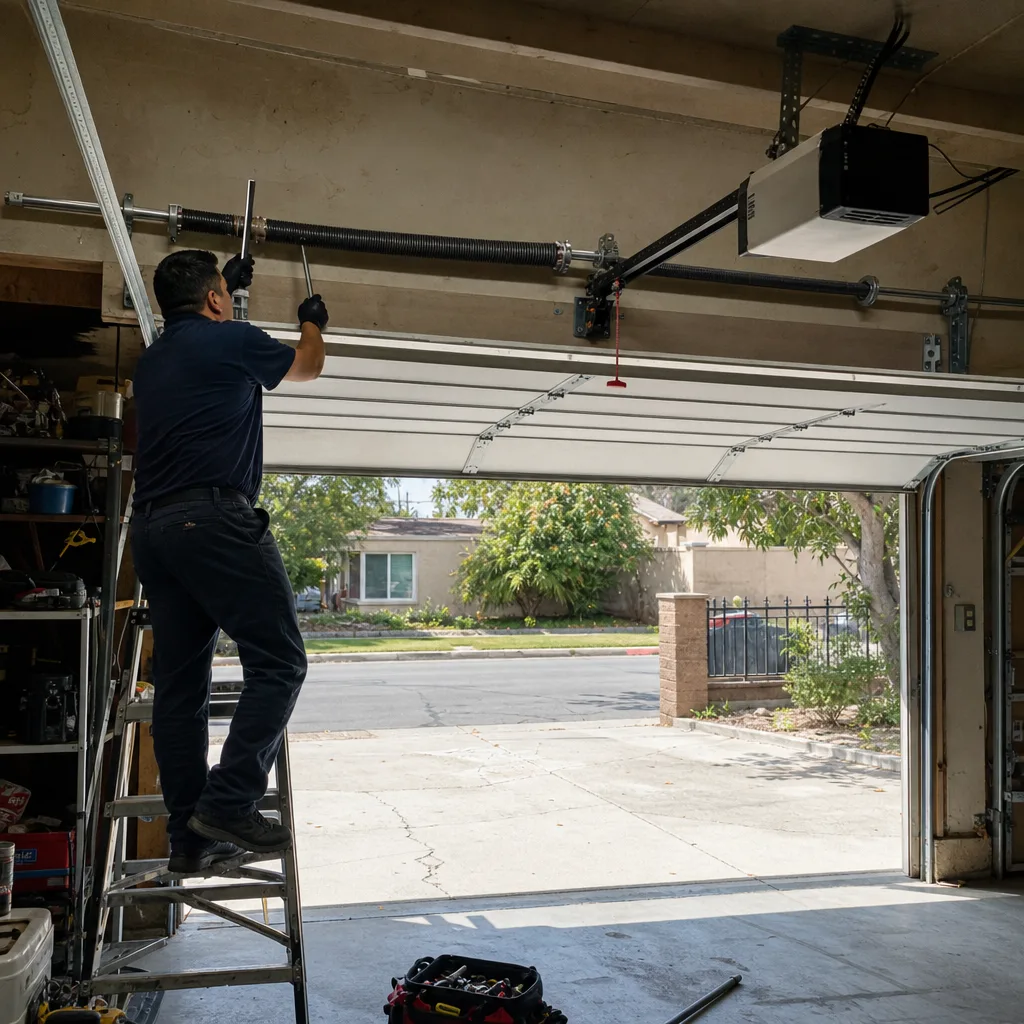
One thing to understand about Pasadena summers: the garage itself becomes a heat sink. Attached garages on the west side of a home, like many in Madison Heights and Bungalow Heaven, regularly hit 120°F inside on July afternoons. That interior temperature is what the nylon rollers and the opener’s logic board actually experience. The outdoor temperature is the milder number. When we replace rollers in Pasadena, we’re replacing them after they’ve been baked at temperatures that would soften any polymer over time.
Santa Ana Event Checklist (September-November): Grit, Heat Sinks, and Cycle Rates
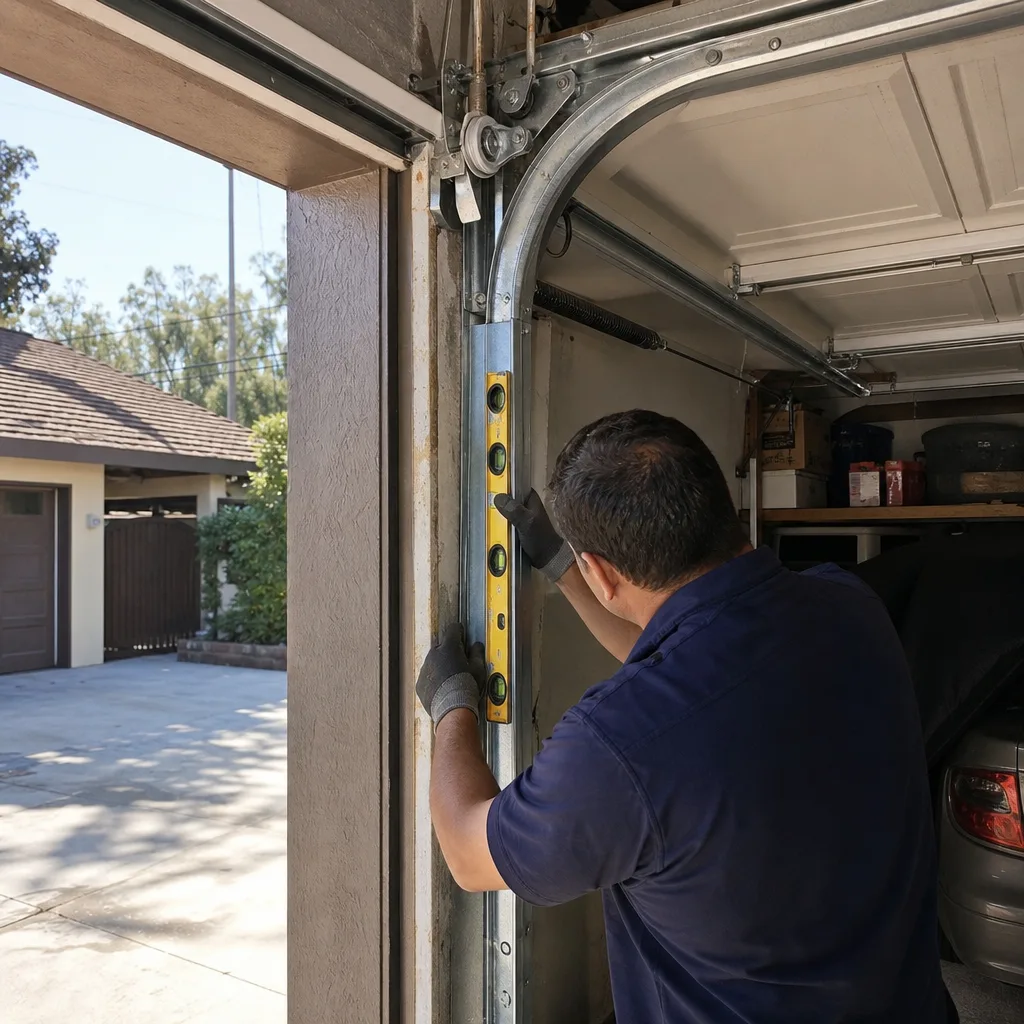
Santa Ana winds aren’t just a fire weather story. They’re a garage door wear event, and they repeat every autumn in Pasadena. The wind carries fine grit - especially from the Arroyo Seco corridor and the slopes above Linda Vista - and that grit ends up in your door’s track and weatherstripping. Wind-driven sand acts as an abrasive paste when mixed with whatever grease is on the track. It scores the track surface, embeds in the bottom seal, and accelerates wear on the roller bearings.
The other Santa Ana factor is less visible but more consequential: during high-wind events, homeowners open and close their garage door faster than normal because nobody wants to stand outside in a blowing face-full of dust. Fast-rise/fast-close cycles - the door’s rapid movement between fully open and fully closed - subject the springs and cables to more cycles per hour than they’d typically see. You’re not doing anything wrong. You’re just running the door through more load cycles while airborne grit is grinding into the moving parts. That’s a compound wear condition.
We recommend a three-step post-Santa Ana checklist, ideally done after the first major wind event of the season and again after any event strong enough to knock tree debris into the driveway:
- Door seal inspection: Run your finger along the bottom seal and side weatherstrip. If it comes away with embedded grit, the seal is acting as a reservoir for sand. Clean it with a dry cloth. If the seal is cracked or compressed flat, factor replacement into the coming season.
- Operator heat sink check: Openers in uninsulated Pasadena garages - common in pre-1990 homes - run hot during Santa Ana weeks because the ambient temperature is already high and the peak electricity demand is cranking the grid voltage around. Hold your hand near the opener motor housing after a full cycle. If it’s hot to the touch, the opener is working harder than it should, usually because of drag somewhere in the system.
- Cycle rate observation: Count how many times you open and close the door on a windy day. It’s more than you think. Each cycle is a full spring wind and unwind. If the door sounds different on the second or third rapid cycle, note it - that’s a spring showing early fatigue signs.
The most common Santa Ana failure we see in Pasadena is not the door itself. It’s the opener’s logic board overheating, which presents as a door that opens but will not close, or closes but reverses midway. The reversal circuit on most modern openers is heat-sensitive. When a logic board runs at 140°F because the garage is 120°F, the obstruction sensor can misbehave. The fix is not always a new board. Often it’s a tension correction on the door that lets the opener work against less resistance, which drops its internal temperature.
Fall Transition (October-November): The Highest-Risk Window for Torsion Spring Fracture
The highest-risk window for torsion spring fracture in Pasadena is late October through the first real cold snap, and the reason is thermal cycling. Torsion springs are heat-treated steel coils that store mechanical energy by twisting. Every degree of temperature change causes microscopic dimensional change in the steel. Across a Pasadena day in late fall - 80°F afternoon to 45°F overnight - the spring expands and contracts repeatedly at a rate faster than the steel’s fatigue tolerance. After 6 to 10 years of these daily swings, the spring reaches its fatigue limit. The break happens most often at night or early morning, when the temperature bottoms out and the steel is at its most brittle.
We see this pattern in our own service records. October and November are our highest-volume torsion spring replacement months in Pasadena, and the calls cluster in the first cold mornings after a warm stretch. The spring doesn’t care about the date on the calendar. It cares about the temperature delta it’s been forced through.
A pre-season inspection in fall is the single highest-value maintenance step a Pasadena homeowner can take. That inspection should include:
- Visual check of both torsion springs for gaps, corrosion, or a stretched coil at the set screws
- Measurement of the spring’s coil gap to detect fatigue deformation before a visible gap appears
- Lubrication of the spring with a low-temp formula rated for the winter ahead
- Full balance test with the opener disengaged
- Cycle test to confirm the opener’s force settings are within spec
In Pasadena, a written pre-season inspection should cost between $89 and $149, and you should get that price in writing before anyone puts a tool on the door. We provide that price as a flat written quote, and the written scope states exactly what will be checked, what will be adjusted, and what a replacement would cost if the inspection finds a failure point. No hourly billing, no time-and-materials open end. You know the number before work starts.
Torsion springs are the one component on a garage door system where a home repair attempt is genuinely dangerous. The spring stores enough force to lift the entire door - roughly 150 to 250 pounds per spring, held under rotational tension. If a torsion spring breaks while you’re standing next to it, that stored energy releases instantly. This is not a maintenance task. Do not try to wind a torsion spring yourself. A broken or fatigued spring is a replacement job for a trained technician with the right winding bars, and the work is typically $180 to $340 for a single spring in Pasadena, including the service call.
Winter Cold (December-February): Freeze-Point Lubrication and Seal Stiffness
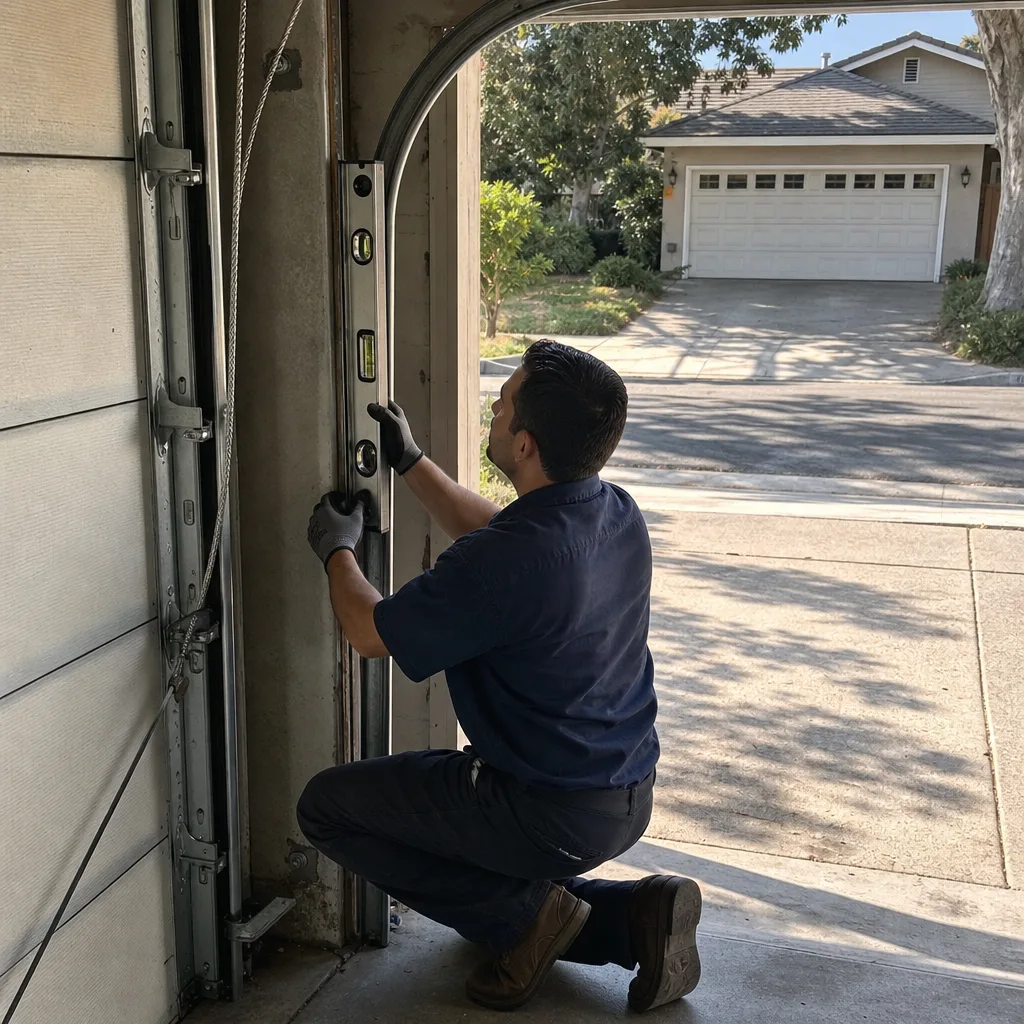
Pasadena winters are the mildest in the region, but January lows in the upper 20s are a documented reality, and they’re a problem for one specific reason: most garage door lubricants are not rated for below-freezing temperatures. Standard white lithium grease stiffens below 35°F. When lithium grease thickens on a garage door spring, the coils can’t slide against each other as the spring winds and unwinds. The spring effectively becomes a solid bar of stuck coils. The opener has to work harder to overcome the added friction, and the spring’s life shortens because the coils are grinding instead of gliding.
The fix is a low-temperature lubricant. Synthetic lubricants, particularly those formulated with PTFE or silicone-based carriers, maintain viscosity at freezing temperatures where lithium grease turns thick. We use a synthetic low-temp garage door lubricant that stays fluid to about -20°F, which covers any cold Pasadena will ever see. The application is simple: spray the spring coils with the door closed, run a full cycle to distribute, then apply a light second coat. Do this on every spring, not just the one that looks dry.
Winter is also when the bottom seal gets stiff. Rubber and PVC weatherstripping both harden in cold weather. A seal that was pliable in September and impenetrable to drafts is, by January, a stiff strip that leaves a visible gap under the door. The gap lets cold air into the garage - which in Pasadena’s older homes, where the garage shares a wall with living space, directly affects heating costs. The compressed seal also makes the door close harder than it should, which sends uneven force through the cables and into the opener.
The winter checklist, roughly monthly from December through February:
- Re-lubricate springs with low-temp formula if temperatures dropped below 40°F since the last application
- Check the bottom seal for gaps - daylight visible under the door means the seal is no longer sealing
- Listen for louder-than-normal operation on cold mornings - that’s thickened lubricant or a stiff seal
- Run the door once manually to feel for increased resistance
If your garage is heated or semi-conditioned, the winter equation changes. The temperature differential between the garage interior and the exterior is larger, which means the door panels expand and contract on an interior-to-exterior gradient. That’s a panel stress condition, and it’s why heated Pasadena garages sometimes show hairline stucco cracks at the door frame in January. The door isn’t failing; it’s flexing against the frame. Adjusting the track spacing by a quarter-inch usually resolves it.
Spring Reset (March-April): Balance, Cable Drums, and the Compression Gap Test
Spring in Pasadena is the reset season, and the first task is a full balance test after the temperature cycle. Here’s the test: disengage the opener, lift the door manually to waist height, and let go. A properly balanced door holds position. If it creeps down, the springs have lost tension through the winter’s thermal cycling. If it climbs up, the springs are over-tensioned - rare, but it happens after someone adjusts a spring mid-winter to compensate for a stiff seal, then the seal warms up and regains its flexibility. Half a turn on the winding cone is often the entire fix, but it’s a half-turn on a spring holding 200 pounds of torque. Again: not a DIY adjustment.
The second spring-reset task is cable drum inspection. The cable drum sits at each end of the torsion bar and winds the lifting cables as the door moves. When a drum’s groove wears unevenly - usually from a period of running with a flat-spotted roller that we described earlier - the cable spools unevenly. You’ll see the cable stacking on one side of the drum, or a bright wear track in the groove where the cable has been cutting a deeper channel. A worn drum groove will eventually fray the cable, and a frayed cable under tension is a sudden failure waiting to happen. Those are the calls we get in April: a door that suddenly dropped one side and is hanging crooked.
The third task, and the one most homeowners skip, is the bottom seal compression gap test. Close the door and look at the bottom seal from inside the garage. The seal should compress uniformly against the floor. If there’s a gap anywhere - and sloped garage floors are common in Pasadena’s older neighborhoods, so it’s often at one corner - the seal is no longer functional, and the door is no longer sitting evenly. That uneven sitting feeds back into the balance system and causes the door to bind on one track. Here’s the measurement: with the door closed, no visible light should pass under the seal at any point. If you can slide a quarter under any section of the compressed seal, the weatherstripping is at end of life.
Spring is also the right season to service the hinges, particularly the top hinge closest to the opener arm, and to check the track brackets for signs of movement over the winter. Shifted brackets are a common post-winter surprise, especially in Pasadena’s older custom homes where the original framing has moved over decades. A track bracket shifted 1/8 inch may not look like much, but at the top of the travel, it can cause an intermittent jam that the homeowner can’t reproduce on demand.
For readers ready to address spring maintenance properly, our Garage Door Repair in Pasadena service starts with the same balance test and cable drum inspection we’ve described here, documented with photographs you receive before any work is quoted. The written price comes before any repair, every time.
What Each Seasonal Task Should Cost in Pasadena, in Writing
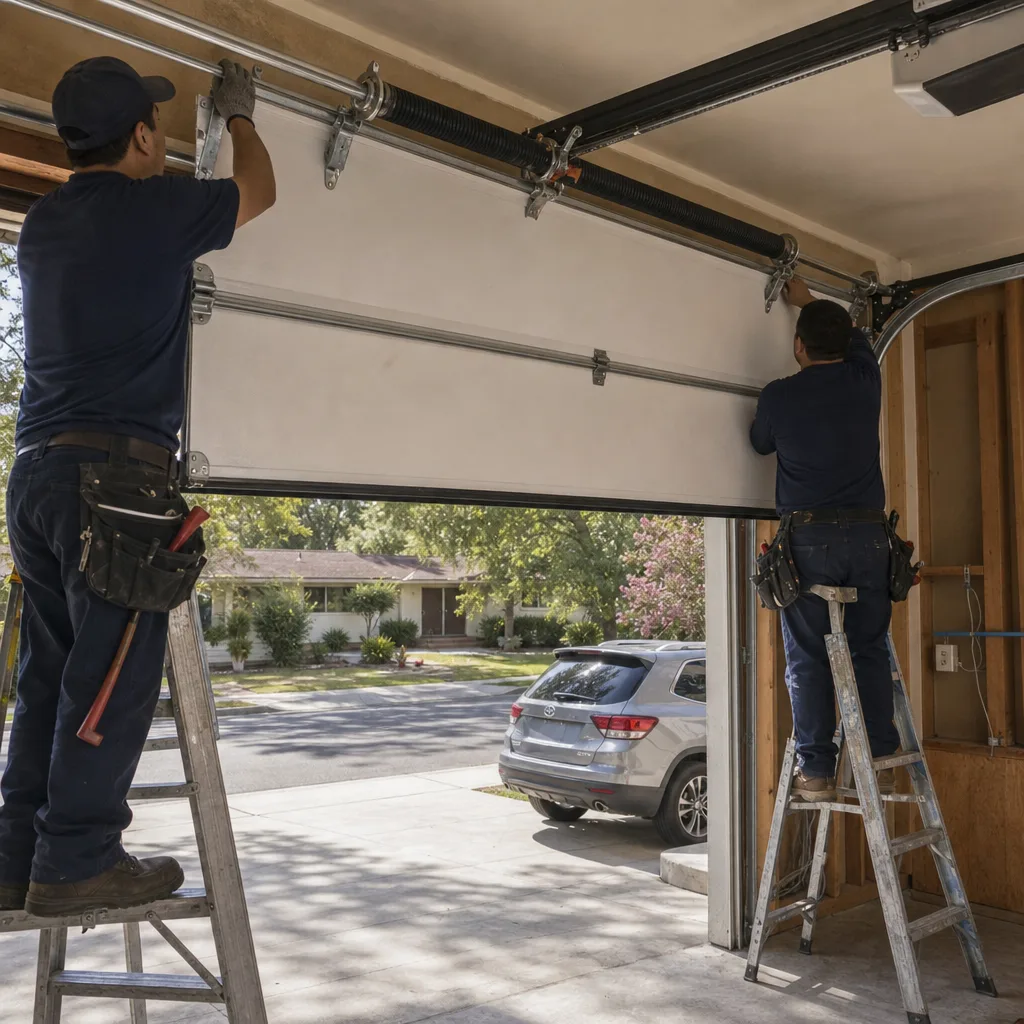
The table below reflects current Pasadena market pricing from our own flat-rate schedule as of this writing. These are the numbers we quote in writing before work begins, and they include the service call, the parts, and the labor. We publish them because Clause 1 of The Haven Standard - the documentation standard our business operates under - requires a written price and written scope before any work starts. Browse more guides & resources from our team. “Call for a quote” is not how this works.
- Seasonal inspection (any season): $89-$149 - includes balance test, roller inspection, spring inspection, seal check, and a written findings report with photos
- Nylon roller replacement (set of 10-12): $85-$140 - recommended when flat-spotting is confirmed on two or more rollers
- Spring lubrication (both springs, low-temp formula): $35-$55 - included at no charge with any other service
- Torsion spring replacement (single spring): $180-$340 - includes the spring, labor, and documented photo record of the failed spring
- Bottom seal replacement: $85-$165 - includes removal, new seal, and compression gap verification
- Cable drum replacement (per side): $110-$180 - includes cable inspection and tension verification
- Operator force adjustment: $65-$95 - includes logic board temperature read and rack calibration
If another company in Pasadena gives you a written estimate different from these numbers, bring the paperwork. We offer a free second opinion on any written estimate from another company. No coupon, no code, no obligation. You get the same photo-documented inspection and the same written price, and you can compare both documents side by side.
Common Mistakes to Avoid
- Lubricating the track. The track is a guide rail, not a bearing surface. Grease on the track collects dust and Pasadena’s airborne grit, turning the track into an abrasive channel. Lubricate the rollers, hinges, and spring. Leave the track dry.
- Waiting until the door fails to call. A torsion spring that breaks at 7 a.m. on a 35°F Pasadena morning means you’re now paying emergency call-out pricing and waiting in a cold garage. The $89 inspection in October would have caught it.
- Using WD-40 on garage door springs. WD-40 is a solvent and water displacer, not a spring lubricant. It strips protective coating and evaporates. Within a week, the springs are drier than before. Use a purpose-made garage door lubricant, ideally low-temp rated for Pasadena’s January mornings.
- Ignoring a door that’s slower in cold weather. A door that moves sluggishly on cold mornings is telling you the lubricant is thickening or the springs are losing tension. It’s not “just the cold.” The cold reveals the problem; it didn’t create it.
- Replacing one spring when the other is the same age. Pasadena garages with two torsion springs almost always have two springs installed at the same time. If one breaks at year 8, the other is at year 8 of fatigue too. Replacing both at once costs less than two separate service calls.
- Spot-checking the seal only when it rains. Pasadena gets 20 inches of rain a year, but it gets 365 days of dust. A seal that passes the rain test but fails the compression gap test is still letting grit into the bearings and wind into the garage.
When to Call a Professional
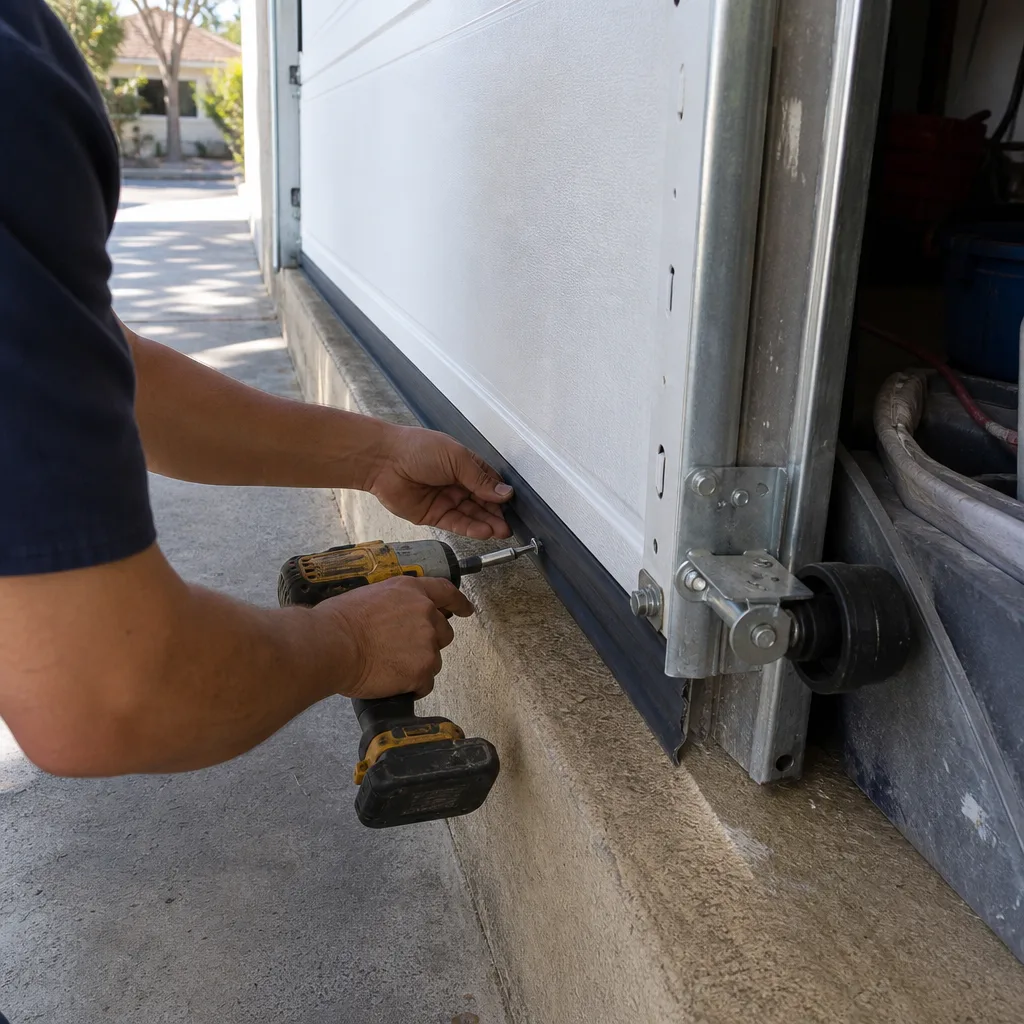
A garage door is a mechanical system holding 150 to 250 pounds of potential energy. Most seasonal maintenance tasks - cleaning, visual inspection, seal checks - are safe for a homeowner who follows the steps above. Certain conditions are not. Call a professional if you find a torsion spring with a visible gap in the coil, a frayed cable anywhere in the system, a roller that has come out of the track, or any door that will not stay in position when manually released at mid-height. If the door fell suddenly, or if the opener makes a grinding noise and the door moves unevenly, stop using it entirely until an inspection has been done. Marcus Deller and the team at Servo Garage Doors Pasadena offer free estimates throughout Pasadena - call (213) 816-2483 and a real person answers, 24/7.
Frequently Asked Questions
Seasonal garage door maintenance in Pasadena costs roughly $89 to $149 for a written inspection with photograph documentation. At Servo Garage Doors Pasadena, that price includes a balance test, roller inspection, spring inspection, and seal check, with findings delivered in writing. A full tune-up that includes lubrication and minor adjustments typically runs $120 to $180 in the broader Pasadena market. Call (213) 816-2483 for an exact quote - the price is written and flat, not an estimate you’ll have to renegotiate after the inspection.
Replace garage door springs when a visual inspection shows a visible gap or coil deformation, when the door fails a mid-height balance test, or as a preventive step when the springs reach 8 to 10 years of age from the date stamped on the winding cone. In Pasadena, most torsion springs last 6 to 10 years depending on cycle count. If you don’t know the spring’s age, the October inspection is the right time to find out. A single torsion spring replacement in Pasadena runs $180 to $340 including labor, and the written quote covers both springs if you choose to replace them as a pair.
The most common seasonal failure in Pasadena is a torsion spring fracture during the first cold snap of late fall or early winter. The rapid temperature drop from mid-80s daytime to mid-40s overnight stresses the heat-treated steel past its fatigue limit, and the break almost always happens at night or early morning. Flat-spotted nylon rollers from summer heat are the second most common, followed by bottom seal failure from Santa Ana grit infiltration.
Yes, seasonal maintenance prevents roughly 70% of the emergency repair calls we take in Pasadena. The four-window inspection schedule - rollers in summer, seals after Santa Ana events, springs in fall, balance in spring - catches wear patterns before they become failures. A $89 to $149 written inspection in October is the single most cost-effective thing you can do to avoid a $300 spring replacement on a cold January morning, plus the emergency call-out charge and the morning spent with a car stuck inside the garage. Call (213) 816-2483 to schedule a written, photo-documented seasonal inspection.
Yes. Our service vehicles in Pasadena are stocked with parts for Amarr, Raynor, Wayne Dalton, and five other major brands. That means the technician arrives with the roller set, spring, or seal solution without a second trip. If the part needed is non-standard - a custom-width panel or a specific opener logic board - the written quote covers the part cost and the installation in one flat price before work begins, per Clause 1 of The Haven Standard.
Repair is usually the right call when the issue is a spring, roller, or seal - those parts are designed to be replaced independently and a repair restores full function for a fraction of the door cost. Replacement makes sense when the panels themselves are damaged, the door is significantly underinsulated for a garage that shares a wall with living space, or the owner wants to upgrade to a modern smart opener system. If you’re close to the line, our Garage Door Installation in Pasadena service starts with a written recommendation, not a sales pitch. We’ll photograph the condition and hand you the evidence.
The Bottom Line
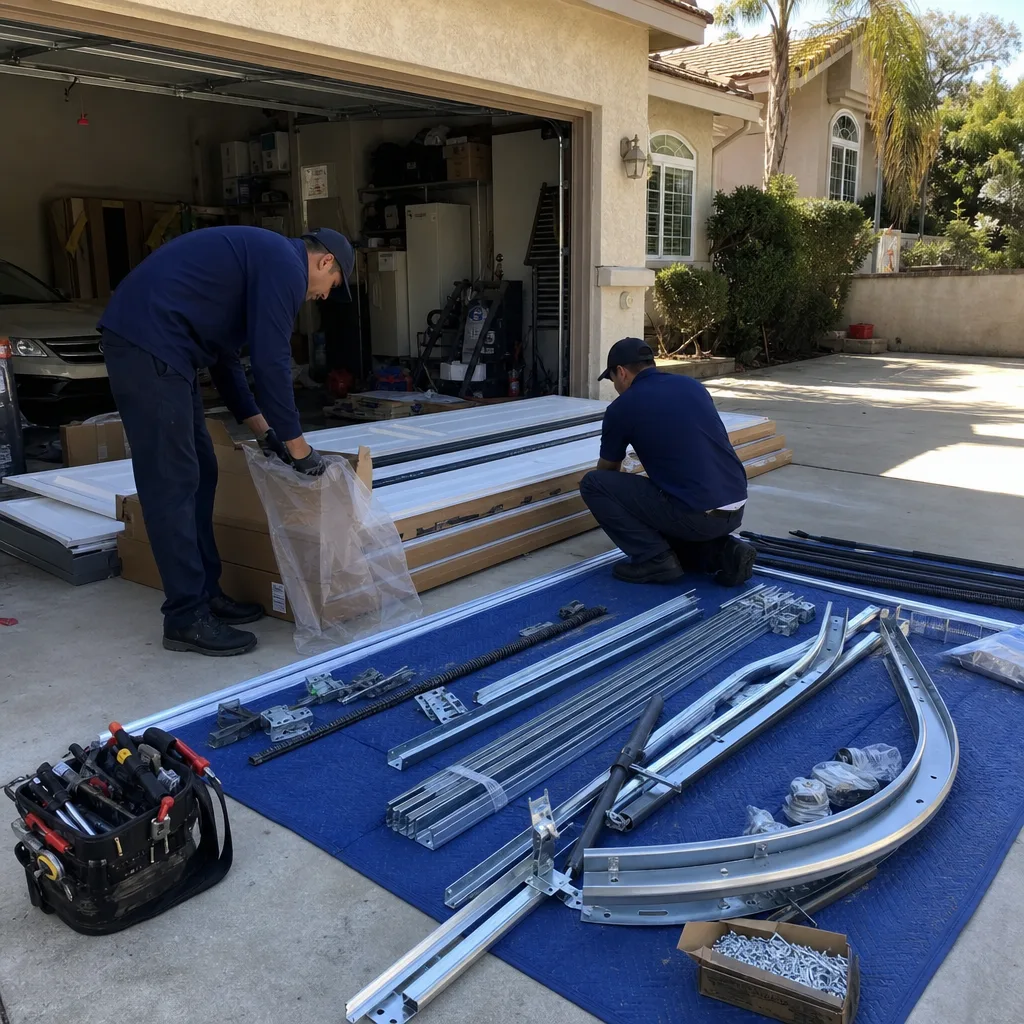
Pasadena’s climate is hard on garage doors in ways the “mild California weather” reputation hides: extreme summer heat that flat-spots rollers, Santa Ana winds that embed grit in seals, fall temperature swings that fracture torsion springs, and winter mornings that thicken the wrong lubricants. The fix is seasonal attention on a schedule the climate dictates, with a written price for every inspection and every repair before work starts. A homeowner who performs the four season checks outlined here - roller inspection in summer, seal inspection after wind events, spring inspection in October, balance test in March - will avoid most emergency repairs and extend the life of every component. For everything beyond inspection, the number to call is (213) 816-2483.
Written by Marcus Deller, Owner at Servo Garage Doors Pasadena, serving Pasadena since 2015.