
Last updated September 20, 2026
Full 25-point door and opener safety check with every visit - springs, cables, rollers, tracks, and your LiftMaster or Chamberlain opener included
You get a price before we start. It does not change when the truck arrives.
 Before
 After
After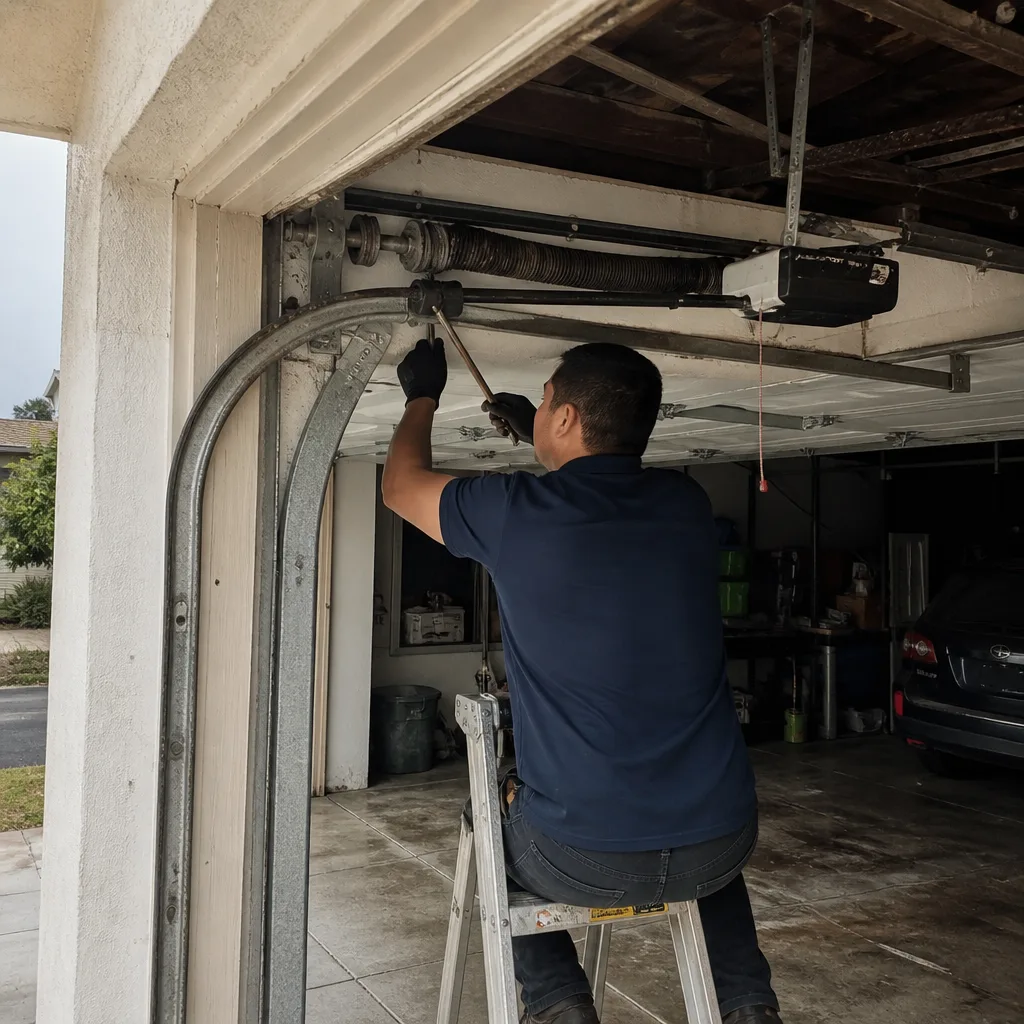 Before
 After
After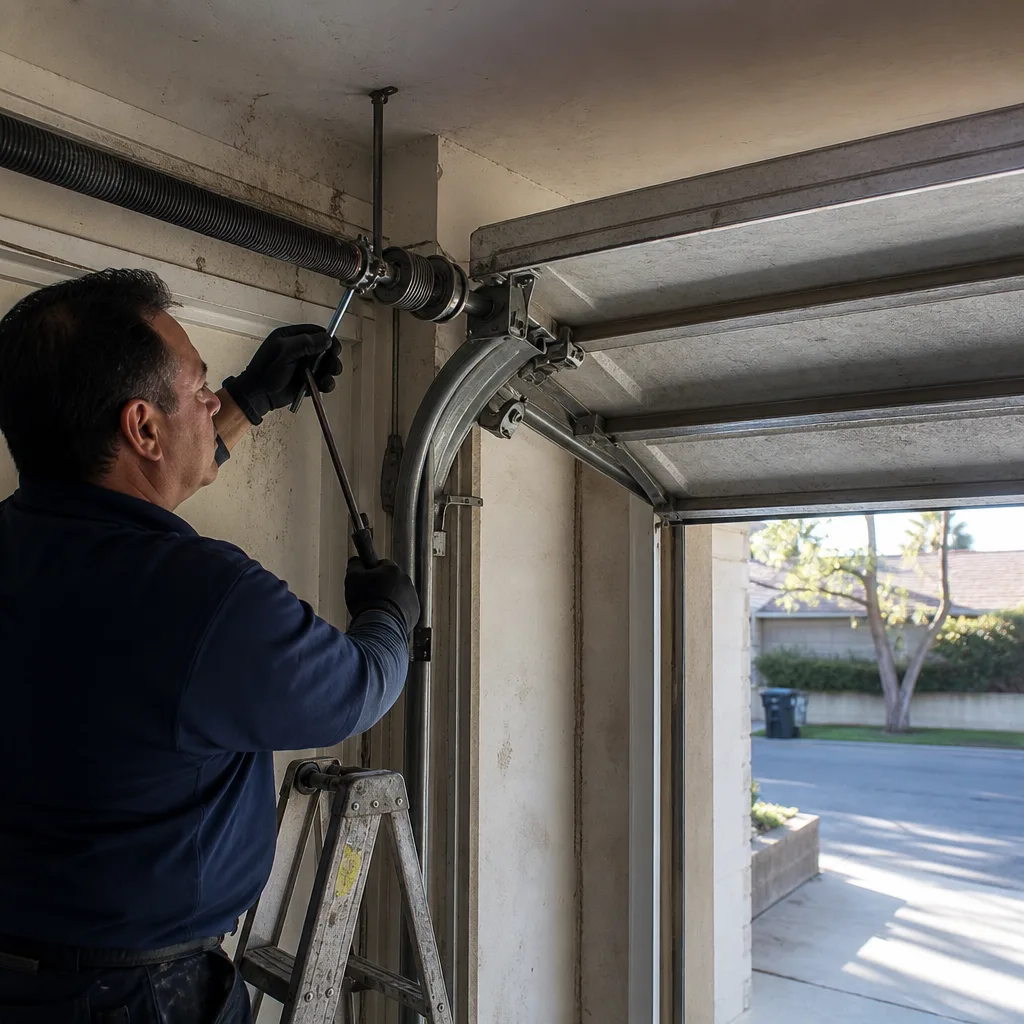 Before
 After
AfterGarage Door Warning Signs: A Pasadena Homeowner’s Reference Guide
A broken torsion spring doesn’t fail silently. In the weeks before it fractures, it produces a specific symptom: the door rises faster on one side than the other, creating a visible lean at the top of travel. That sign has a name, a cause, and a repair cost range, none of which require a technician to identify. This guide catalogs the precursor symptoms by component so Pasadena homeowners can name what they’re seeing before they call anyone, and for more guides & resources you can explore our blog. You’ll learn which sounds are normal, which are warnings, what to photograph, and what a fair repair should cost in this market.
Quick Answer
The most common garage door warning signs in Pasadena are uneven rise (spring fatigue), grinding during travel (worn roller bearings), intermittent opener non-response (logic board heat stress), and reversal before closing (sensor misalignment)-all covered in our Complete Guide to Garage Door in Pasadena. A spring that shows a visible lean at the top of travel typically has 30 to 90 days before it fractures. Repair costs in Pasadena range from $120 for roller replacement to $280 to $420 for a single torsion spring replacement, depending on wire gauge and door weight.
Table of Contents
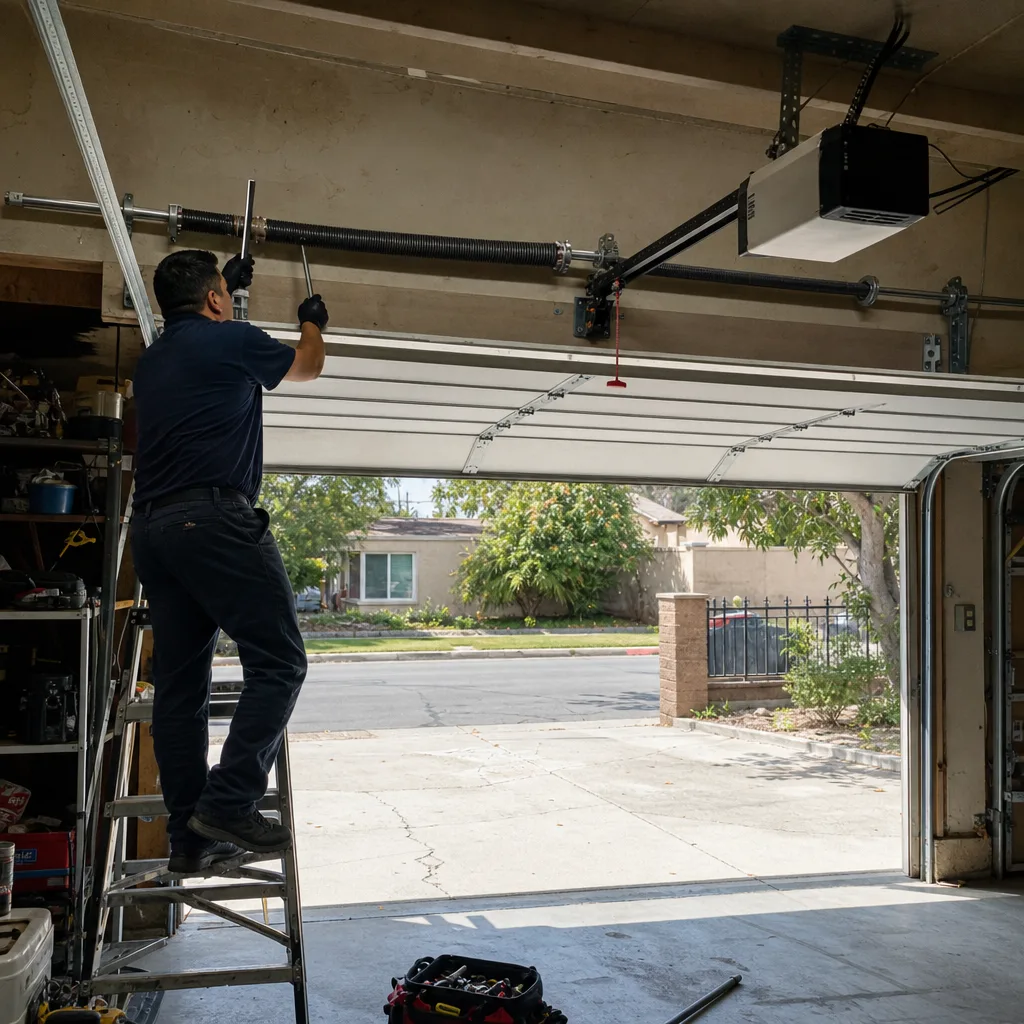
- Spring Warning Signs: The 30-to-90-Day Window
- Cable vs. Spring: How to Tell the Difference
- Roller and Track Warning Signs
- Opener Warning Signs: The Click Sequence Test
- Why Pasadena Climate Accelerates Component Wear
- How to Photograph a Warning Sign Correctly
- What Repair Costs Look Like in Pasadena
- Common Mistakes to Avoid
- When to Call a Professional
- Frequently Asked Questions
BeforeAfterSpring Warning Signs: The 30-to-90-Day Window
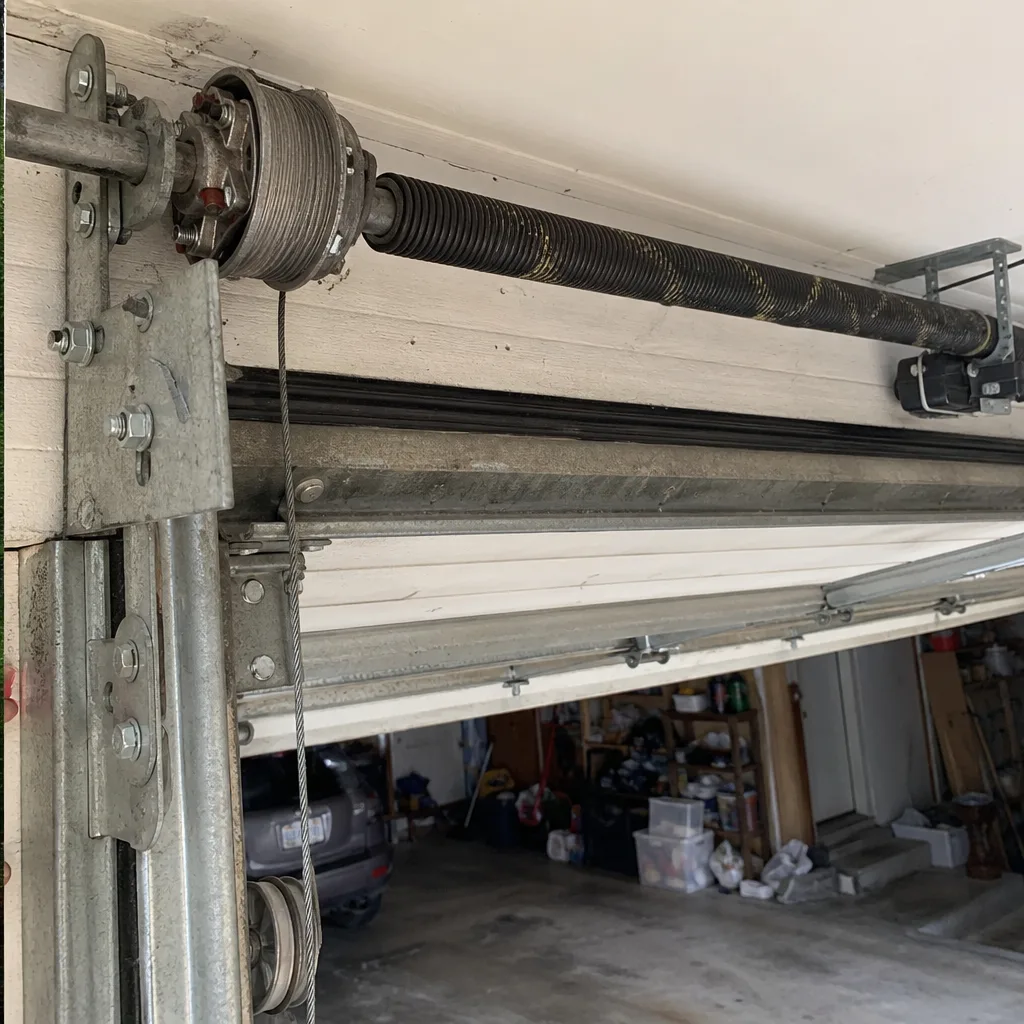
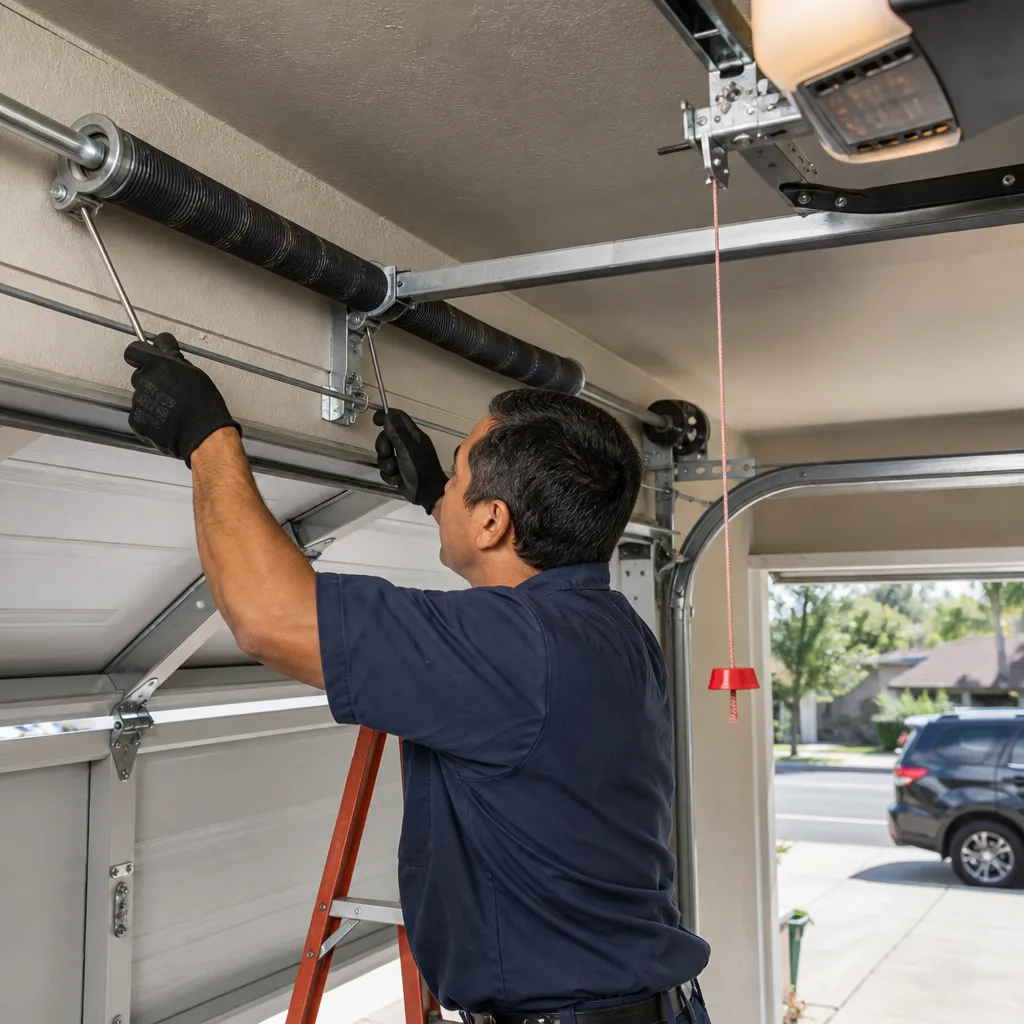
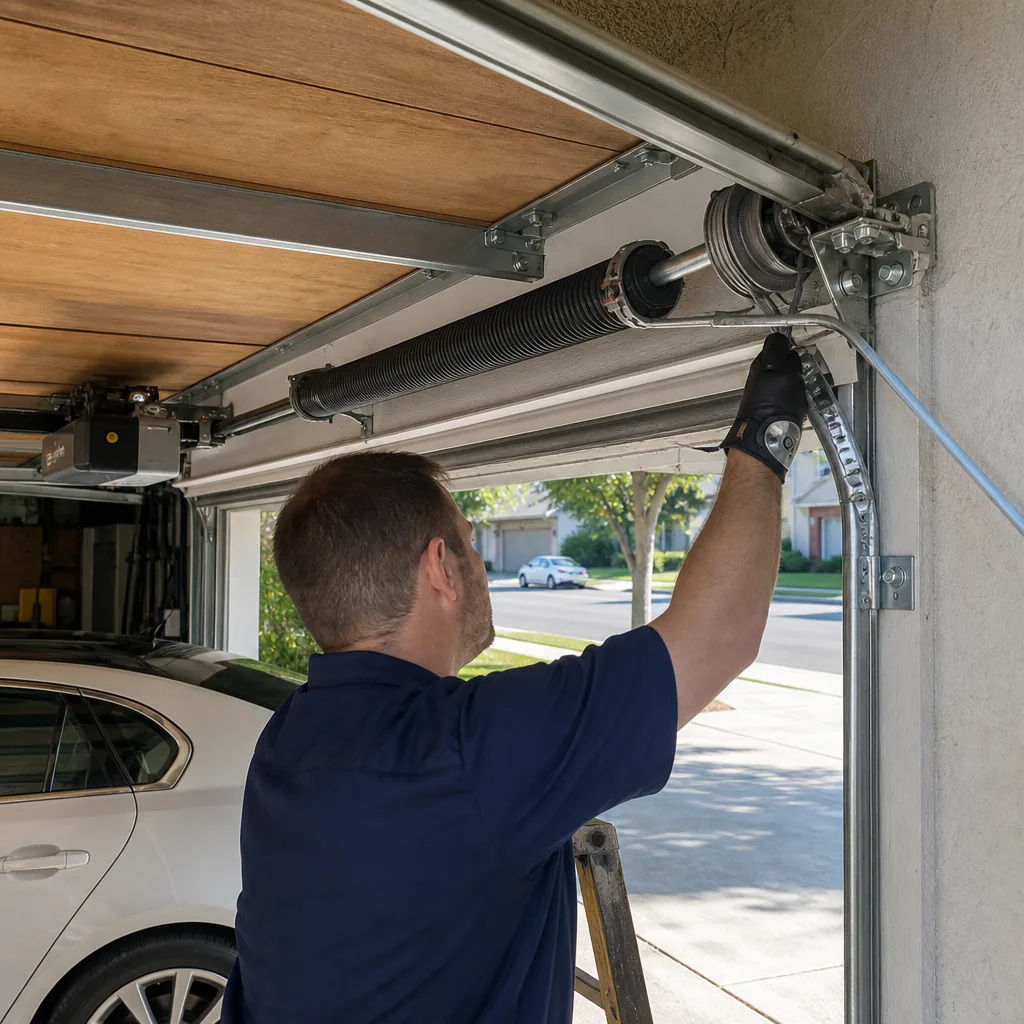
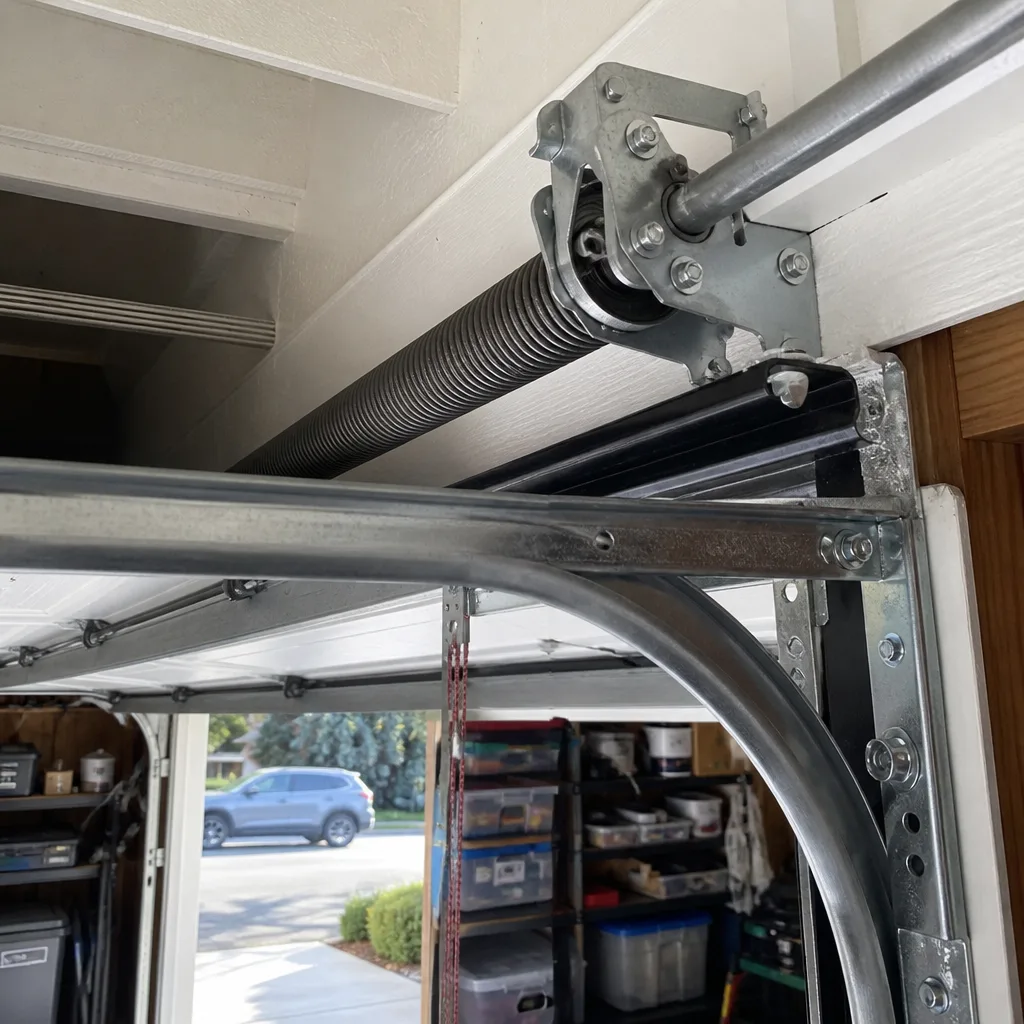
A torsion spring (the coiled spring mounted horizontally above the door opening) carries the full weight of the door through every cycle. Standard springs are rated for roughly 10,000 cycles, which translates to 7 to 9 years of typical use for a Pasadena household that opens the door 3 to 4 times daily. When a spring approaches the end of its fatigue life, it broadcasts the failure in advance. The symptom is specific and reproducible.
The door rises faster on one side than the other. You’ll see it at the top of travel: one edge is noticeably higher, creating a diagonal line across the door’s top panel. The cause is uneven tension between the two springs (most Pasadena doors carry a pair, one on each side of the center bearing plate). One spring has lost a fraction of its rated torque, so it’s doing less work while its partner compensates. The imbalance shows at the top of the stroke because that’s where the geometry exaggerates small torque differences.
What you’re seeing is not a track problem. If the tracks were bent, the door would bind or scrape, not lean. A lean at rest, especially when the door is held mid-travel and released, points to spring fatigue. When you release a properly tensioned door at the halfway point, it stays. When one spring is failing, the door drifts down on the weak side.
We’ve replaced springs in Bungalow Heaven, Madison Heights, and Linda Vista where homeowners described exactly this precursor two to three months before the break. The fracture itself is sudden. The warning is not.
What to listen for: a failing torsion spring sometimes makes a soft ticking or creaking sound as the coil unwinds slightly under load. It’s not dramatic. It’s the sound of the coil shifting on the stationary cone, and it’s worth noting if it coincides with the lean.
Repair scope: when one spring fails, both are replaced. They were installed as a matched pair, and the surviving spring has seen identical cycle counts. Replacing one leaves a 2019 spring and a 2025 spring on the same shaft, which means the problem recurs in 12 to 18 months. A single torsion spring replacement in Pasadena runs $280 to $420 including labor, depending on wire gauge and door weight. That’s the range we quote and lock before touching the door, per Clause 1 of The Haven Standard.
Cable vs. Spring: How to Tell the Difference
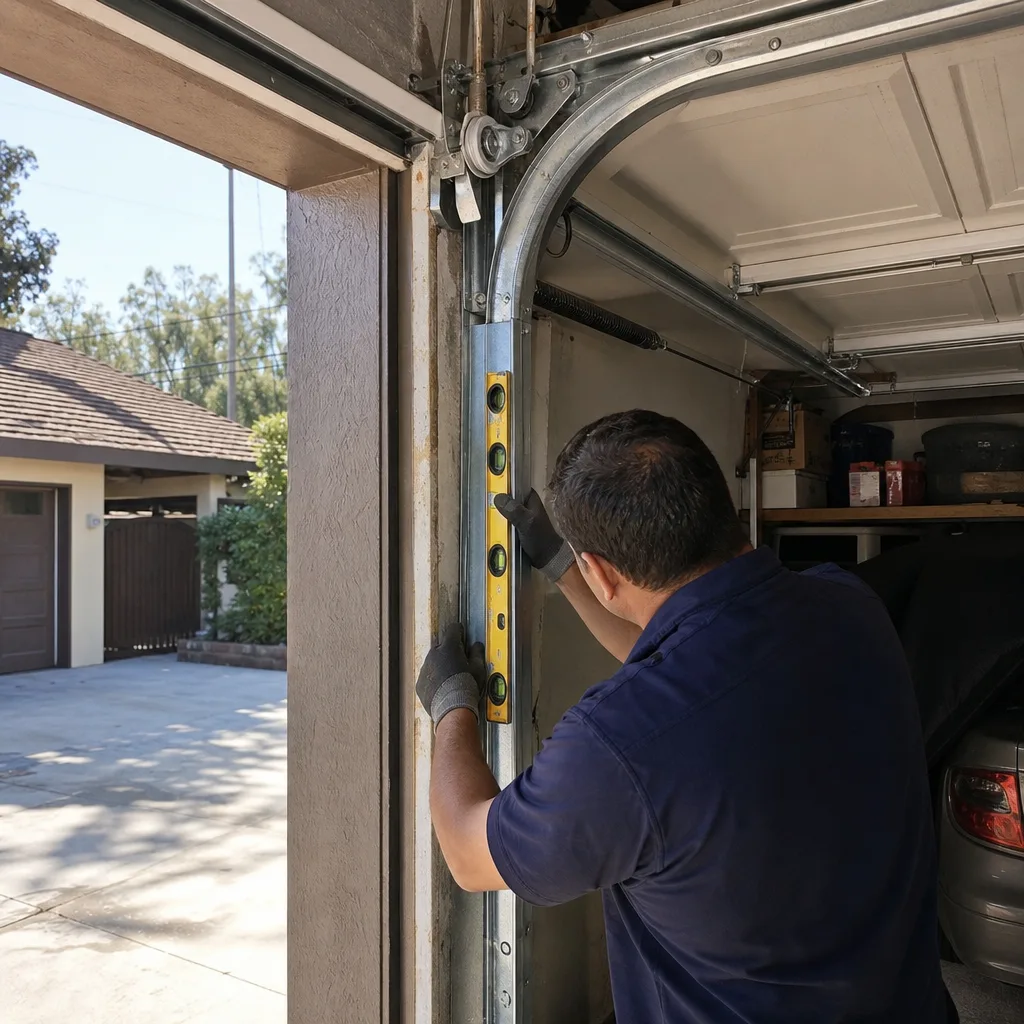
Spring failures and cable failures share one symptom (the door won’t lift or lifts unevenly), but they are different problems with different repair scopes and different cost ranges. Knowing which one you’re looking at tells you whether the repair is a $150 cable replacement or a $350 spring job.
The cables are the steel wires that run vertically along the door’s sides, spooling onto drums at the top corners. They don’t lift the door; they transfer lifting force from the spring to the bottom brackets. When a cable snaps or frays, the door drops on that side, sometimes hard.
Distinguishing symptom one: a broken cable leaves visible evidence. You’ll see a frayed wire end dangling, or a cable lying loose along the track, or a gap in the cable drum’s spool. A failed spring often shows no external damage at all, just a clean break in the coil that’s only visible if you look at the spring itself, specifically the gap between coil segments.
Distinguishing symptom two: a cable failure is usually a secondary failure. When a spring breaks, the door’s weight transfers to the cables, which can snap in response. If you see both a broken cable and a door that won’t lift, assume the spring failed first and the cable followed. Replacing only the cable leaves the root cause in place.
Distinguishing symptom three: a fraying cable makes a specific sound: a metallic whisking or scraping during travel, consistent with each cycle. Spring fatigue sounds like a tick or creak, not a scrape.
Cost ranges in Pasadena: a cable replacement runs $140 to $190 per side. A torsion spring replacement runs $280 to $420. If both are needed because the spring break caused a cable snap, the combined job is $420 to $600 on most doors. This is the honest answer, and it’s the answer we give on the phone before a technician ever sees the door. We don’t do “call for a quote” at the Servo Garage Doors Pasadena home. The price range comes first.
Roller and Track Warning Signs
Rollers are the wheels that carry the door through the track. Pasadena homes built between 2015 and 2025 typically have nylon rollers with sealed ball bearings. Those bearings wear out. When they do, the symptom is not subtle.
The sound: a grinding or rumbling noise during travel, present through the entire cycle, louder at the bottom of the stroke where the track curves. That’s the sound of a bearing running dry or with pitted races, and it’s a friction signature, not a balance signature. It doesn’t change with door position the way spring noise does.
The visual: worn rollers show flat spots on the tire surface or visible wobble when the door moves. If you can see the roller from the inside, watch it as the door cycles. A roller that doesn’t rotate, but slides against the track, has seized. That drag increases the load on the spring and the opener motor, which means a $15 roller can eventually cause a $350 spring failure if ignored.
The track connection: loose track bolts are common on Pasadena homes with wood-framed garage walls, because the wood expands and contracts with our wet winters and dry summers. A track that’s shifted inward produces a scrape at one specific point in travel. If the scrape happens at the same door position every cycle, it’s a track alignment issue, not a roller.
What to do: replace all rollers at once, not just the noisy one. If one bearing has failed, the others on the same door are at the same stage of wear. A full roller replacement on a standard two-car door runs $120 to $180 in Pasadena. It is one of the cheapest repairs that prevents one of the most expensive ones.
Safety note: bottom brackets on some doors are under spring tension, which means removing the bottom roller without proper winding-down carries serious injury risk. This is not a DIY job on torsion-spring doors. Have a trained technician handle it.
Opener Warning Signs: The Click Sequence Test
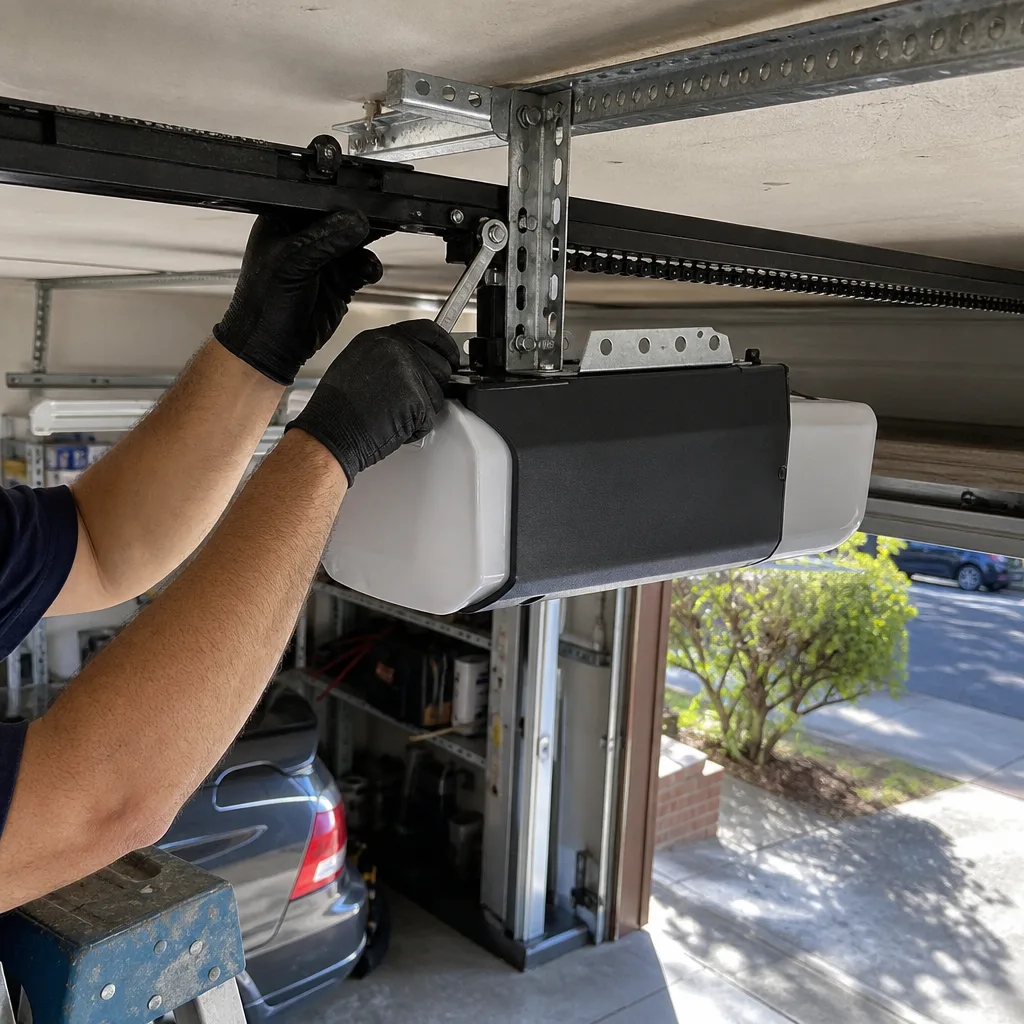
Garage door openers fail silently in obvious ways. The motor doesn’t burn out without warning; the logic board gives up first. And the logic board has a specific failure mode that Pasadena summers accelerate.
The symptom: intermittent non-response. You press the wall button or the remote, and nothing happens. You press it again, and the door opens normally. This is not a remote battery issue, not a wall button issue, and not a motor issue. It’s a logic board thermal fault.
Why Pasadena specifically: our July and August garage temperatures regularly exceed 105 degrees at the ceiling, where the opener motor head sits. Chamberlain and Genie logic boards (the circuit board that interprets button presses and manages safety sensor input) are rated for operation up to 150 degrees internally, but the solder joints on the relay circuits expand and contract with each heat cycle. After enough Pasadena summers, a micro-fracture develops in the relay joint, and the board stops responding intermittently. The first few times, it self-corrects when the garage cools. Eventually, it doesn’t.
The click sequence test: press the wall button and listen to the opener head. You should hear one click (the relay engaging) followed within a half-second by the motor hum. If you hear two clicks with no motor response, that’s the relay engaging and releasing, a logic board failure or a dead capacitor. If you hear one click and a hum but no movement, that’s a gear or carriage problem. If you hear no click at all, that’s a power supply or a dead board. Each variation points to a different repair, and naming it on the phone saves a diagnostic trip.
Chain vs. belt: a chain-drive opener that’s developed slack produces a rattling sound during travel that describes a wave, like a loose chain riding a sprocket. A belt-drive opener with a damaged belt produces a thumping you can feel in the door. Both are normal wear, both are rebuildable in most cases. A new logic board for a late-model LiftMaster runs $140 to $220 installed in Pasadena. A full opener replacement runs $450 to $700 for a belt-drive unit, including installation and removal of the old one. Learn more on our Garage Door Opener Repair & Installation in Pasadena page.
Why Pasadena Climate Accelerates Component Wear
Pasadena’s climate is not kind to garage door hardware. The same conditions that make our rosemary and citrus thrive also stress metal components in ways a coastal San Diego homeowner never sees.
Diurnal temperature swings: Pasadena regularly posts 35-degree spreads between afternoon highs and overnight lows. Torsion springs, which are tempered steel coils, expand and contract with each swing. That thermal cycling contributes to micro-stress that shortens effective spring life by 10 to 20 percent compared to a coastal installation. A spring rated for 10,000 cycles in a moderate climate might deliver 8,500 in Pasadena.
Santa Ana wind dust: our fall winds load the air with fine particulate that coats lubricants and works into roller bearings. The result is accelerated bearing wear and the grinding sound we described earlier. Homes in the foothills, including Hastings Ranch and Upper Hastings Ranch, see this more severely than flatland homes because the wind currents concentrate dust in those corridors.
UV exposure on west-facing doors: a garage door facing west on a street in Bungalow Heaven takes direct afternoon sun. The panels heat up, and the insulation layer inside Clopay and Amarr doors expands and contracts against the steel skins. Over years, this contributes to panel delamination at the bottom edges. You’ll see it as a slight bulge or a soft spot when you press on the panel’s lower corner. It’s cosmetic initially, but it grows.
What this means for you: if you bought your Pasadena home between 2015 and 2025 and the garage door is original, you’re inside the window where original rollers and springs are reaching end of life. That’s not a scare tactic. It’s a calendar observation. A door installed in 2018 with original rollers and springs is now seven years old, which is when the first meaningful wear shows up. Garage Door Repair in Pasadena is about replacing what’s actually failed, not what might fail someday. But the warning signs in this guide are how you know the difference.
How to Photograph a Warning Sign Correctly
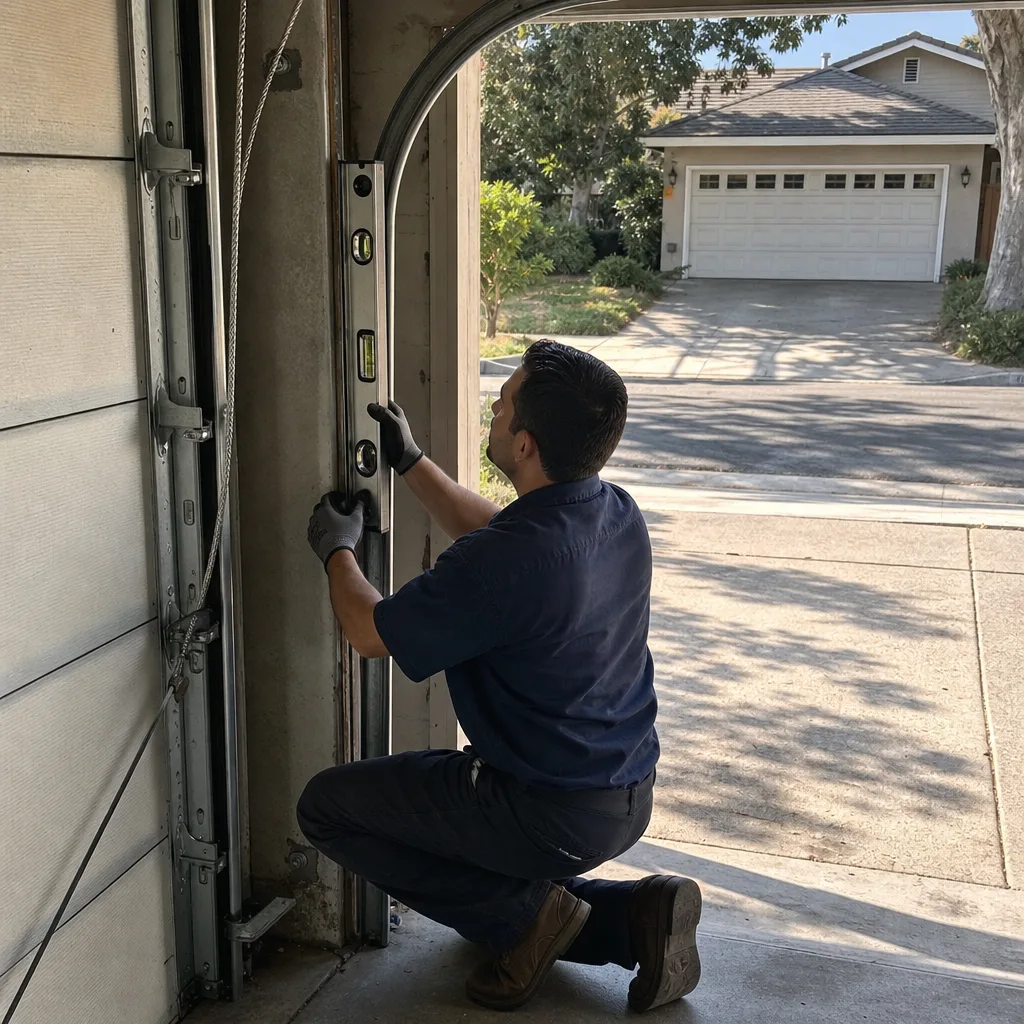
If you’re seeing any of the warning signs in this guide, a photograph can save a diagnostic trip. But a bad photograph is worse than no photograph. Here’s how to shoot one a technician can actually use to confirm a diagnosis remotely.
- Stand inside the garage, facing the door, with the door closed. This establishes the baseline. Shoot the full door from inside, corner to corner, so the technician sees the entire door, both track sides, and the spring assembly in one frame.
- Photograph the spring assembly specifically. The torsion spring is the coiled tube mounted horizontally above the door. Center it in frame. Use your phone’s flash if it’s dark. The technician is looking for a gap between coil segments, a cone that’s rotated out of position, or a spring that’s visibly deformed.
- For an uneven rise complaint, shoot the door from the front at the top of travel. Have someone run the door up while you stand outside, centered on the door. Photograph the door at its highest point. The lean you’re describing needs to be visible in frame, measured against the header line. Include the header trim in the shot for reference.
- For a grinding noise, shoot video instead of photos. Five seconds of travel, phone held steady, camera pointed at the rollers on the affected side. Sound matters more than image here. A technician can identify a seized bearing from the audio signature alone.
- Include a close-up of any visible damage. A frayed cable end, a gap in the spring coil, a roller that’s sitting crooked in the track. Get close enough that the part fills the frame. Your phone’s macro mode will do fine.
- Text the photos to (213) 816-2483. A real person answers 24/7, and photos arrive with a name attached. The technician on duty can look at what you’re seeing and tell you whether it’s urgent or scheduleable, before anyone gets in a truck.
This is not a gimmick. Clause 4 of The Haven Standard exists because our founder photographed a failed part before quoting a replacement in 2015 and realized the customer’s entire posture changed when they saw the evidence. We’ve done it on every job since. You seeing the warning sign and photographing it is the same principle, just moved earlier in the process.
What Repair Costs Look Like in Pasadena
Here’s what you should expect to pay, in dollars, for the most common warning-sign repair jobs in Pasadena. These are flat, written prices, not ranges we adjust after we arrive. We quote the line item before any work starts, per Clause 1 of The Haven Standard, and the price we quote is the price on the invoice.
- Roller replacement (all rollers, standard two-car door): $120 to $180. This includes labor and hardware.
- Single torsion spring replacement: $280 to $420. Price varies by wire gauge (0.218, 0.225, 0.234, 0.250) and door weight. A heavier Clopay or Amarr door takes a heavier spring.
- Cable replacement (per side): $140 to $190.
- Track alignment (loose bolts or shifted track): $90 to $150, frequently included with roller replacement.
- Logic board replacement: $140 to $220 including labor, depending on opener brand and model year.
- Full opener replacement (belt-drive, installed): $450 to $700 for a Chamberlain or Genie unit, including removal and haul-away.
- Sensor realignment: $80 to $120. This one is simple, but a door that reverses before closing is a safety feature doing its job, not a fault to be bypassed.
Pasadena pricing sits slightly above the national average because our service area is dense, our homes skew older, and we quote the price before we send a truck, which means we never recover on surprise change orders. We’d rather tell you the number on the phone than show up with a different one.
If you have a written estimate from another company, bring it. We offer a free second opinion on any competing written estimate. No coupon, no code, no fine print. You can also see our full scope of work on the Garage Door Installation in Pasadena page, which covers new door pricing the same way: written, flat, and specific.
Common Mistakes to Avoid
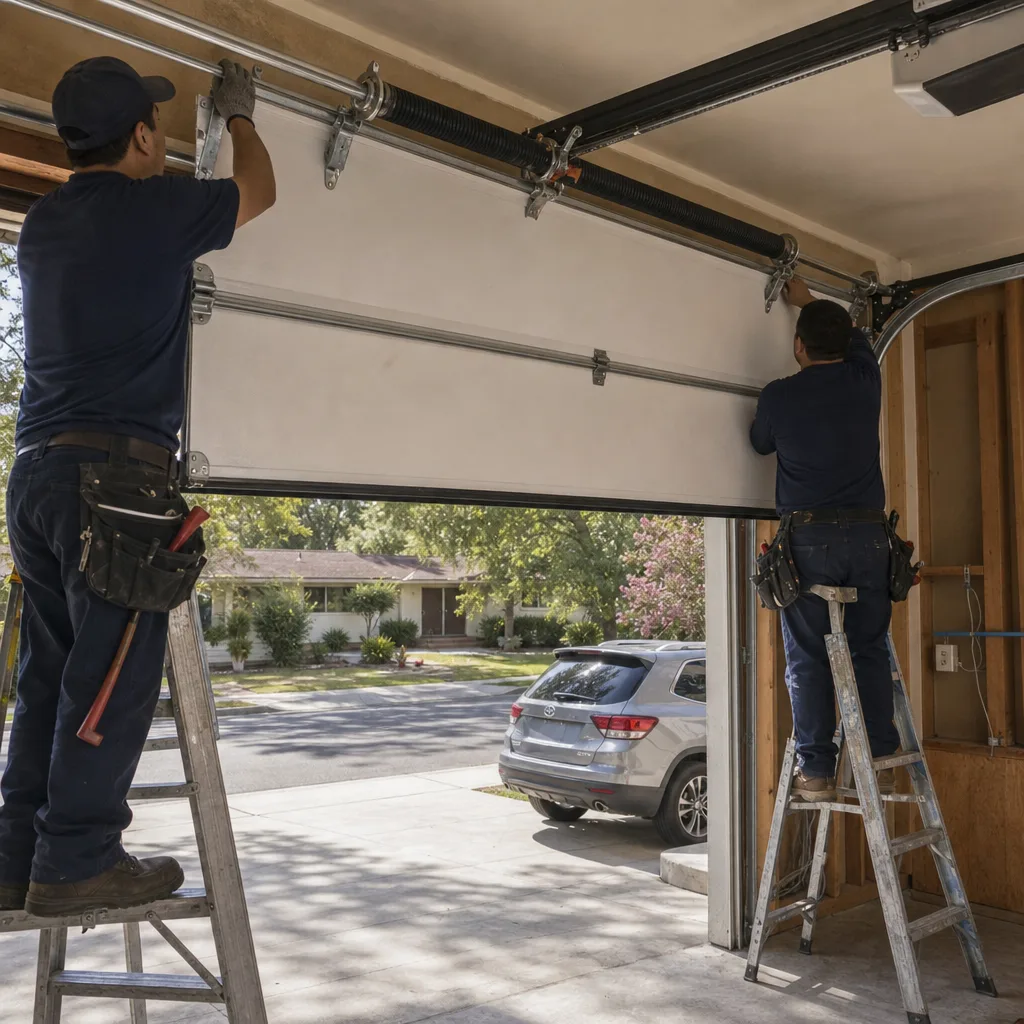
- Ignoring the lean. An uneven rise is the single most reliable predictor of a spring failure. Waiting until the spring breaks turns a $350 scheduled repair into a weekend emergency call.
- Lubricating without cleaning first. Spraying lubricant over dust and grit turns the track into a grinding paste. Wipe the track clean, then lubricate. Or have a technician do it properly during a roller replacement.
- Replacing one roller. A seized bearing is never alone. If one roller on a 2018 door has failed, the other nine are at the same stage. Replace the set.
- Bypassing the safety sensors. A door that reverses before closing is the photo-eye system working as designed. Disabling the sensors to force the door closed is a code violation and a safety hazard, and it will fail a home inspection when you sell.
- Using the emergency release while the door is open. If the door is stuck in the raised position, pulling the red release cord drops the door, which can be violent on a broken-spring door. Call first. We’ll walk you through it over the phone.
- Assuming the opener is the problem when it isn’t. A door that struggles to open is usually a balance problem, not a motor problem. The opener is working harder because the spring isn’t doing its share. Replacing the opener without fixing the spring wastes $500 and leaves the root cause in place.
When to Call a Professional
If you see the lean, hear the grind, or get intermittent non-response from your opener, you have a documented warning sign and a few weeks to act before it becomes an emergency-see How to Hire a Garage Door Contractor in Pasadena: A Step-by-Step Guide to prepare. If the door is stuck open, stuck closed, or a spring has already broken, don’t run the opener: the motor will strip its gear on an unbalanced door. Call (213) 816-2483. A real person answers, 24 hours a day, including holidays, and you’ll get a named technician with an on-the-way text, not a callback window.
Servo Garage Doors Pasadena offers free estimates in Pasadena, written upfront, photographically documented, and backed by the 365-Day Done Right Promise. Every job ends with a photo record of what we found and what we did. That’s the standard we’ve worked to since 2015, and it’s the standard your door gets.
Frequently Asked Questions
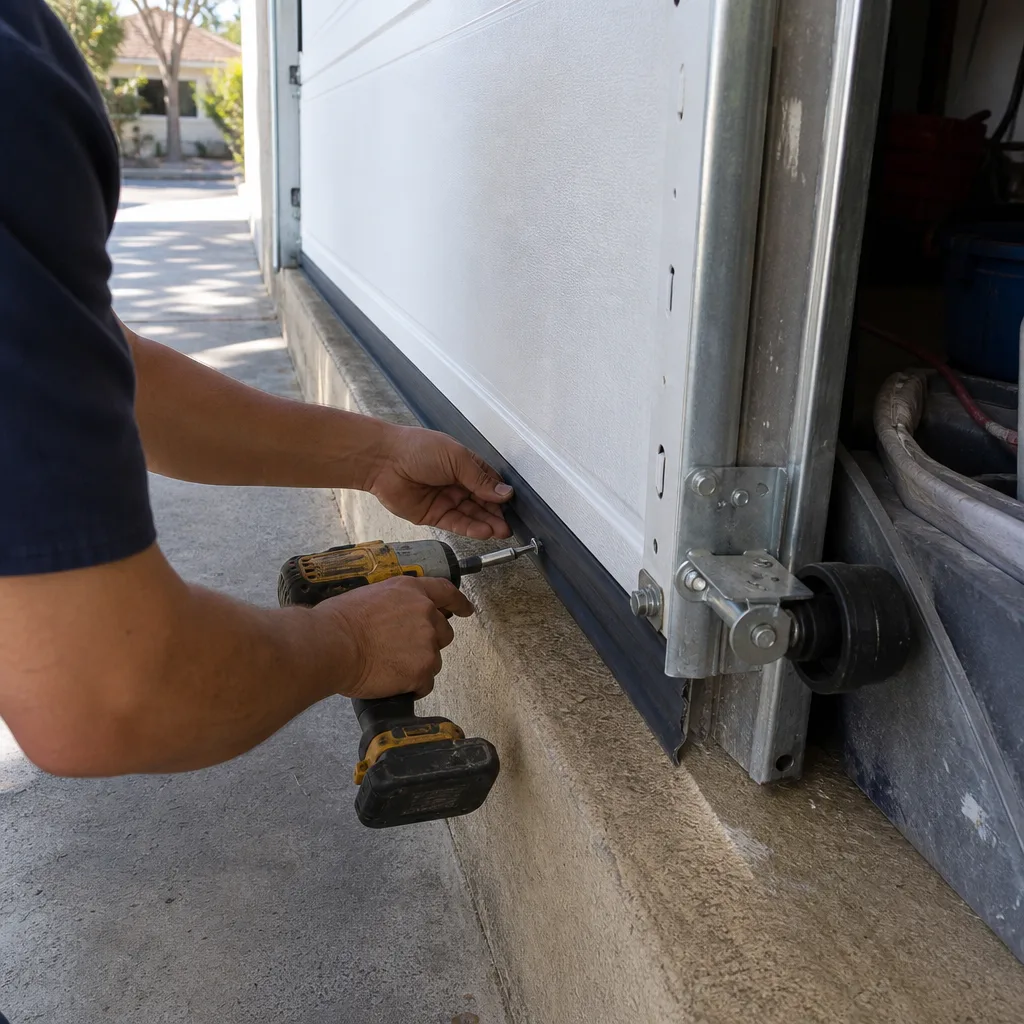
The door will rise unevenly, with one side reaching the top of travel before the other, creating a visible lean. You may also hear a faint ticking or creaking from the spring during movement. In Pasadena, this precursor window typically lasts 30 to 90 days before the spring fractures. When you see the lean, schedule the replacement: $280 to $420 for a single torsion spring, quoted and locked before work starts. Call (213) 816-2483.
Intermittent mid-travel stops usually point to a failing logic board on the opener or a force limit setting that’s been knocked out of adjustment. In Pasadena summers, logic board thermal faults are the most common cause. If the door stops at the same spot every time, it’s more likely a track obstruction or a damaged roller. Either way, the click sequence test described above will tell you a lot before you call. Call (213) 816-2483 for a diagnosis by phone.
Uneven rise is the signature symptom of unbalanced torsion springs. One spring has lost torque while its partner hasn’t, so the door rises faster on one side. It is not a track problem unless accompanied by scraping. In Pasadena, where thermal cycling shortens spring life by 10 to 20 percent, this warning sign is common on doors that are 5 to 8 years old with original springs. Repair range is $280 to $420. Call (213) 816-2483 for a written quote.
If the click sequence test produces no click, or a double-click with no engagement, the logic board has failed. On openers 8 years old or newer, a board replacement at $140 to $220 makes sense. On openers older than that, or units that have also lost gear or carriage functionality, a full replacement at $450 to $700 is the honest recommendation. We’ll give you both numbers before sending a technician. Call (213) 816-2483.
Most repair jobs in Pasadena fall between $120 and $420: $120 to $180 for roller replacement, $280 to $420 for a torsion spring, $140 to $190 for a cable, $140 to $220 for a logic board. Every price we quote is flat and written before work begins, per Clause 1 of The Haven Standard. You’ll know the number before we touch the door. Call (213) 816-2483 for an exact quote, free.
For a roller grind or a track scrape, yes you can wait if you keep cycles low. For an uneven rise, you’re in the 30-to-90-day window and should schedule the replacement now, because a broken spring leaves the door inoperable and can damage cables on the way down. For intermittent opener non-response, waiting means the failure will eventually become permanent, and it will happen on a day you need the door. Call (213) 816-2483 to schedule before the window closes.
The Bottom Line
Garage doors don’t fail without warning. A broken spring telegraphs its failure with a visible lean for 30 to 90 days beforehand. Grinding rollers, intermittent opener non-response, and door reversal before closing are all named symptoms with specific causes and predictable cost ranges. Pasadena’s climate makes these warnings appear earlier and more often than they would in a coastal market. Photograph what you see, call (213) 816-2483, and get a written price before any work starts. That’s how it’s been done at Servo Garage Doors Pasadena since 2015, and that’s the paper trail your garage door deserves.
Written by Marcus Deller, Owner at Servo Garage Doors Pasadena, serving Pasadena since 2015.