
Last updated September 20, 2026
Full 25-point door and opener safety check with every visit - springs, cables, rollers, tracks, and your LiftMaster or Chamberlain opener included
You get a price before we start. It does not change when the truck arrives.
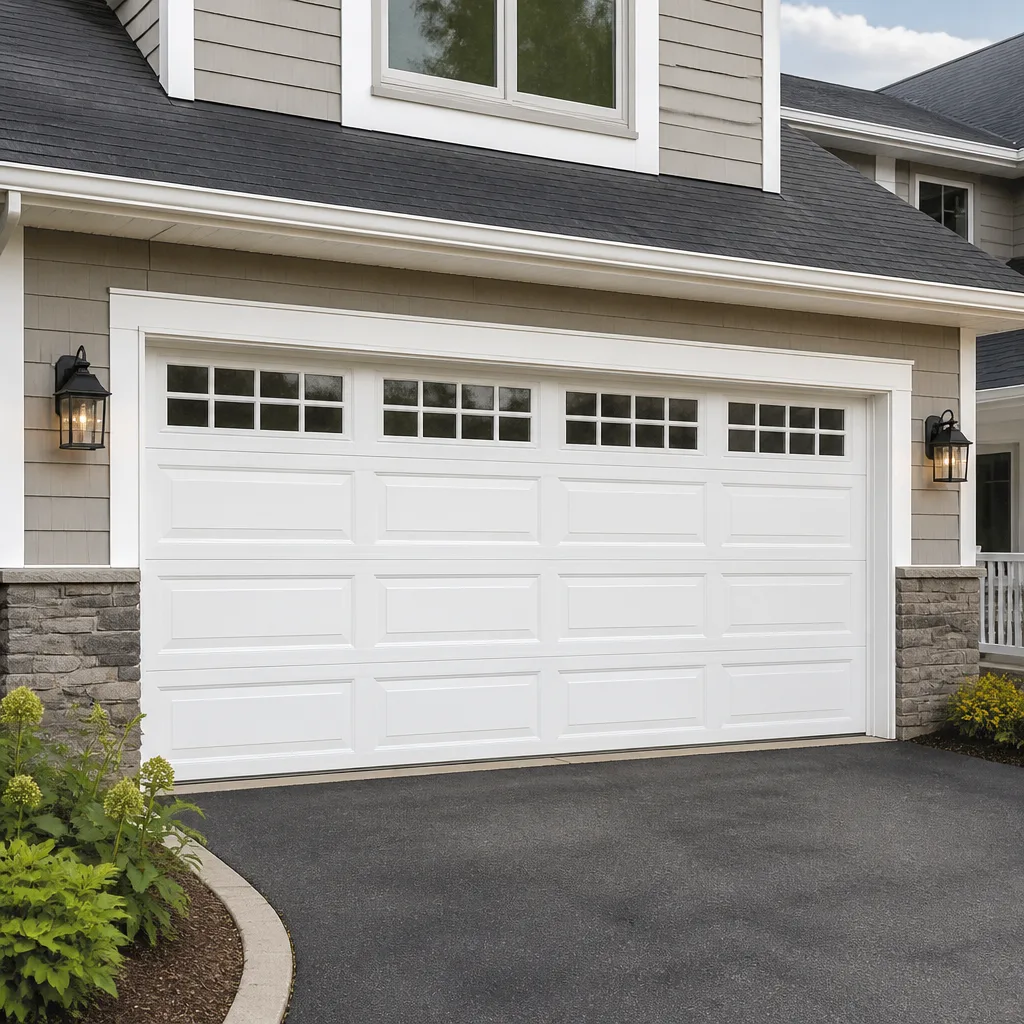
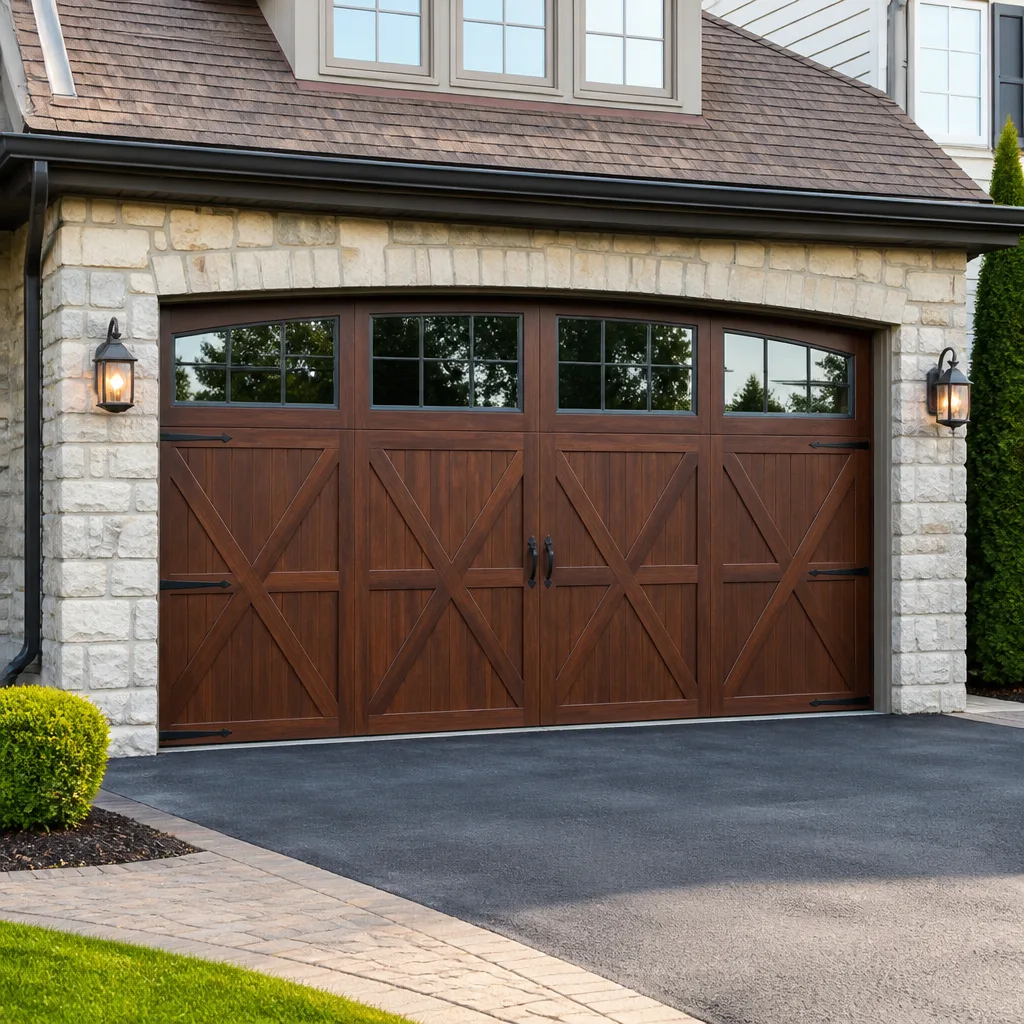
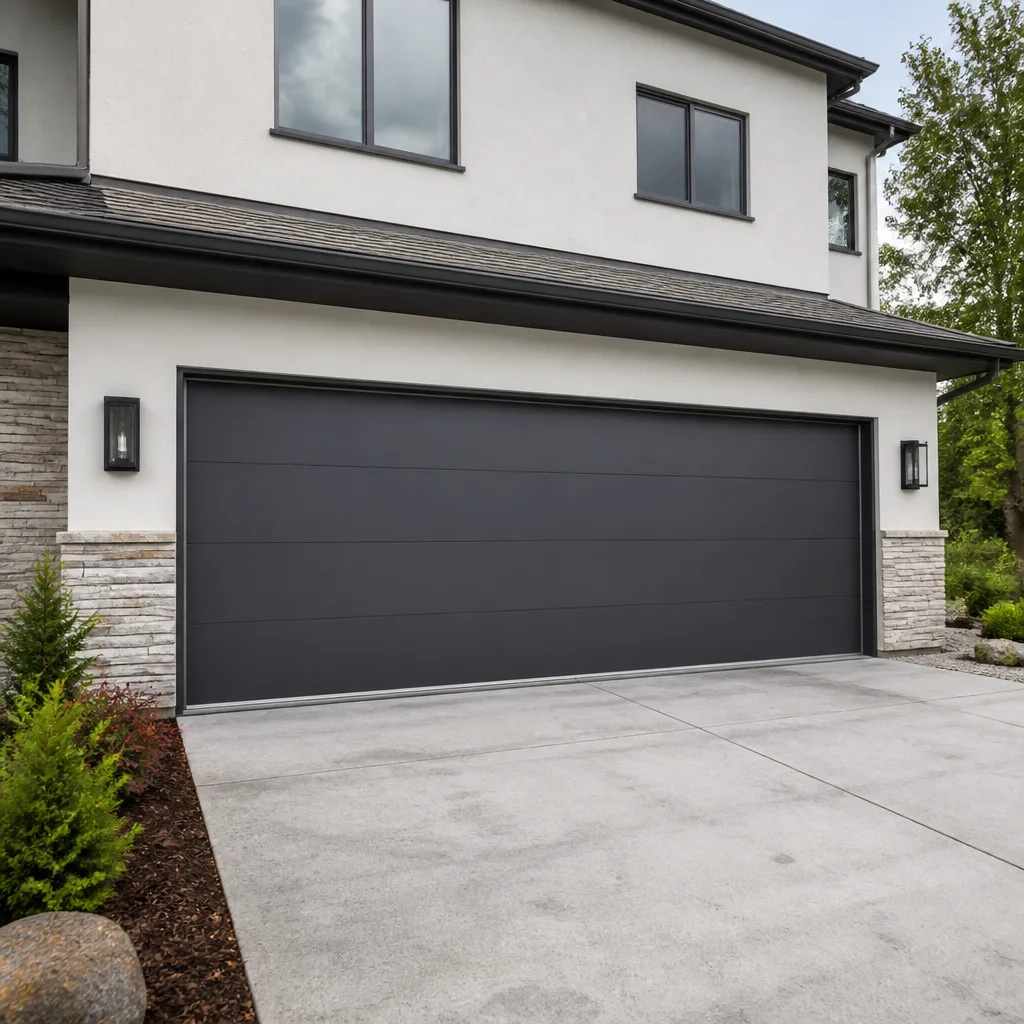
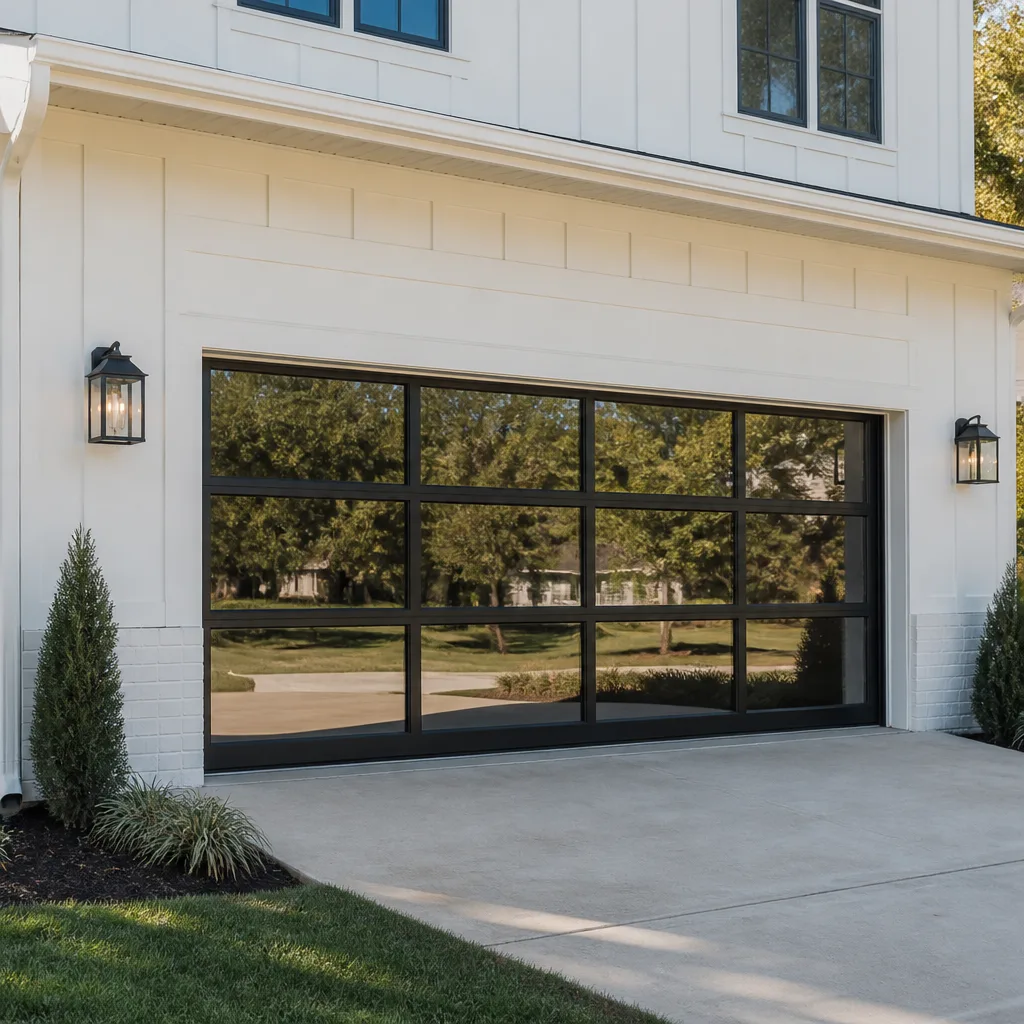
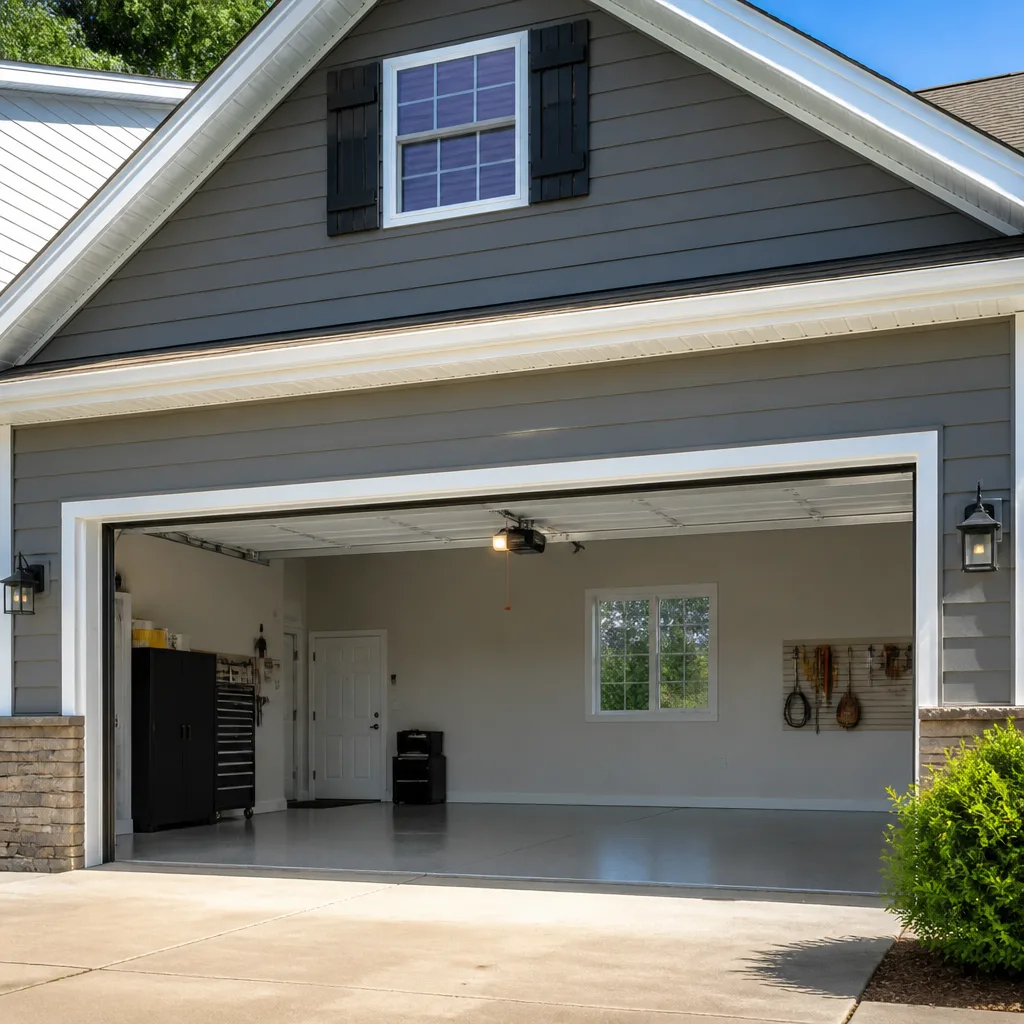
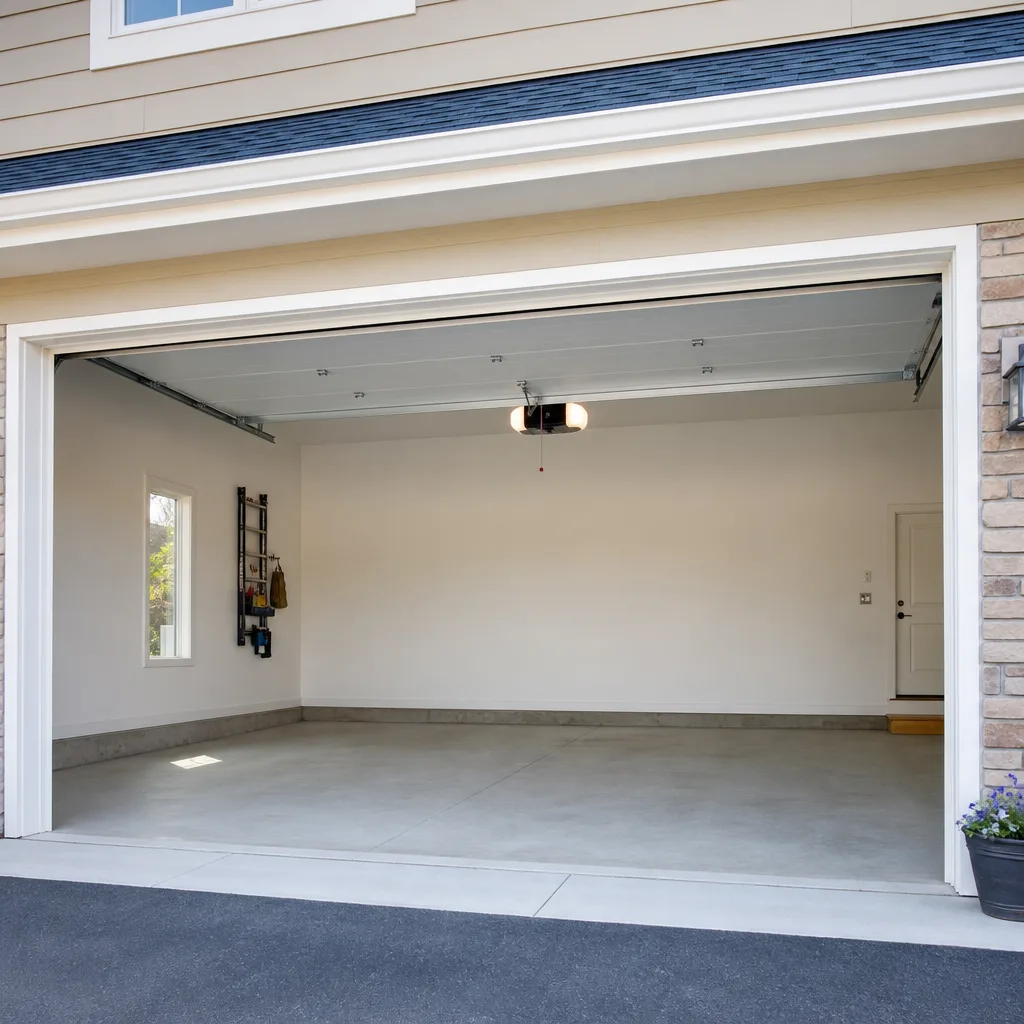
 Before
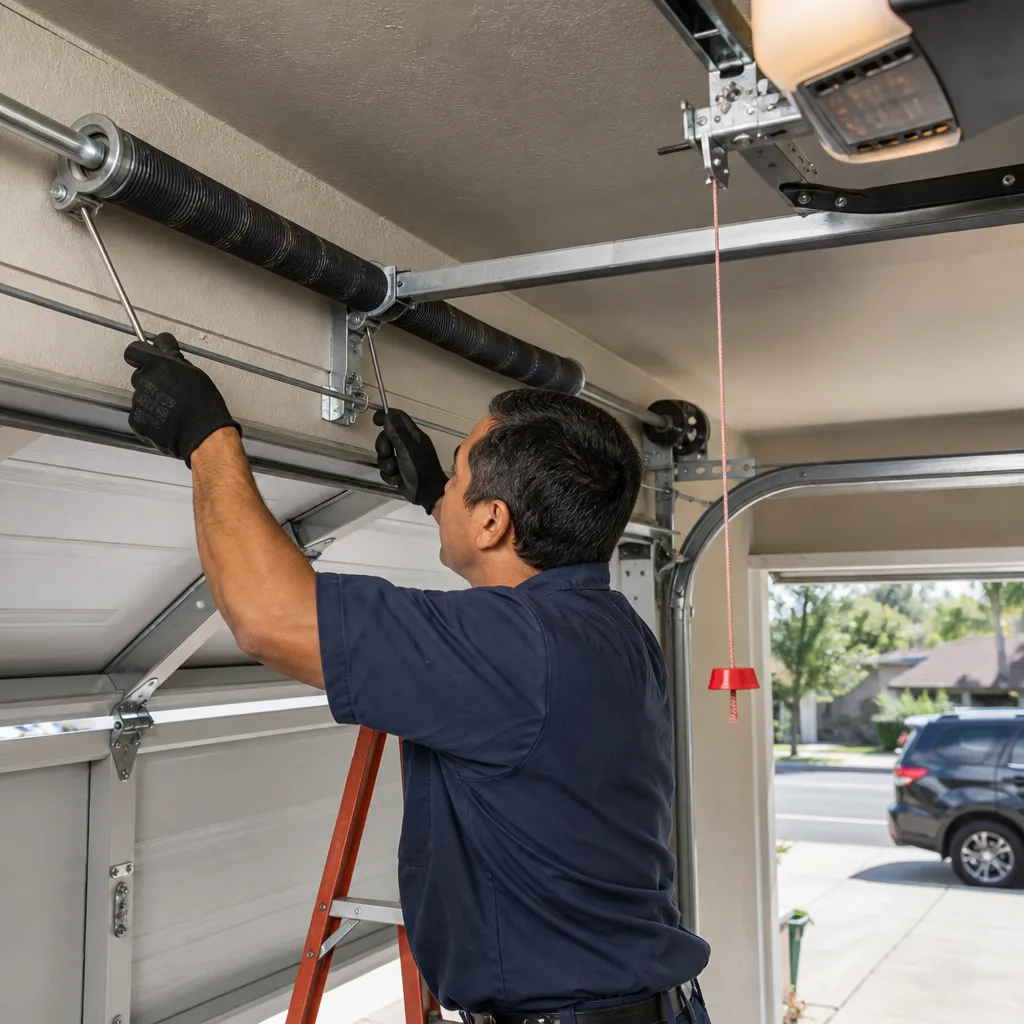 After
After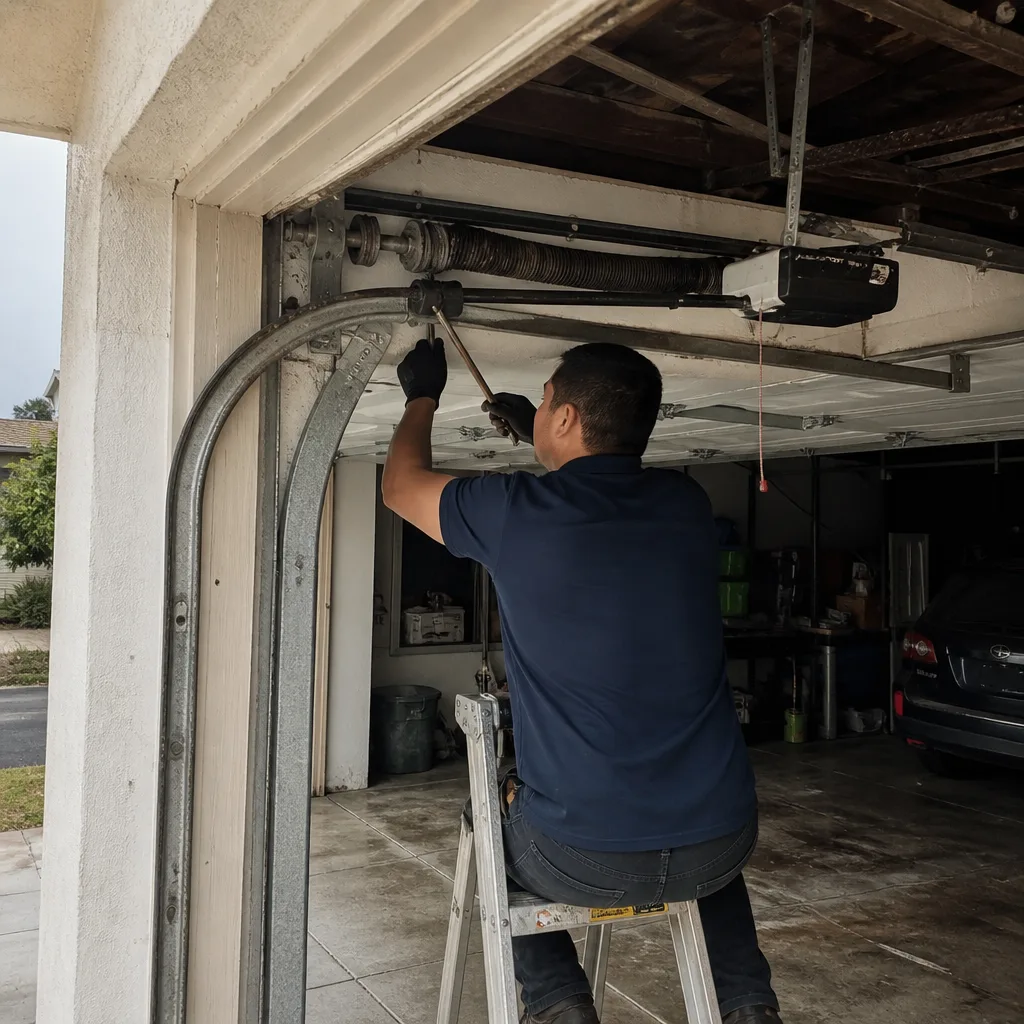 Before
 After
After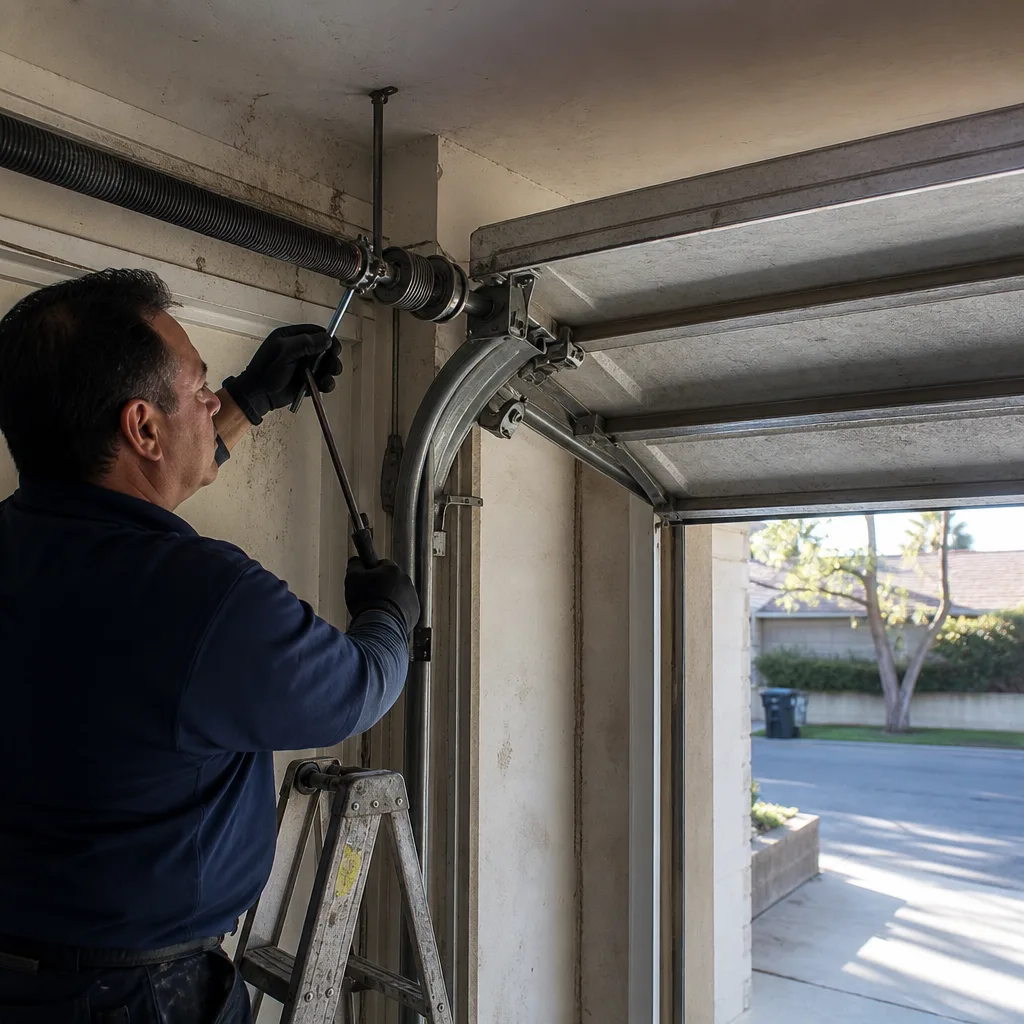 Before
 After
AfterThe Complete Guide to Garage Door in Pasadena
Most Pasadena homeowners call a garage door company describing a symptom: “it won’t open,” or “it’s making a grinding noise.” Then they hand the diagnosis entirely to the person being paid to find a problem. That hand-off is where overselling starts. This guide exists so you never have to make that hand-off blind. We’ll walk through the three mechanical systems inside every garage door in Pasadena, how each fails in its own distinct way, what those failures cost in this market, and the decision tree for each one. By the time you pick up the phone, you’ll know which component is actually at issue and what a fair written quote should include.
Quick Answer
A garage door is not one machine - it’s three independent mechanical systems: the springs that lift the weight, the operator that moves the door, and the door assembly itself (panels, rollers, tracks, weatherstripping). Each system fails differently, costs differently to repair, and in Pasadena’s summer heat, the springs are almost always the first thing to go. Knowing which system is failing before you call means you can compare written quotes line by line instead of trusting a verbal diagnosis.
Table of Contents
- The Three Systems Inside Your Garage Door
- How Pasadena’s Climate Wears Out Garage Doors
- How to Read Your Garage Door Label Before Calling Anyone
- What a Written, Photo-Documented Quote Actually Looks Like
- Repair, Replace, or Rebuild: The Decision Matrix
- Common Mistakes to Avoid
- When to Call a Professional
- Frequently Asked Questions
BeforeAfterThe Three Systems Inside Your Garage Door
A garage door looks like a single object, but it’s actually three separate mechanisms bolted together. When a component fails, the failure mode tells you which system is involved. Here’s what each one does and how each one breaks.
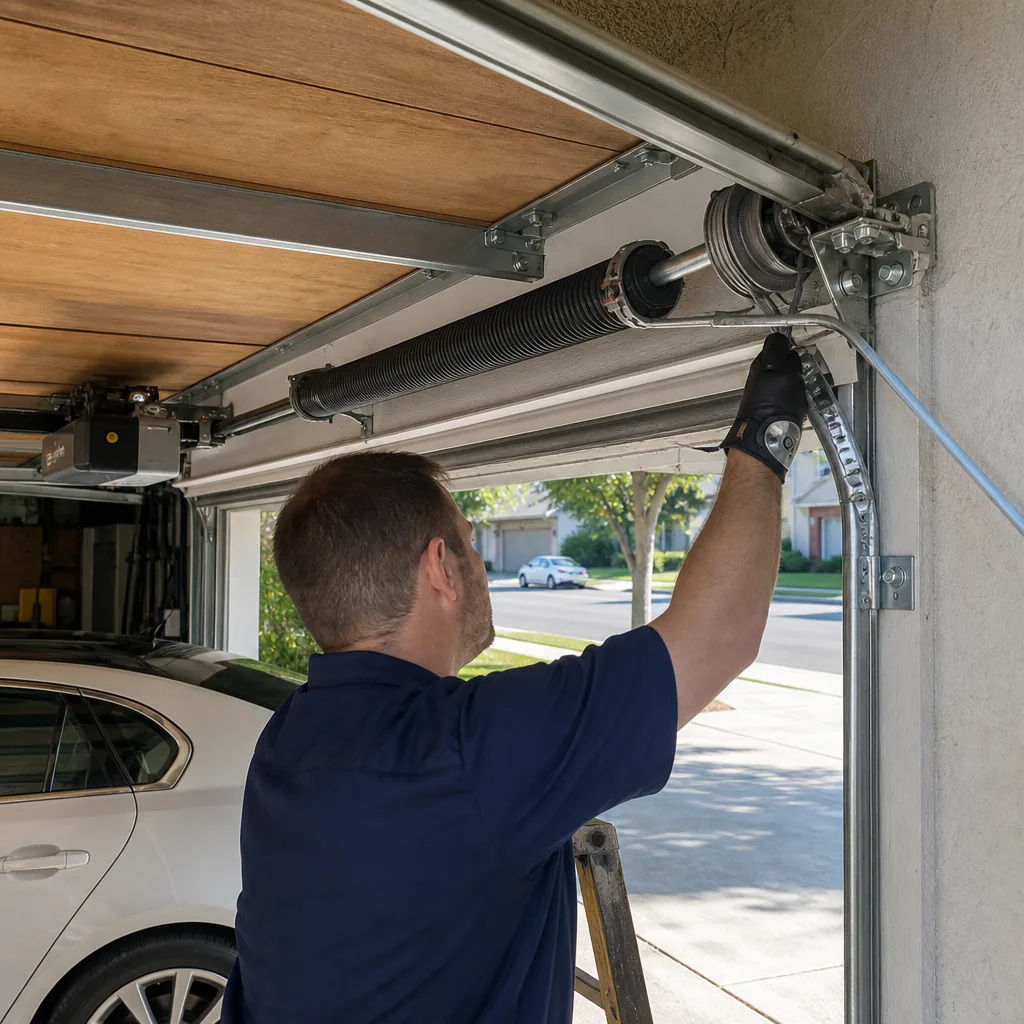
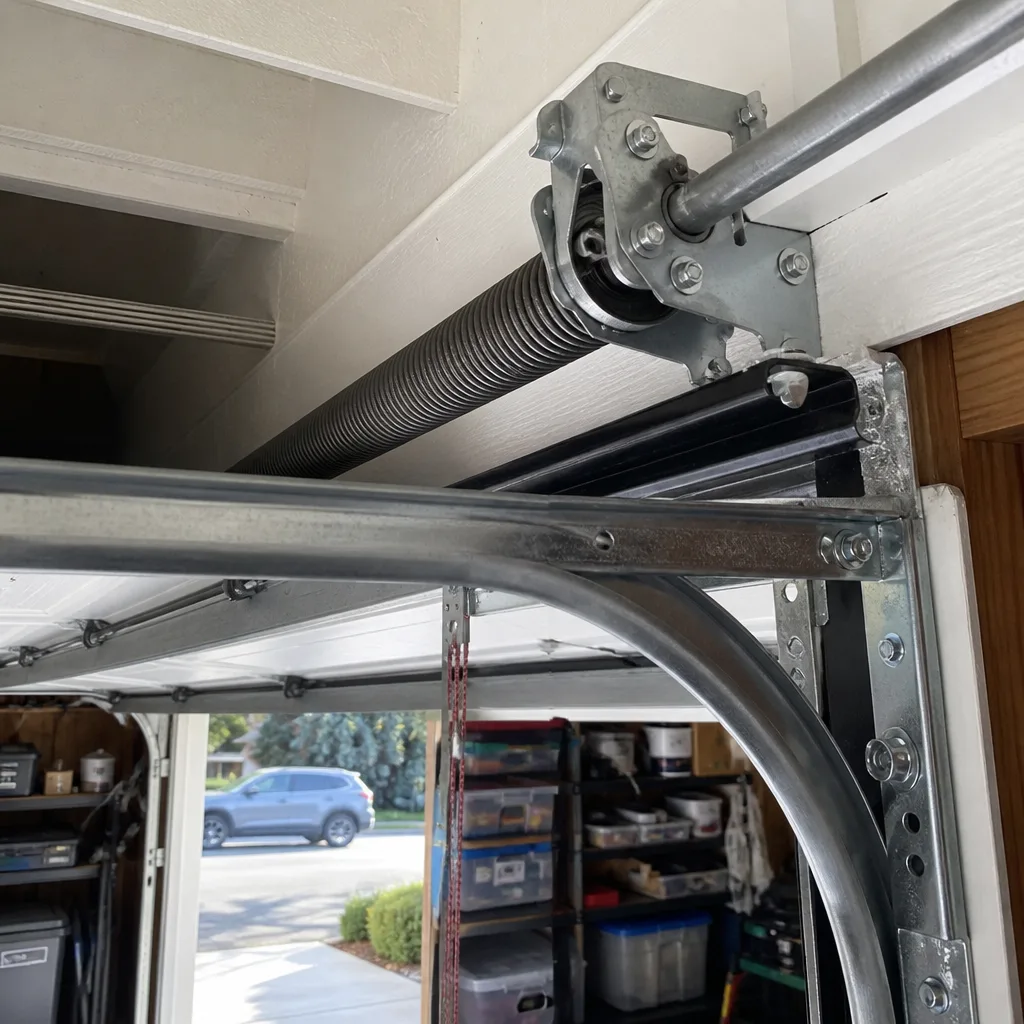
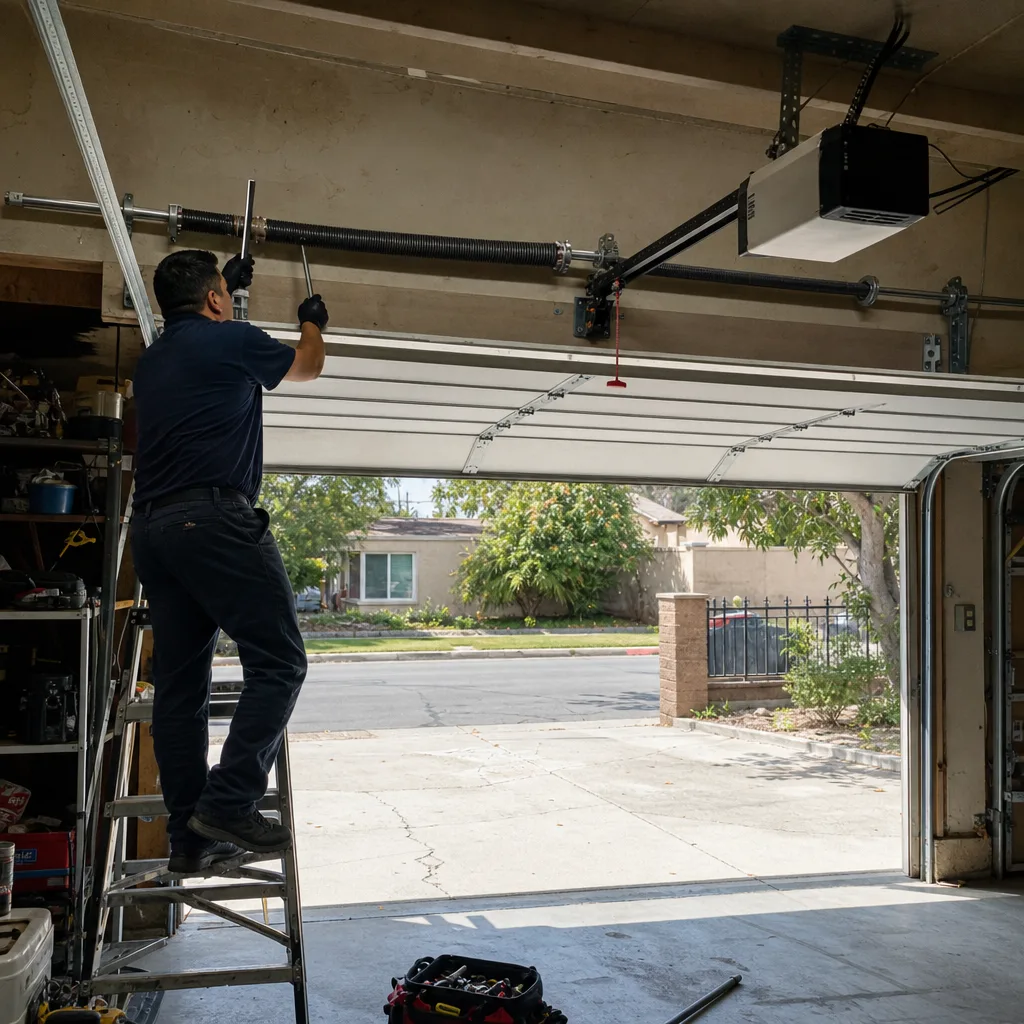
System 1: Torsion Springs and Cable Drums
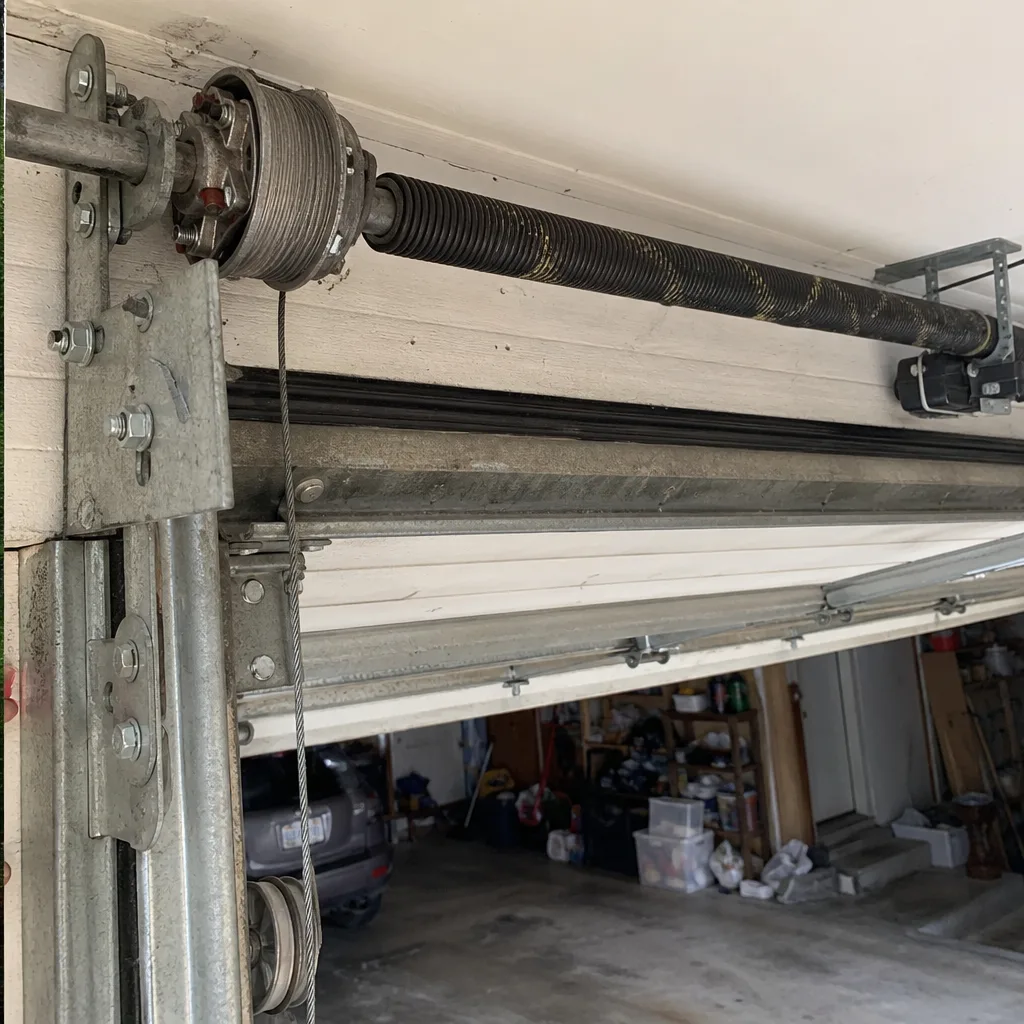
The torsion spring is the steel coil mounted horizontally above the door opening. It stores the mechanical energy required to lift a 150 to 250 pound door. When you press the opener button, the spring unwinds and does most of the heavy lifting; the opener motor just guides the door along the track. The cable drum sits at each end of the spring shaft and winds the steel lifting cables that run down to the bottom corners of the door.
How it fails: torsion springs are rated for a fixed number of cycles (one open and one close equals one cycle). Most stock springs are 10,000-cycle parts, which translates to roughly 7 to 9 years of normal use. They fail with a loud bang that homeowners often mistake for a gunshot or a car backfiring. The break is usually clean, visible at the coil. A broken spring means the door will not open, or will open only a few inches before stopping. This is a high-tension component. A torsion spring under load stores enough energy to cause serious injury if mishandled. Do not attempt to replace one without training and the correct winding bars. This is the repair we most often see as an emergency call in Pasadena, because a broken spring renders the door unusable and often blocks a car inside the garage.
System 2: The Operator (Opener and Rail)
The operator is the motor unit mounted on the garage ceiling, connected to the door by a rail and a trolley carriage. In Pasadena homes built since the mid-1990s, the operator is typically a Chamberlain or LiftMaster belt-drive or chain-drive unit. It contains a logic board that processes signal from the wall button and remote, a limit switch that tells the motor when the door has reached open or closed position, and a safety sensor system at the base of the door tracks.
How it fails: operator problems are electrical, not mechanical. A door that opens partway, reverses, or does not respond at all often points to a failed logic board, a worn trolley carriage gear, or misaligned safety sensors. The tell-tale sign is that the opener motor runs but the door doesn’t move, or the lights on the unit flash in a diagnostic pattern. These failures are slower to develop than spring breaks. They announce themselves with intermittent operation over weeks or months. We’ve replaced Genie operators in Pasadena that were 15 years old and still running, and Chamberlain units that failed at year six because a power surge took out the logic board. The operator does not lift the door’s weight on its own; it relies on the springs. So an operator that labors or groans is often a spring problem, not a motor problem.
System 3: The Door Assembly (Panels, Rollers, Tracks, Weatherstripping)
The door assembly itself is the segmented panels, the steel or nylon rollers that ride in the vertical and horizontal tracks, and the weatherstripping that seals the top, bottom, and sides. Amarr and Clopay are the dominant door brands we see in Pasadena, both offering steel and wood-composite lines with insulation values from R-6 to R-18.
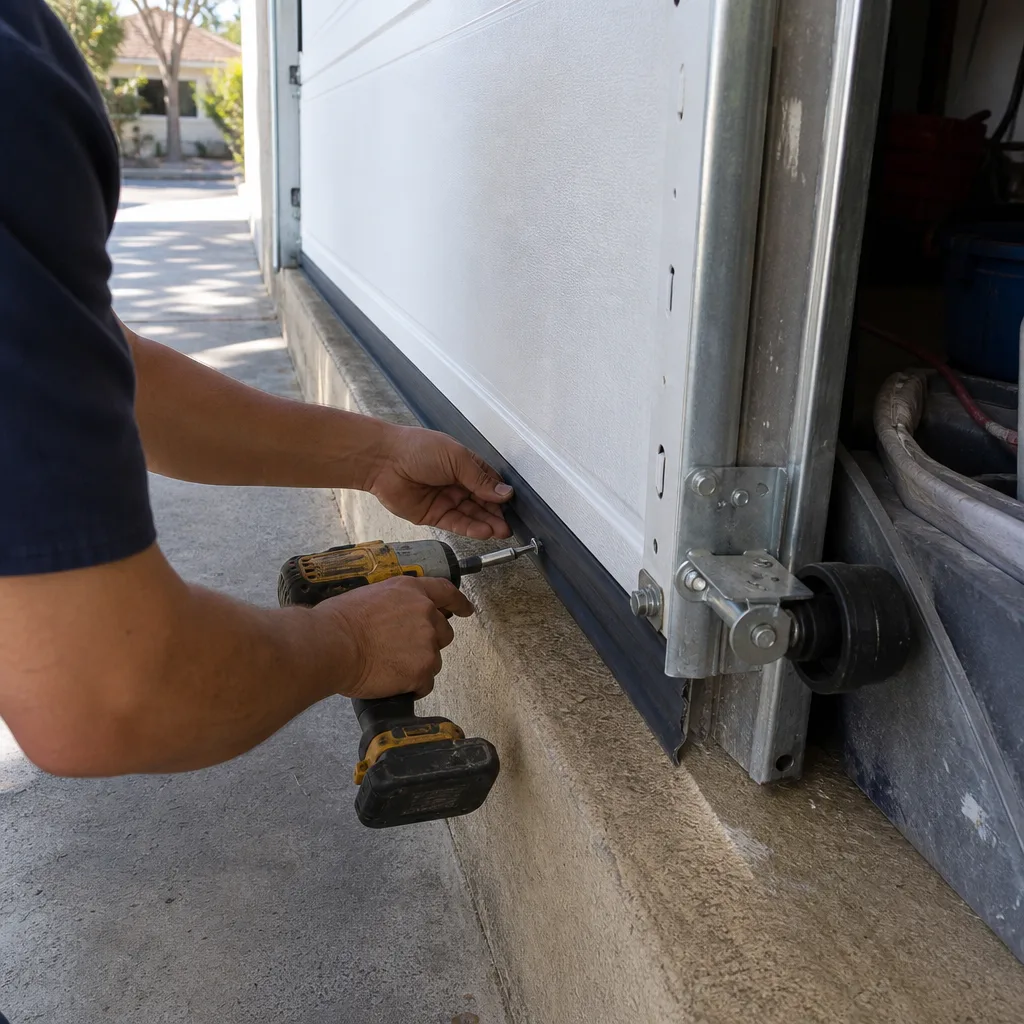
How it fails: panels dent, rust, or delaminate; rollers wear down and cause grinding or squealing; tracks bend out of alignment from impact or foundation settling. Weatherstripping is the fastest-wearing part: in Pasadena’s dry heat, bottom seals crack within 3 to 4 years and top seals pull away from the header. A door that goes off track is almost always a roller or cable issue, not a spring issue. A door that leaks light around the edges is a seal problem. A door that’s loud at specific points along the track usually has a flat-spotted or worn roller.
Garage door repair in Pasadena almost always lands in one of these three systems, and a competent diagnosis starts by identifying which one is making the noise or refusing to move.
How Pasadena’s Climate Wears Out Garage Doors
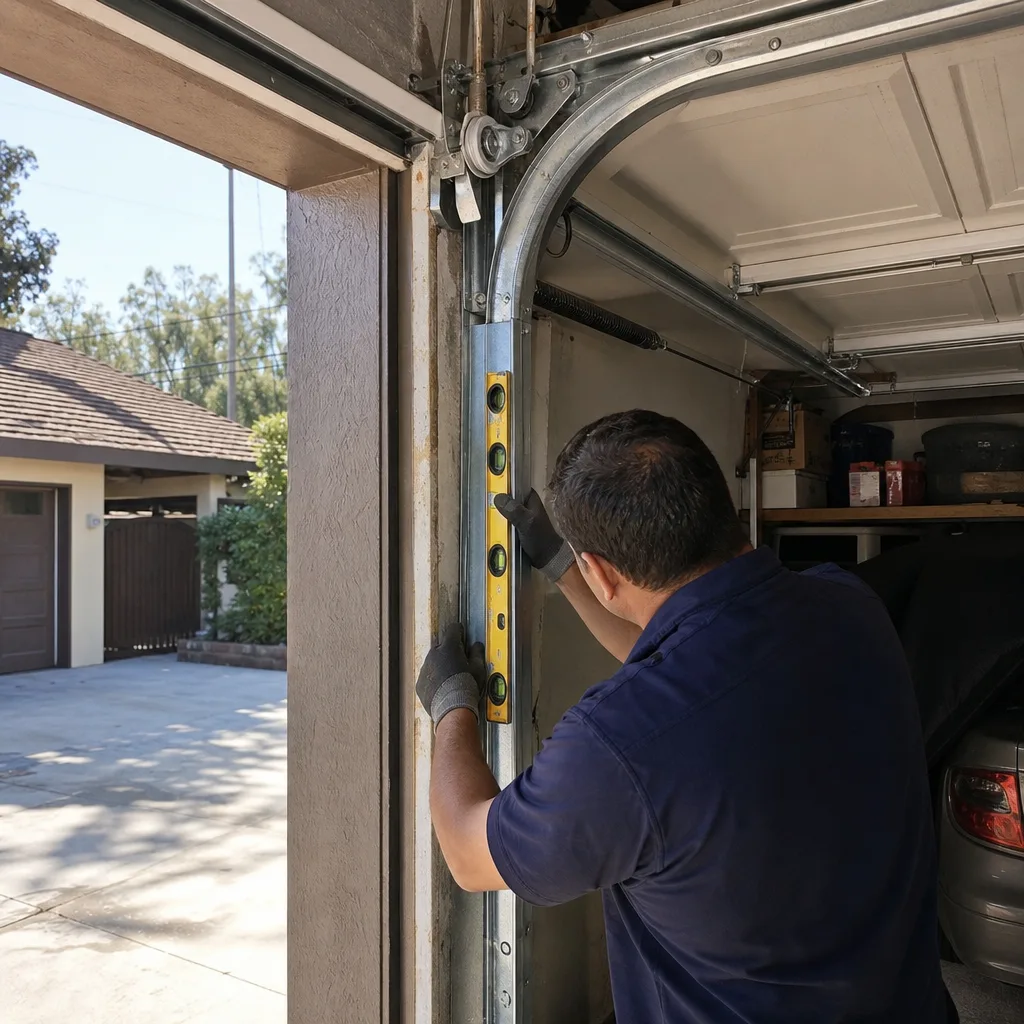
Pasadena sits inland, far enough from the ocean that summer temperatures regularly exceed 95°F and occasionally touch 105°F. That heat is a meaningful mechanical variable. It affects three parts of the door system in measurable ways.
Spring metal fatigue. Torsion springs are steel, and steel expands and contracts with temperature. In coastal California, a spring might experience a daily temperature swing of 15 to 20 degrees. In Pasadena during August, that swing can be 30 to 40 degrees between a 60°F dawn and a 100°F afternoon. The repeated thermal cycling accelerates micro-cracking in the spring wire. In our experience across Pasadena service calls, springs on west-facing garages that get afternoon sun tend to fail 1 to 2 years earlier than identical springs on shaded garages. We document this on every visit: the photo record shows the break, the wire diameter, and the mounting position.
Bearing and lubricant breakdown. High heat thins the grease in roller bearings and in the operator rail. Thinned lubricant runs off, leaving metal-on-metal contact. The result is a dry, grinding noise that homeowners in Pasadena often notice first in July and August. Re-lubricating the rollers and rail with a white lithium or silicone-based lubricant is a simple maintenance step, but replacing sealed rollers that have already run dry is a repair job.
Weatherstripping hardening. Pasadena’s UV index and dry air bake the rubber and vinyl seals. Bottom seals on south-facing and west-facing doors lose flexibility and crack along the fold where the seal meets the floor. When that happens, dust, leaves, and small insects get under the door. In the foothill neighborhoods north of the 210, we also see sugar ants using dried-out door gaps as an entry route in the late summer.
None of this means a Pasadena garage door needs different parts than a door in Long Beach. It means the service life of those parts is shorter here. The decision math is different when a spring rated for 10,000 cycles realistically lasts 6 to 7 years in this climate instead of 9.
How to Read Your Garage Door Label Before Calling Anyone
Every residential garage door has a manufacturer’s label, usually located on the interior side of the top panel or on the side jamb near the bottom. This label contains three pieces of information that let you compare quotes intelligently, without relying on a technician’s verbal read. Before you call any garage door company in Pasadena, take a phone photo of this label and keep it handy.
Here’s how to parse what it tells you:
- Door weight. The label specifies the door’s weight, typically between 125 and 250 pounds for a single-car door and up to 500 pounds for a heavy wood double door. The torsion spring you need is sized to this exact weight. A technician who quotes a spring replacement without knowing the door weight is guessing. A competent one reads the label or weighs the door.
- Spring wire diameter and wind count. The label sometimes notes the original spring dimensions, such as “0.225 wire, 28 winds.” If not on the label, the spring itself is stamped. This information determines the replacement spring’s lift capacity. Wrong spring dimensions mean the door either won’t open all the way or will open too fast.
- Operator horsepower requirement. The operator’s model badge, usually stamped on the motor unit or printed on the instruction manual, specifies the motor’s horsepower (typically 1/2 HP to 1-1/4 HP). A heavy Amarr or Clopay wood door requires a more powerful opener than a lightweight steel panel door. If you’re replacing the door and keeping the opener, this spec tells you whether the existing operator can handle the new door’s weight.
When we send a technician to a Pasadena home, the first photo in the visit record is the door label or the spring stamp. That photo anchors the written quote: it shows what was measured, what was found, and what the replacement part will be. It’s also the reason a free second opinion is practical at all. If another company’s estimate is based on a verbal visual inspection and ours is based on the physical spring spec, the paperwork makes the difference.
What a Written, Photo-Documented Quote Actually Looks Like
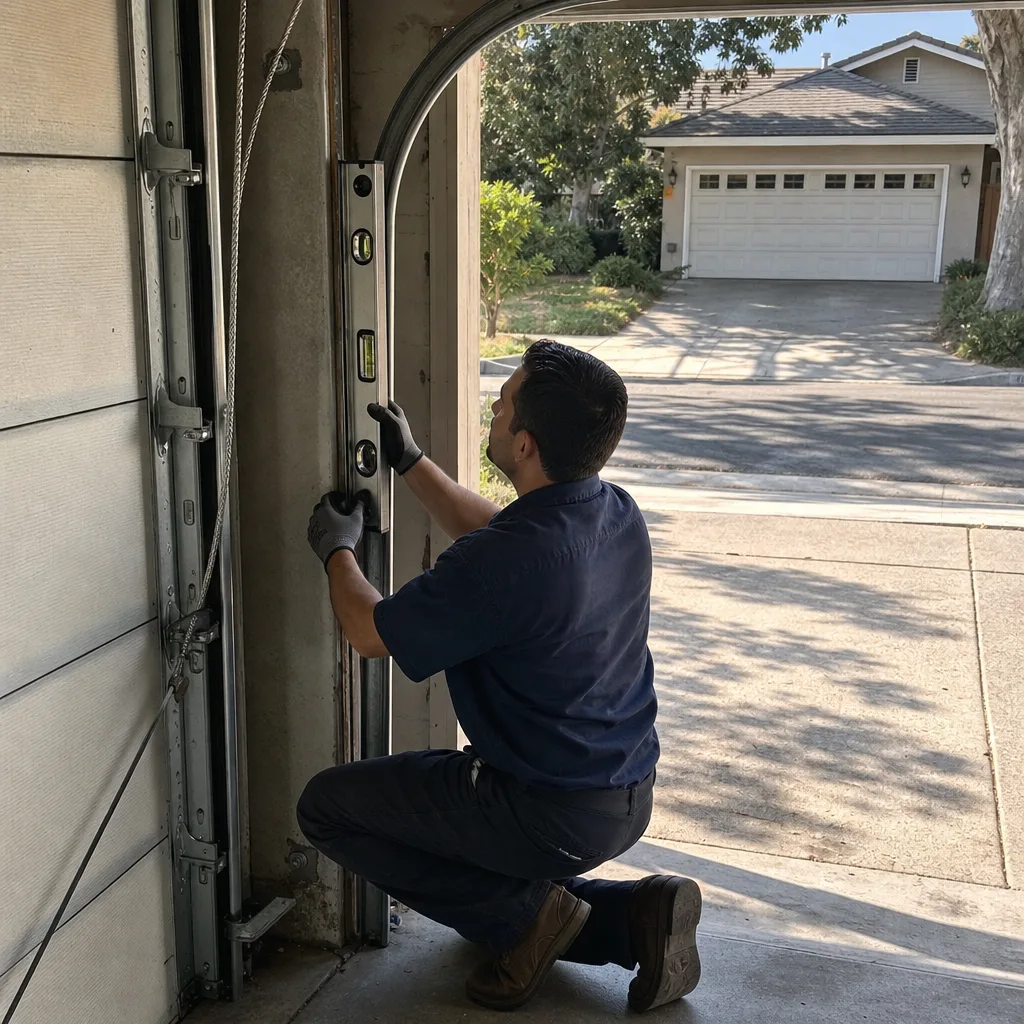
There are two ways a garage door quote gets delivered. The first is a verbal estimate: a technician looks at the door, says a number, and maybe writes it on a business card. The second is a written, line-item scope that lists the exact part numbers, labor, and total price on paper before any work starts, with photographs of the failed component attached. In a California repair context, these two are not legally equivalent, and the difference matters.
A verbal estimate is not a contract for a specific price. It’s an opinion offered before diagnosis. If the job goes over, the homeowner has little recourse because there’s no documentation of what was promised. California’s home improvement contract rules (Business and Professions Code sections 7150-7165) require home improvement contracts over $500 to be in writing, but even for smaller jobs a written price fixes expectations in a way a verbal number cannot.
A written, photo-documented quote should include, at minimum:
- The full itemized scope: part name, quantity, part number where applicable, and labor.
- The exact total, including tax, with no “estimates may vary” language.
- Photographs of the failed component: the broken spring with wire diameter visible, the stripping gear on the trolley, the damaged panel.
- The date of inspection and the technician’s name.
- A written warranty term for the repair or installation.
We codified this at Servo Garage Doors Pasadena because the entire service relationship depends on evidence. Clause 1 of The Haven Standard requires a flat, written price and written scope before any work begins on every job. Clause 4 requires the technician to photograph the failed part before quoting a replacement. That means you see the broken torsion spring in the photo before you are asked to approve its replacement. If you want a second opinion, bring the paperwork. We’ll honor that.
Garage door installation in Pasadena follows the same rule: the written scope covers the old door removal, the new door model and size, the hardware, the labor, and the warranty, with a firm number at the bottom.
Repair, Replace, or Rebuild: The Decision Matrix
Most garage door advice online is built on a sales incentive: replace the door whenever possible. The honest math is simpler than that. Each of the three systems has its own repair-versus-replace threshold, and the decision is driven by cost relative to the door’s remaining life, not by urgency. For a deeper look at how to weigh your options, see our DIY vs Professional Garage Door: The Pasadena Homeowner’s Decision Guide.
When to repair the component
- Torsion spring: If the spring broke, replace the spring (always in a matched pair for two-spring doors). A single spring replacement in Pasadena typically runs $180 to $340 installed, depending on door weight and spring size. This is a repair, not a door replacement. If the door is otherwise sound, replace the springs and keep the door.
- Rollers and hinges: Worn rollers are a $10 to $25 part each. Replacing all rollers and hinges on a 16-foot door is a few hundred dollars of labor and parts, far less than a new door.
- Weatherstripping: A bottom seal is $40 to $90 installed. Top and side seals are similar. This is a maintenance item, not a capital expense.
- Operator logic board or gear: A logic board replacement is $120 to $250 in parts. A new Chamberlain or LiftMaster belt-drive operator runs $400 to $700 fully installed. If the operator is over 12 years old and the motor is fine, replace the part. If two parts fail in a year, replace the operator.
When to replace the door
- Two or more panels are dented or rusted through. Single panel replacement costs between $300 and $700 per panel on common door lines. At two panels, new door pricing becomes competitive.
- The door is more than 25 years old and the insulation R-value is below modern code expectations (Title 24 energy efficiency standards in California effectively require insulated doors in living-space-adjacent garages).
- You’re upgrading for noise, insulation, or curb appeal and the door’s hardware is original. A full door replacement with new hardware and track typically runs $1,600 to $3,800 in Pasadena depending on size, material, and insulation.
When to rebuild the full system
- The door is sagging, the hinges are pulled out of the panels, the springs are mismatched, and the operator is a 1990s unit. In that scenario, piecemeal repairs will cost more than a complete rebuild within 3 years.
- You bought the house in a 2015-2025 purchase and the garage door was flagged in the home inspection. A full system rebuild (door + opener + springs + hardware) in Pasadena runs $2,500 to $5,500, and it resets every wear item to day one.
The key is this: no legitimate Pasadena contractor should present a $4,000 door replacement as the “only safe option” for a broken spring that costs $280 to fix. The decision matrix should be about money and remaining service life, not about the size of the invoice.
Common Mistakes to Avoid
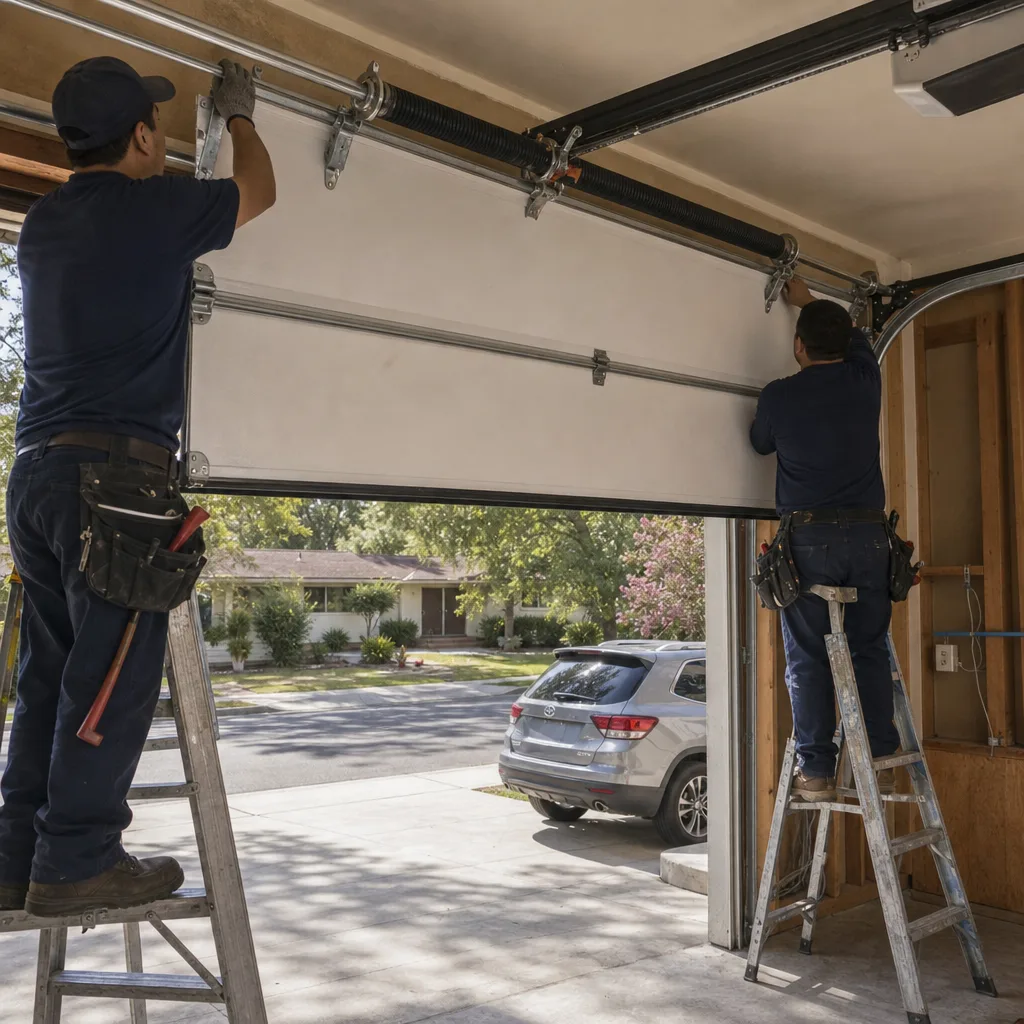
- Trusting a verbal diagnosis without documentation. A verbal “your spring is bad” has no evidence attached. Ask for a photo of the failed part and a written quote. If the company won’t provide either, you’re not obligated to approve the work. This is the exact scenario Clause 4 of The Haven Standard was written to prevent.
- Replacing the operator when the spring is broken. A motor that hums but doesn’t lift the door is often paired with a broken or fatigued torsion spring. Replacing the opener without addressing the spring is a $500 mistake that doesn’t fix the problem.
- Ignoring spring cycles. A stock 10,000-cycle spring is not “lifetime.” In Pasadena’s thermal cycling, plan for replacement around year 7 or 8, especially if the garage gets direct afternoon sun.
- Lubricating the wrong parts. White lithium grease on the torsion spring helps extend its life. But spraying lubricant on the operator rail or on the safety sensor lenses causes its own problems: the trolley picks up debris and the sensors get fouled. Use the right product for each surface.
- Skipping the bottom seal until you see daylight. A cracked bottom seal is the first entry point for dust, leaves, and ants in the foothill neighborhoods around Pasadena. Replacing it early is a $50 to $90 fix. Replacing a rust-eaten bottom panel later is a $400 to $600 problem.
- Taking the lowest verbal price and skipping the written scope. A low verbal number with no written scope has no legal weight. You want the price in writing, and you want the scope to list the part numbers and labor, not just “spring replacement.”
When to Call a Professional
Any work involving torsion springs, lifting cables, or a door that has come off its track warrants a trained technician. These components are under tension; a spring that lets go at the wrong moment or a cable that snaps while under load can cause serious injury. The same goes for operator electrical work: a logic board that misbehaves due to wiring issues is a shock and fire hazard. For homeowners in Pasadena, the practical line is this: if the problem is a worn bottom seal or a squeaky roller you can reach with a ladder and the door stays balanced, that’s a maintenance item. If the door is heavy to lift, crooked on the track, or the spring looks broken, stop and call someone. Servo Garage Doors Pasadena offers free estimates in Pasadena; call (213) 816-2483 and we’ll give you a written, photo-documented scope before any tool comes off the truck.
Frequently Asked Questions
Spring replacement in Pasadena typically runs $180 to $340 for a single torsion spring on a standard residential door, including labor. Double-spring doors run $300 to $500 for a matched pair. The exact number depends on spring wire size, door weight, and whether we’re also replacing the cable drums. For a complete breakdown of pricing factors, see our Garage Door Cost Breakdown: The Pasadena Homeowner’s Reference for 2026. Call (213) 816-2483 with your door label handy and we can quote the part number over the phone before a technician has even arrived.
In Pasadena’s heat cycle, a steel garage door with routine maintenance typically lasts 20 to 25 years. The torsion springs last 7 to 9 years, the operator 10 to 15 years, and the weatherstripping 3 to 5 years. The door assembly itself is the longest-lived component; the springs and seals are the consumables.
Repair when the failure is one component: a spring, a roller set, a logic board, a bottom seal. Replace when two or more panels are damaged, the door is past 25 years old, or the insulation no longer meets California Title 24 expectations. The honest approach is to price the repair against the replacement and compare the remaining service life, not to default to the larger sale. If you’re planning a replacement, be sure you understand Garage Door Permits, Codes & Inspections in CA: What You Need to Know.
That bang is almost always a torsion spring breaking. The spring snaps under load, the tension releases, and the door won’t move because nothing is lifting its weight. This is the most common emergency call we handle in Pasadena, and it’s a repair we typically complete the same day with the right spring in the truck.
For repairs involving broken springs, off-track doors, or failed openers, yes: same-day and 24/7 emergency garage door service is available in Pasadena, and our calls are answered by a live person any hour, including holidays. Installation and full door replacements are scheduled and require a free measurement visit first. Call (213) 816-2483 for a repair dispatch; you’ll get a named technician and an on-the-way text.
No. Under Clause 1 of The Haven Standard, every Servo Garage Doors Pasadena job is quoted as a flat, written price with a written scope before any work starts. The price you see on the written quote is the price on the invoice. If the scope changes for any reason, we discuss it and re-quote in writing before proceeding. The quote stands or the work doesn’t start.
The Bottom Line
A garage door in Pasadena is three separate machines wearing out at three different speeds. The springs are a consumable that fail dramatically and suddenly in this valley heat. The operator is an electrical system that degrades slowly and quits intermittently. The door assembly is structural and long-lived, but its seals and rollers need routine replacement. Know which system is failing, read the label, get the price in writing with photos attached, and the decision to repair or replace becomes arithmetic instead of a sales pitch. That’s the entire point of this guide: you don’t need to know how to fix your garage door. You need to know enough to verify what you’re being told. For more guides & resources on keeping your door reliable, visit our blog.
Written by Marcus Deller, Owner at Servo Garage Doors Pasadena, serving Pasadena since 2015.
For a written, photo-documented quote on any garage door issue in Pasadena, call (213) 816-2483 or visit our Servo Garage Doors Pasadena home page. We handle garage door opener repair and installation in Pasadena with the same written-price-first system applied to every spring, panel, and seal we touch.