
Last updated September 20, 2026
Full 25-point door and opener safety check with every visit - springs, cables, rollers, tracks, and your LiftMaster or Chamberlain opener included
You get a price before we start. It does not change when the truck arrives.
 Before
 After
After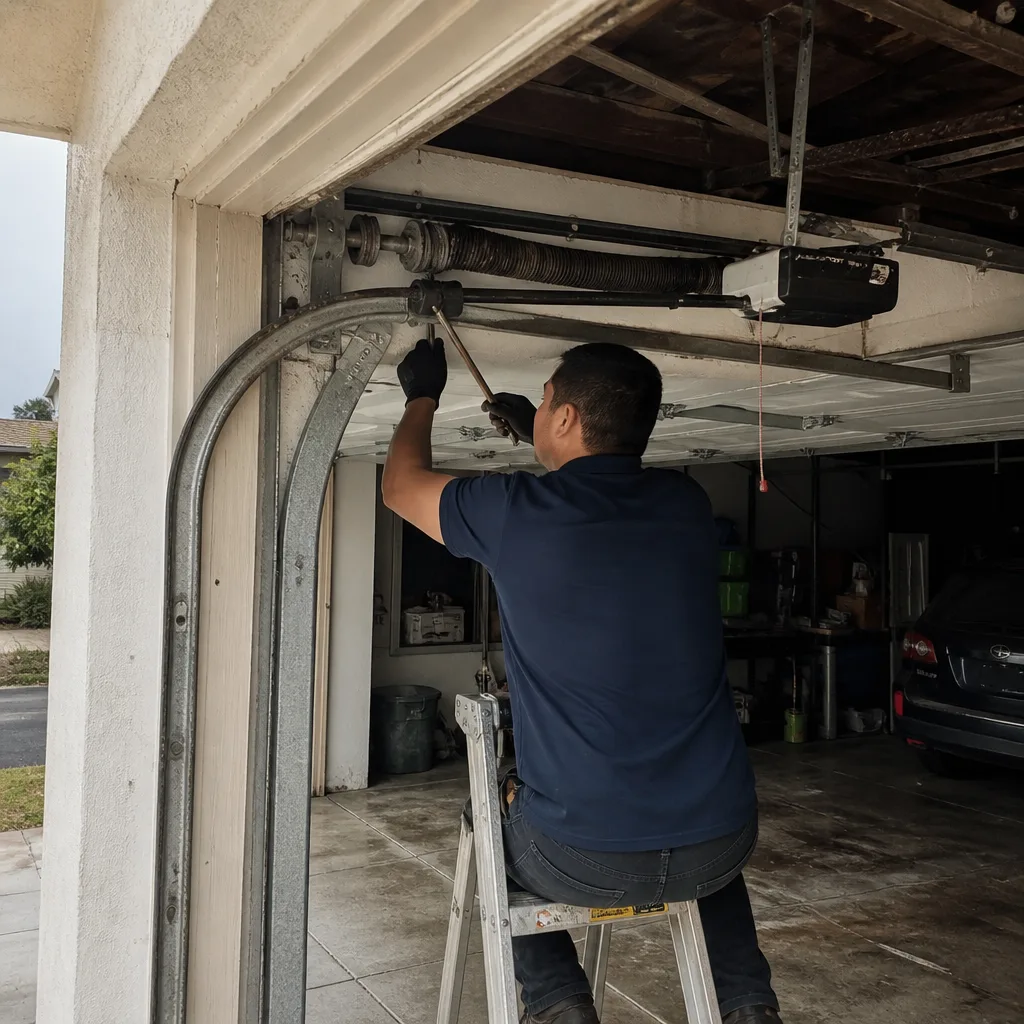 Before
 After
After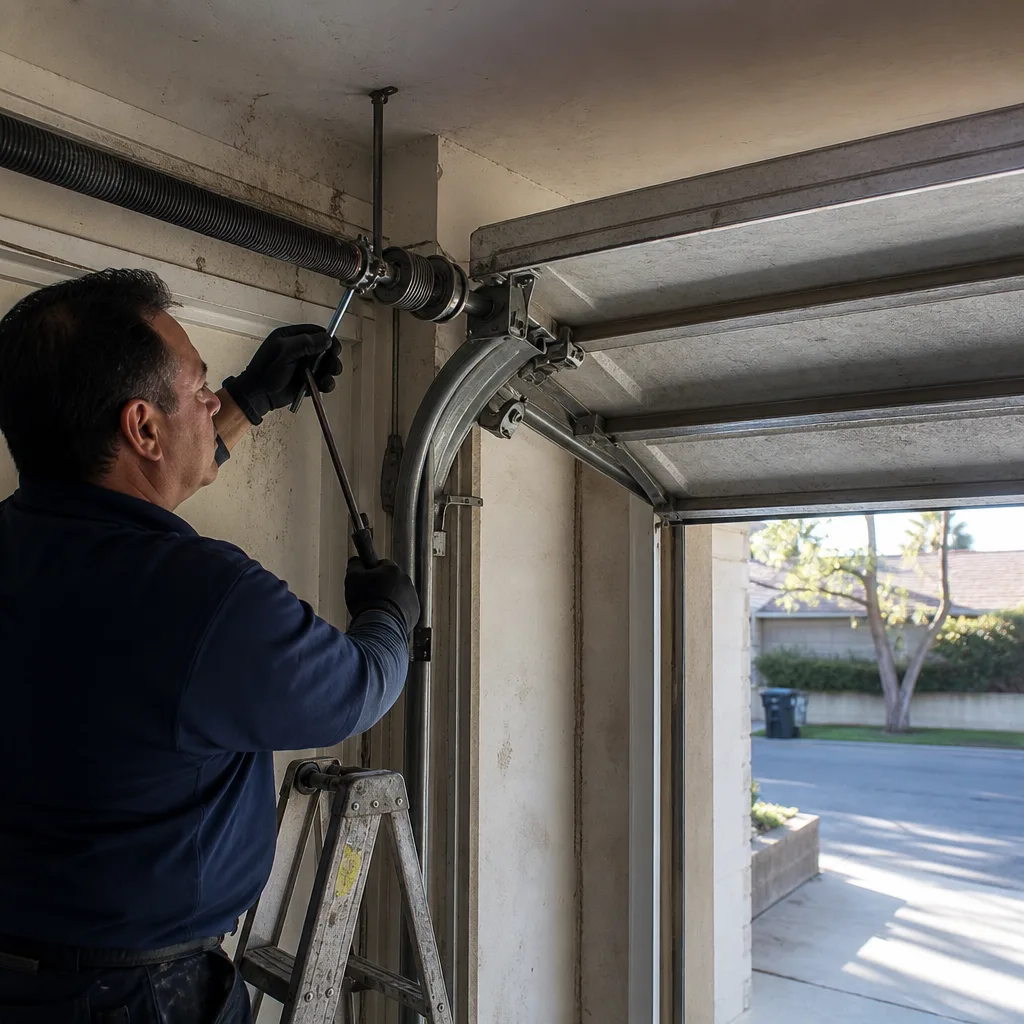 Before
 After
AfterDIY vs Professional Garage Door: The Pasadena Homeowner’s Decision Guide
A residential torsion spring holds between 150 and 300 foot-pounds of stored torque. That’s roughly the rotational force of a small motorcycle engine, wound tight and waiting inside a metal coil above your car. The question of what you can fix yourself isn’t about how handy you are. It’s about which component failed, and how much stored energy sits between you and the repair. This guide walks through every common garage door failure, which ones a Pasadena homeowner can safely handle, and which ones belong in the hands of someone who carries winding bars and a torque chart to every job. For more guides & resources, visit our blog.
Quick Answer
Weatherseals, bottom seals, hinges, and safety sensors are legitimate DIY projects for a Pasadena homeowner with basic tools and patience. Torsion springs, extension springs, cables, and drums are not. Those components operate under enough stored tension to cause serious injury or death, and the labor cost of hiring a professional for them is justified by the documentation, warranty, and the fact that the technician already owns the specialized tools required to do the job without incident.
Table of Contents
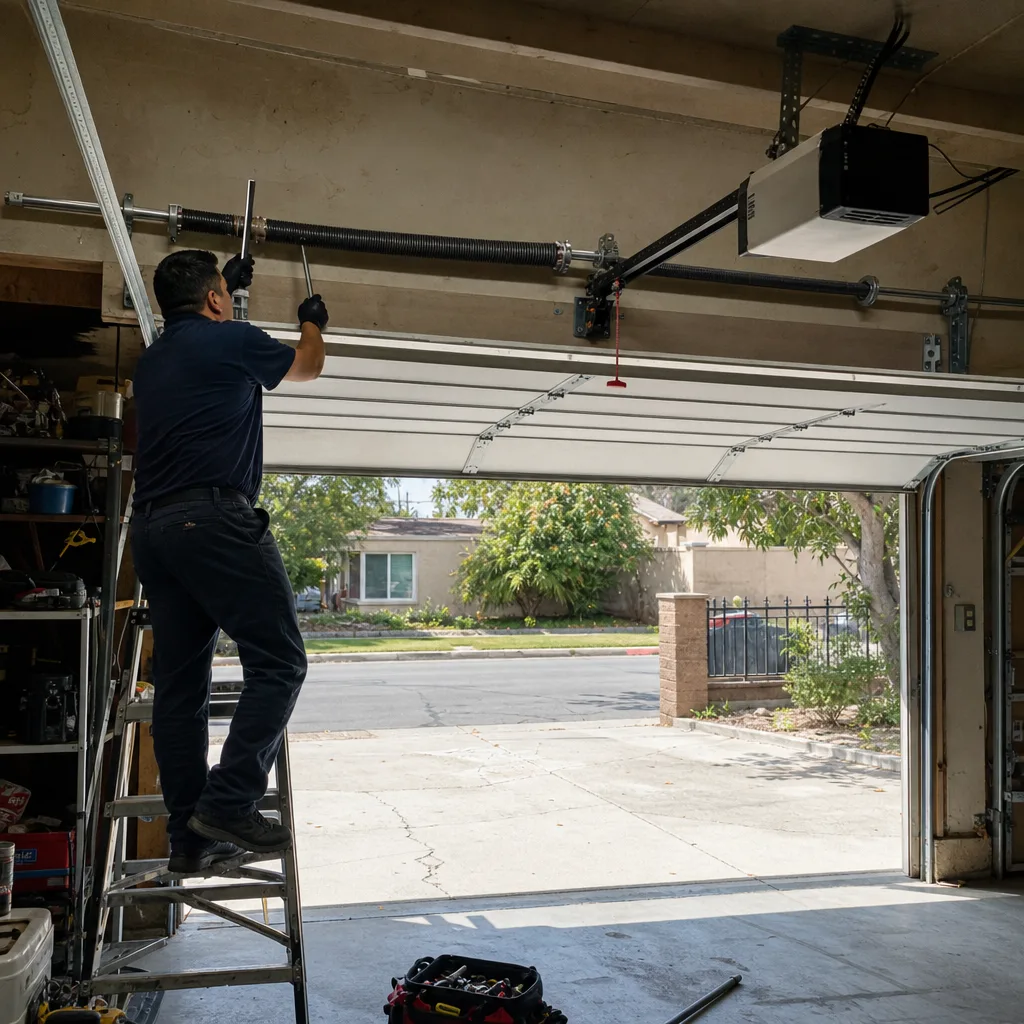
- Component-by-Component DIY Eligibility Chart
- The Stored Energy Problem: What Actually Injures People
- How to Calculate Door Weight Before Any Adjustment
- California Law and the Owner-Occupant Permit Exception
- The True Cost Comparison: Parts vs. Professional Flat Rate
- How to Prepare for a Professional Visit in Pasadena
- Common Mistakes to Avoid
- When to Call a Professional
- Frequently Asked Questions
- The Bottom Line
BeforeAfterComponent-by-Component DIY Eligibility Chart
Before the question of skill, there’s the question of force. A garage door is a counterweight system: springs balance the door’s mass, cables transfer that balance to the track, and the opener’s motor only has to move the residual load. When someone says “the opener burned out,” the truth is often that a spring failed first and the motor spent weeks lifting the full, unbalanced weight of the door until it gave up. Understanding that hierarchy changes how you evaluate every repair, because it means the first question is never “what does this part cost” but “is this part under load right now.”
Here is the full eligibility breakdown for a Pasadena homeowner. We’ve organized it by whether the component stores energy, moves under load, or sits passively in the assembly.
DIY-Eligible: Low Risk, Low Tools
- Bottom weatherseal: A single rubber strip held in a T-channel or mounted on an aluminum retainer. Requires a rubber mallet or flathead screwdriver and about 20 minutes. Pasadena’s dry heat breaks down rubber seals faster than coastal climates, so this is a 3-to-5-year replacement cycle for most homes in the area. Materials run $18 to $35 at any Pasadena hardware store.
- Side and top weatherstripping: Vinyl strips nailed or screwed into the jamb. A ladder, a pair of snips, and a drill are the only requirements. No stored energy anywhere near the work area.
- Hinges on the door panels: The numbered hinges (1 through 4) wear at the pivot points and crack over time. Replacing one involves removing four bolts, no spring tension, and the door must be in the closed position. Cost per hinge: $10 to $18.
- Safety sensor alignment: The photo eyes at the base of the track can drift out of alignment from vibration or an accidental bump. Loosen the wing nut, realign the sensor beam, tighten. If the sensor still blinks after alignment, the issue is the logic board, which is a professional replacement.
- Lubrication of rollers and hinges: A can of white lithium grease or silicone spray, applied to the hinge pins and roller bearings twice a year, extends the life of both. Pasadena’s fine dust from the foothills mixes with old grease to form an abrasive paste, so seasonal lubrication is more important here than in wetter climates.
Not DIY: Stored Energy and Injury Risk
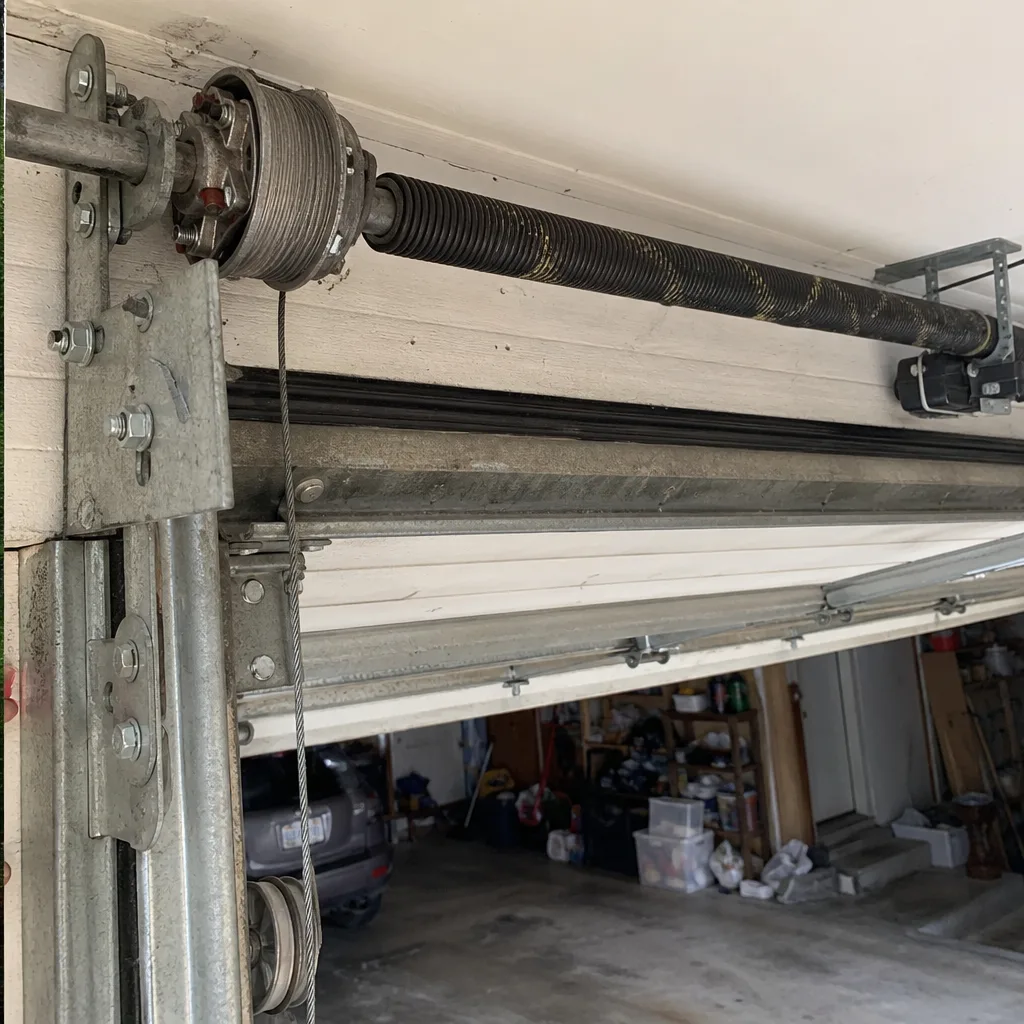
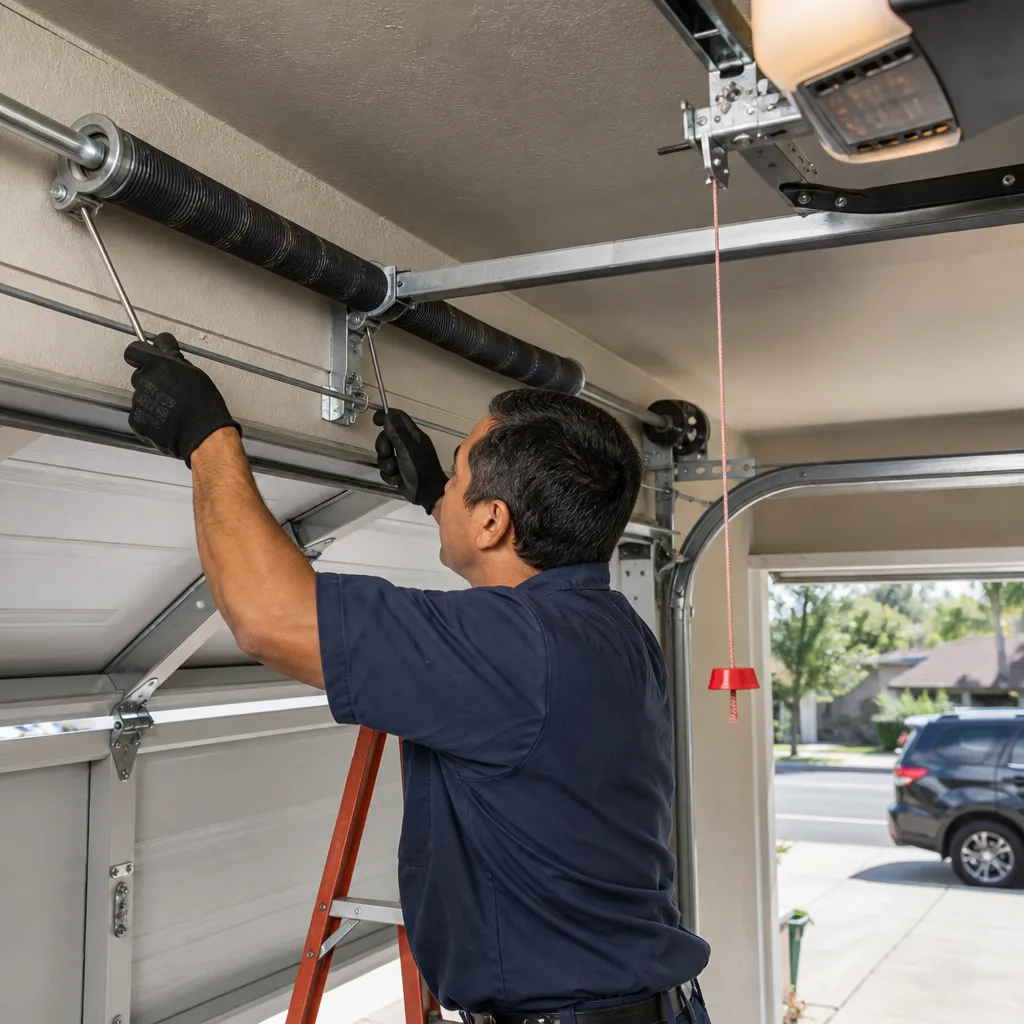
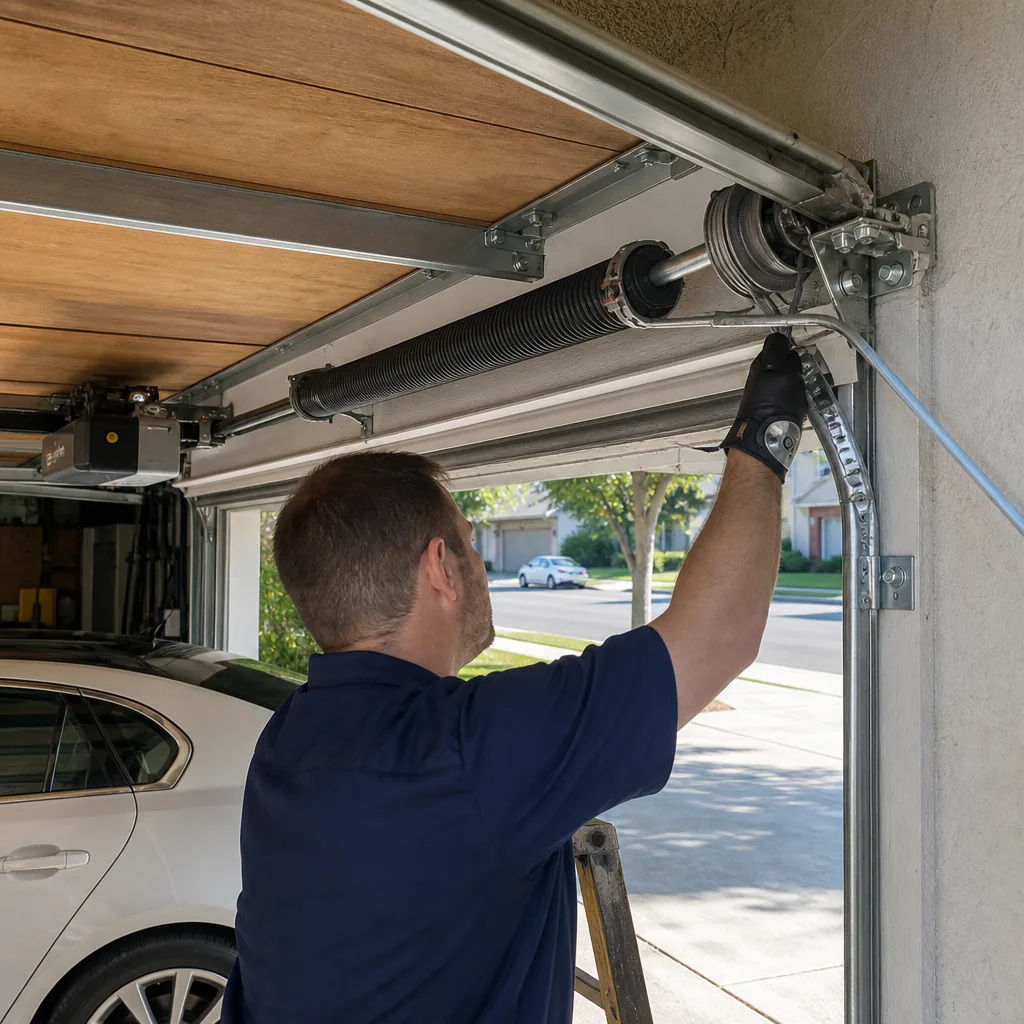
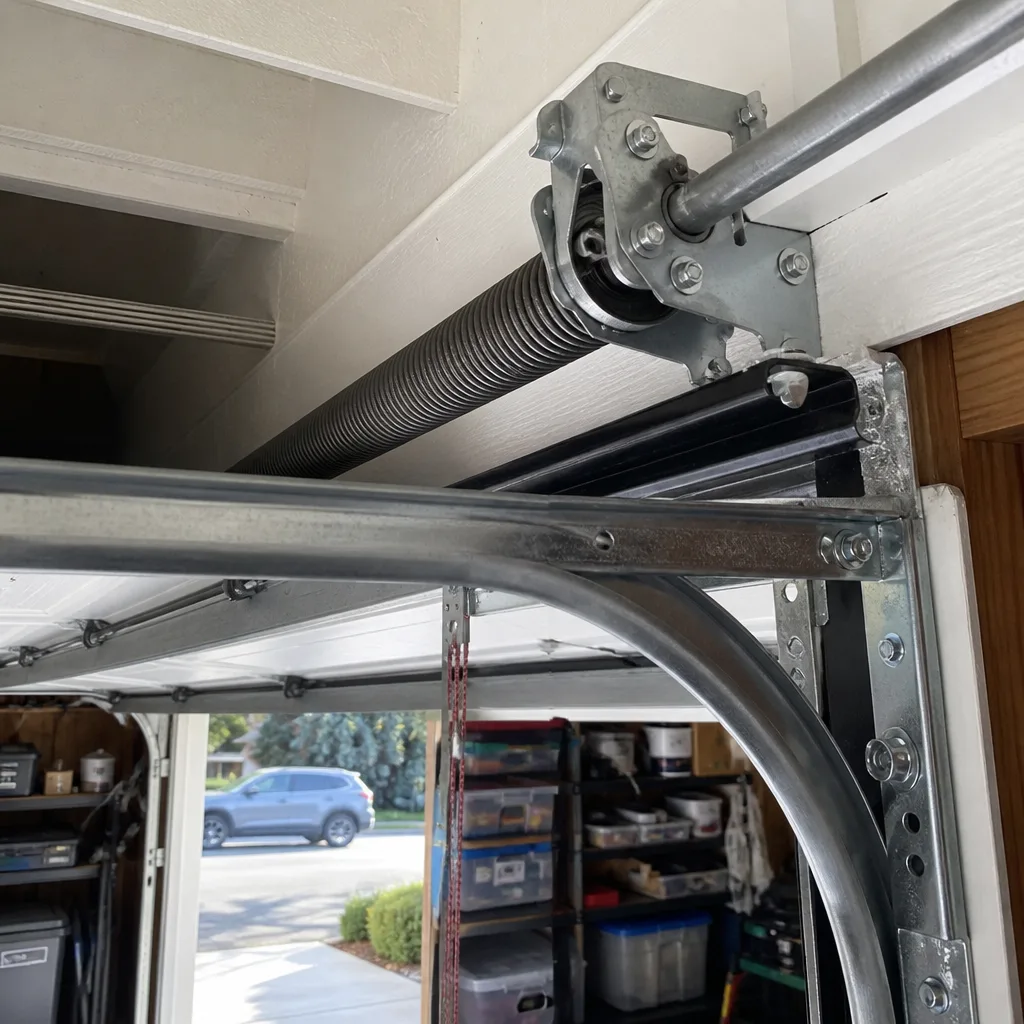
- Torsion springs: The injury mechanism here is specific. A winding bar sizes to the spring cone, and when the spring is under tension, the bar wants to rotate violently in the direction of the wind. If the cone’s set screws are loosened improperly, or if the bar slips out of the cone, the bar becomes a projectile. The standard repair requires two 18-inch bars, a torque calculation matched to the door weight, and a specific winding sequence (quarter-turns up, set screw check, repeat). An error in either direction – under-winding means the door is still too heavy and the opener burns out; over-winding means the spring snaps under overload – is exactly how injuries happen. Pasadena homes built in the 1980s through 2000s with original doors are at the age where torsion spring replacement is a routine service call.
- Extension springs: Older Pasadena garages built before 1990 often still have side-mounted extension springs rather than torsion. These stretch rather than wind, but the failure mode is just as violent. The safety cable running through the center is the only thing that stops a snapped spring from whipping across the garage. Most DIY tutorials skip the safety cable step, which is the only step that matters if the spring breaks. We’ve seen the aftermath in a garage off Orange Grove – the spring went through a drywall wall, and the homeowner was standing in the wrong spot when it happened.
- Cables: The two cables that run from the bottom bracket up to the drum are under constant tension whenever the spring is wound. Replacing a cable requires unwinding the spring, which moves you directly into torsion spring territory. The cable itself is just steel wire, but access to it is never safe while the spring is loaded.
- Drums: The cable drums sitting above the door on the torsion shaft hold the cables in a spiral groove. If a drum is worn or cracked, the cable can slip, the door can drop, and the torsion system is no longer balanced. Drum replacement means the same spring-unwinding process as cable replacement.
- Bottom brackets: The bracket that anchors the cable to the bottom of the door lives under full cable tension at all times. This is a small, cheap part in exactly the wrong place.
The Stored Energy Problem: What Actually Injures People
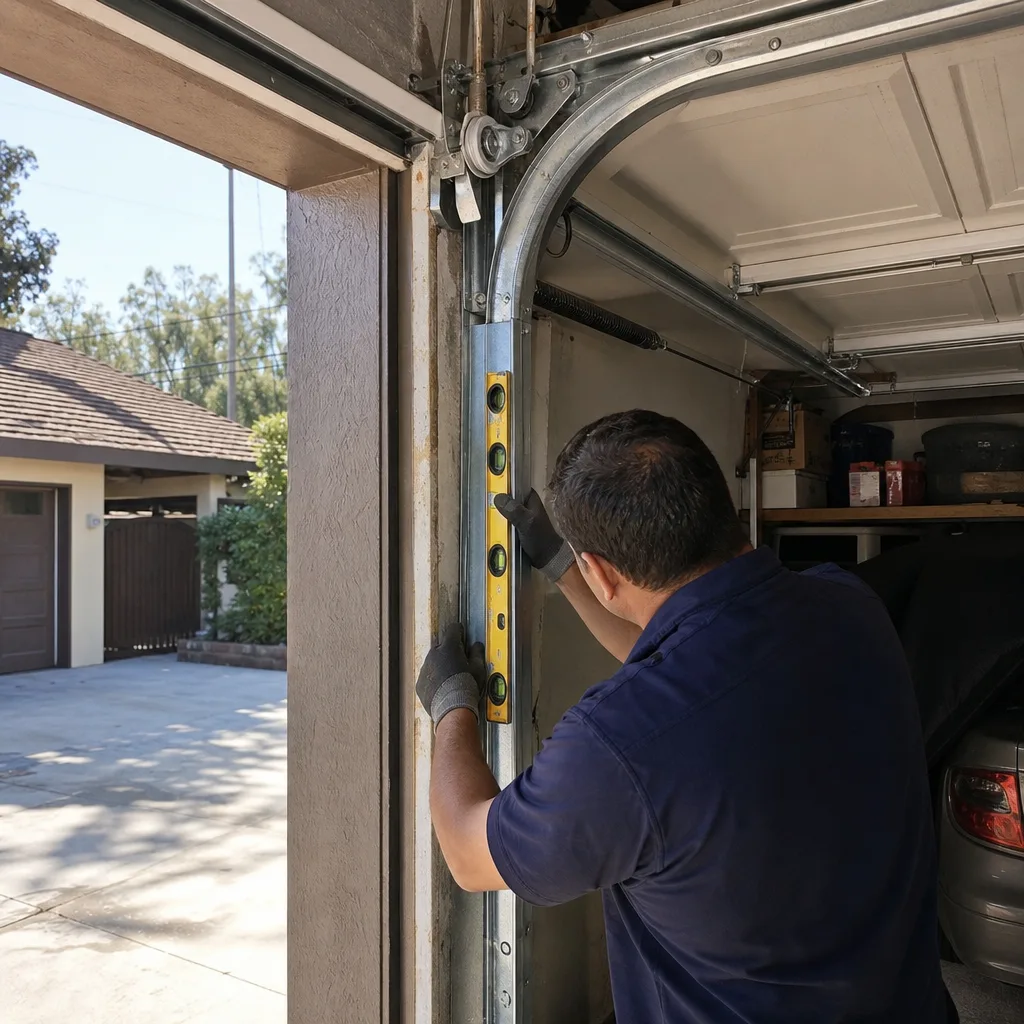
Most people imagine a garage door injury as a falling door. The reality is worse and more specific. The two dominant injury mechanisms in DIY garage door work are projectile tools and spring snapback. When a torsion spring is wound, the winding bars inserted into the spring cone become levers under several hundred foot-pounds of torque. If the cone’s set screws aren’t fully engaged and the spring rotates unexpectedly, the bar launches. An 18-inch steel bar at that energy level does not bounce off a wall – it penetrates it.
The second mechanism is what happens when a spring snaps while someone is working underneath it. A torsion spring under load that breaks will uncoil in a fraction of a second, and anything in its rotational path – fingers, forearms, faces – gets caught in the coils. Extension springs, common on older Pasadena garage doors, whip sideways instead. The safety cable threaded through the spring is the only containment, and that cable is only as good as its anchor points.
Our position is not that only professionals should ever touch a garage door. It’s that the decision needs to be made with accurate information. A weatherseal does not have a failure mode that can hurt you. A torsion spring does, and it’s not a rare event. We’re a Pasadena company serving this area since 2015, and we’ve replaced springs for homeowners who tried the DIY route, got through two winding cycles, and decided the risk was not worth the $80 in parts they’d bought. The tools alone – two winding bars and a torque wrench – cost more than the labor on most spring replacements.
How to Calculate Door Weight Before Any Adjustment
The reason door weight matters is that every force-based decision on a garage door – which spring size, how many quarter-turns, what force setting on the opener – traces back to the door’s actual mass. Guesses cause problems. An opener’s force setting that’s too high for the door weight will keep pushing after the door hits an obstruction, which is exactly how fingers get caught and panels get crushed. Too low, and the door won’t travel up the track.
The manual lift test works this way:
- Disengage the opener. Pull the red release handle hanging from the trolley. The door is now in manual mode, operating independently of the motor.
- Lift the door by hand. Grab the handle and raise it to the halfway point, then let go.
- Observe what happens. A properly balanced door stays at the halfway point. A door that drifts down is heavy – the springs are not providing enough counterbalance. A door that shoots up is light – the springs are providing too much.
- Check at the bottom and top. Repeat the test with the door at one-quarter and three-quarters travel. Inconsistent behavior across the range means the spring system is wearing unevenly.
If the door stays put at the halfway point but the opener still struggles, the spring system is fine and the issue is in the motor or the opener’s force settings. If the door drops in any position, the springs are shot, and that’s a professional replacement – not a DIY-eligible adjustment. The test itself is safe in the wrong-hands sense: you’re not loosening anything under tension, you’re just lifting and releasing. But it’s the diagnostic foundation for everything that follows, whether you adjust an opener yourself or describe the problem over the phone to a technician.
California Law and the Owner-Occupant Permit Exception
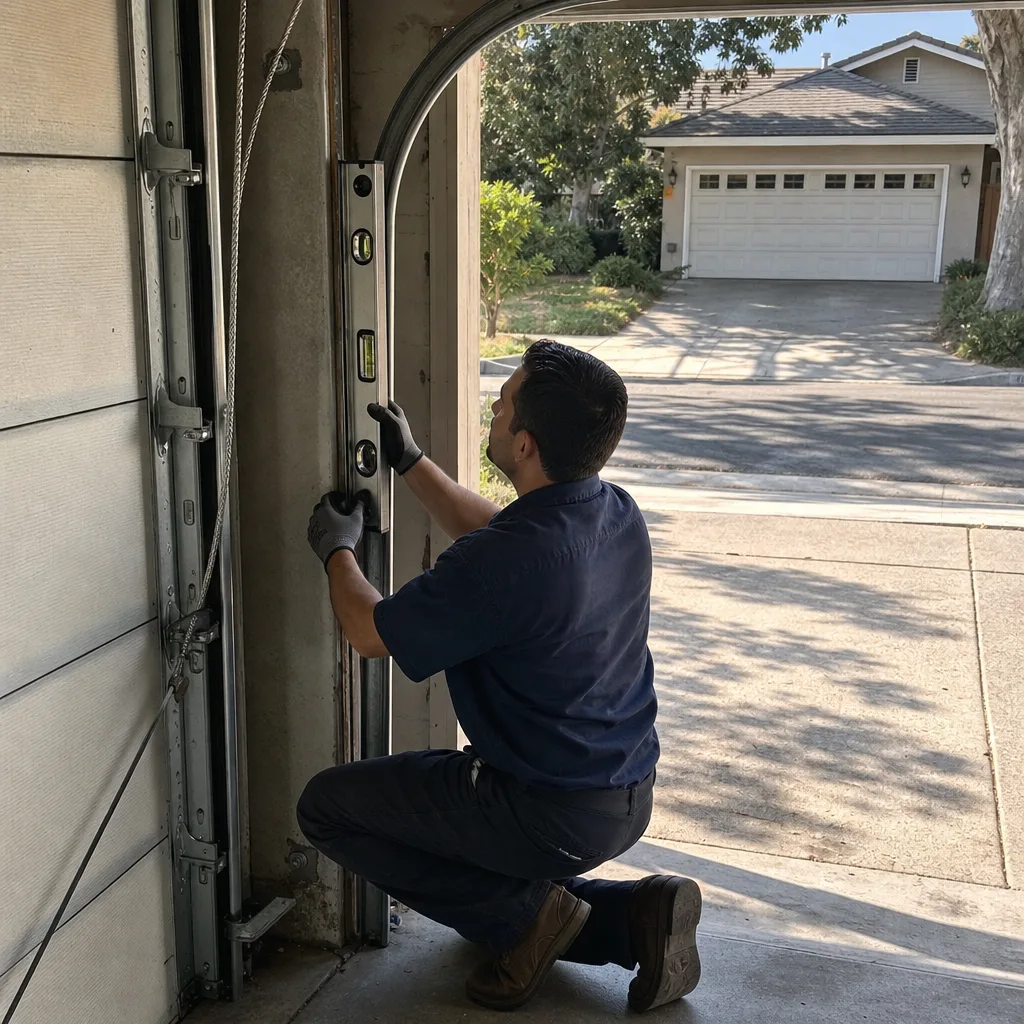
California’s contractor licensing law is specific about who can perform what work on a residential property. The California Business and Professions Code requires a state contractor’s license for any work valued at $500 or more in materials and labor on a building that is not your own residence. The main garage door work that crosses the $500 threshold is full door replacement and spring system overhauls.
The owner-occupant exception exists in the code and applies to the person who owns and lives in the home. An owner-occupant can perform building work on their own residence without holding a contractor’s license, provided they intend to live in the home and do not sell the property within a short time window. The exception does not apply to rental properties, investment properties, or flips. If the Pasadena home is not your primary residence, California law is clear: contractor-performed work only, by a licensed operator.
Permits for garage door work in Pasadena are generally not required for replacing an existing door in a like-for-like configuration. The spring, cable, and roller systems are considered repair components, not structural changes. Where permits enter the conversation in Pasadena is when the door opening changes size or a new opening is cut, which is beyond the scope of this guide. The practical takeaway for most Pasadena homeowners: if you own and occupy the home, and the door is a direct replacement, there’s no permit hurdle for either DIY work on eligible components or hiring a licensed company for the full job. See our full guide to Garage Door Permits, Codes & Inspections in CA: What You Need to Know for additional detail.
The True Cost Comparison: Parts vs. Professional Flat Rate
The honest comparison of DIY versus professional service isn’t parts cost vs. invoice total. It’s parts cost plus tools plus time plus risk against flat rate plus warranty plus documentation. In Pasadena’s market, the numbers look like this for the most common repairs:
Repair-by-Repair Cost Breakdown for Pasadena
- Bottom weatherseal replacement: DIY $18 to $35 in materials, 20 minutes, zero risk. Professional: $75 to $120 including the part, which covers the service trip. If the rest of the door is in good shape, DIY makes sense here. We’d only advise against it if you’re replacing the seal because of a larger issue, like panel damage from Pasadena’s dry rot on older wooden doors, in which case the seal is masking a structural problem.
- Hinge replacement (single hinge): DIY $10 to $18 for the hinge, 15 minutes. Professional: $60 to $95. Low risk, small savings. The one argument for professional is pattern recognition – a worn hinge is often the first sign that the door is out of balance, and a technician will catch that while looking at the hinge.
- Safety sensor replacement: DIY $35 to $55 for a sensor pair from LiftMaster or Chamberlain, 30 minutes including alignment. Professional: $110 to $160, including verification that the logic board is responding correctly. If you’ve ruled out alignment and the sensor is actually dead, DIY remains viable because sensors are low-voltage, low-risk components.
- Torsion spring replacement (single spring): DIY $60 to $120 in parts, plus $45 to $80 for winding bars and a torque wrench if you don’t own them, plus the risk. Professional in Pasadena: $180 to $340 for a single spring replacement, including the correct wire diameter and coil count matched to the door weight. The professional price includes one specific thing DIY cannot produce: a written warranty on the labor. If a professional spring fails inside the warranty window, the replacement is included.
- Cable replacement: Professional in Pasadena: $120 to $220 per cable. There is no legitimate DIY version of this, because cable replacement requires the same spring-unwinding process as spring work. The tools and risk are identical, and the savings on the cable part itself ($15 to $30) are meaningless against the exposure.
The warranty point deserves emphasis. When you replace a torsion spring yourself and it fails, you’ve lost the part cost, the tool cost if you bought them, and the day. When a Pasadena professional replaces it and it fails inside the warranty, you get a new spring at no cost. That’s the difference the DIY cost comparison never captures. It’s not the cost of the first repair; it’s the cost of the first repair plus the probability of the first repair failing. And for tension components, the professional’s written warranty is the only version of that math that exists.
How to Prepare for a Professional Visit in Pasadena
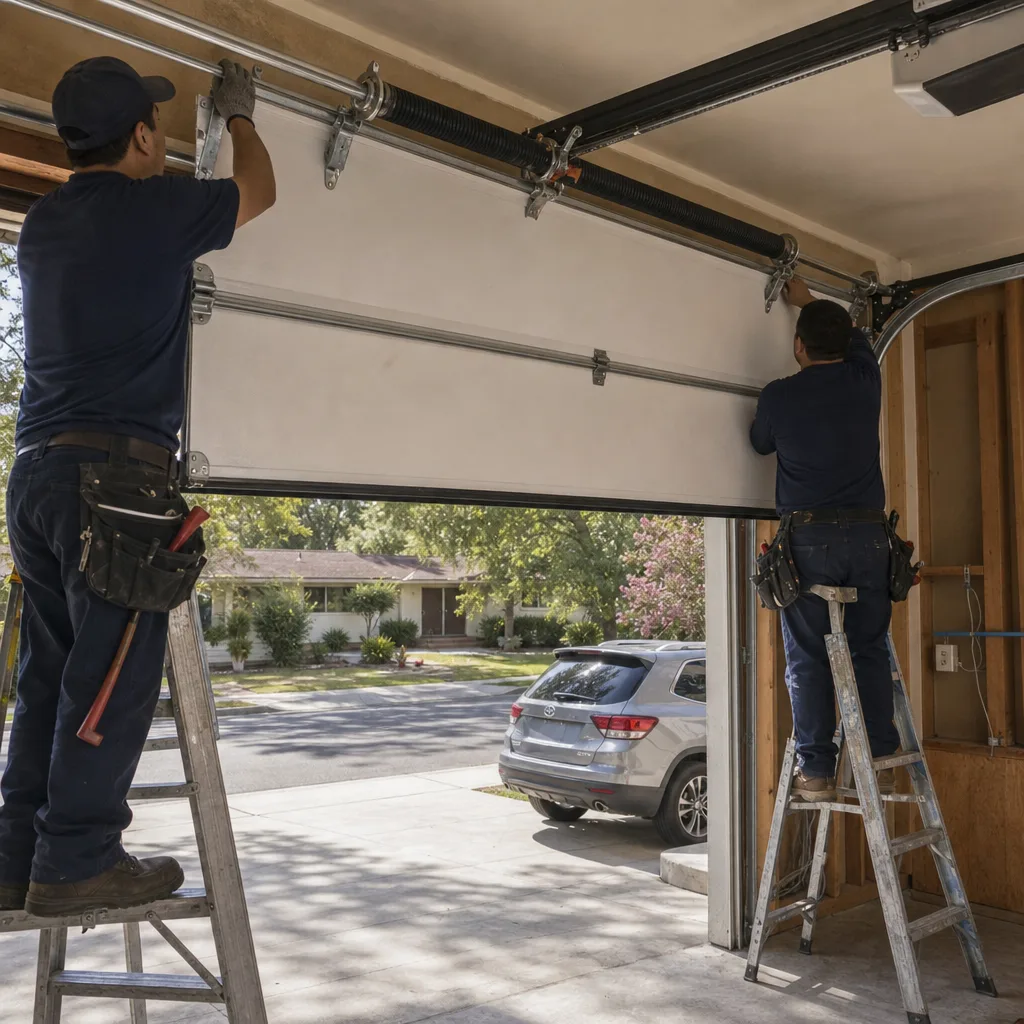
If the repair lands in the professional column, here’s how to shorten the call and reduce billable time. A good technician walks into the garage with a Garage Door Repair Maintenance Checklist for Pasadena Homeowners, and anything you can provide up front moves the job faster. This is not about impressing anyone. It’s about the fact that a 60-minute visit has a different labor cost than a 90-minute visit, and preparation controls that difference.
- Photograph the failure. If the door is stuck, photograph the area where it sticks. If the spring is broken, photograph the break point. If there’s a noise, record it on video. These records let the technician diagnose before arriving, which means the right parts come on the first trip.
- Measure the door. Height and width, in inches. The torsion spring size and cable length are functions of door height and weight, so this cuts through the first five minutes of the appointment.
- Check the opener model number. It’s on the motor housing, usually on a label on the side. LiftMaster and Chamberlain print it clearly; Craftsman openers from earlier decades sometimes have it on the back. The model number tells the technician which parts are compatible before they arrive.
- Clear the garage bay. The area around the track, the spring line above the door, and the floor under the door opening. Nothing worse than moving boxes at $120 an hour.
- Test the manual lift before the appointment. Disengage the opener and do the halfway lift test described above. Tell the technician what happened over the phone. “Drops at the halfway point” is more useful than “it’s making a weird noise.”
You don’t need any of this to get service. But if you want the fastest visit and the lowest billable time, the preparation list above is the single most effective thing you can do besides clearing the space. At Servo Garage Doors Pasadena, our technicians arrive with a written scope and a flat price for every job – see our Garage Door Repair in Pasadena page for how that process works from first call to finished photo record.
Common Mistakes to Avoid
- Mistaking the door weight for the opener’s capacity. A half-horsepower opener does not mean the door weighs what the opener can lift. The spring system does the lifting. If the door dropped during the manual lift test and you’re replacing the opener to fix it, you’re solving the wrong problem. The opener was never designed to lift an unbalanced door.
- Lubricating the spring as a repair. A noisy spring is a spring under stress, and lubricating it is not a repair. It’s a temporary quiet for a problem that is progressing. If the spring is noisy and the door passes the manual lift test, the spring is still wearing toward failure. Pasadena’s summer heat accelerates spring wear – the thermal cycling of hot afternoons and cool foothill nights stresses the coil metal over time.
- Adjusting the opener’s force setting without doing the manual lift test first. This is the most common DIY error we see. A door that won’t close gets its force setting cranked up, which masks the underlying problem (a heavy door from a failing spring) and creates a new one: an opener that will now crush anything in its path before the obstruction sensor stops it. The force setting is a safety system, not a performance setting.
- Trying to replace the spring with any hex key or pipe. Winding bars are not interchangeable with anything else. They’re sized to the spring cone’s winding holes. A hex key is smaller and will slip. A pipe is larger and won’t seat. Both failures happen under torque, which is exactly when you don’t want a tool slipping.
- Skipping the safety cable on extension springs. The Internet is full of extension spring replacement tutorials that omit this step. The safety cable is the one component that contains the spring if it snaps during installation or use. Omitting it converts the injury mechanism from “spring breaks and stays contained” to “spring breaks and becomes a steel whip.”
- Buying “universal” springs rather than matched springs. Pasadena doors vary significantly in weight by material, from lightweight aluminum to heavy solid wood on the older Craftsman and Raynor doors in the area. A universal spring is a compromise that will neither balance the door correctly nor last as long. Match the wire diameter and coil count to the actual door weight.
When to Call a Professional
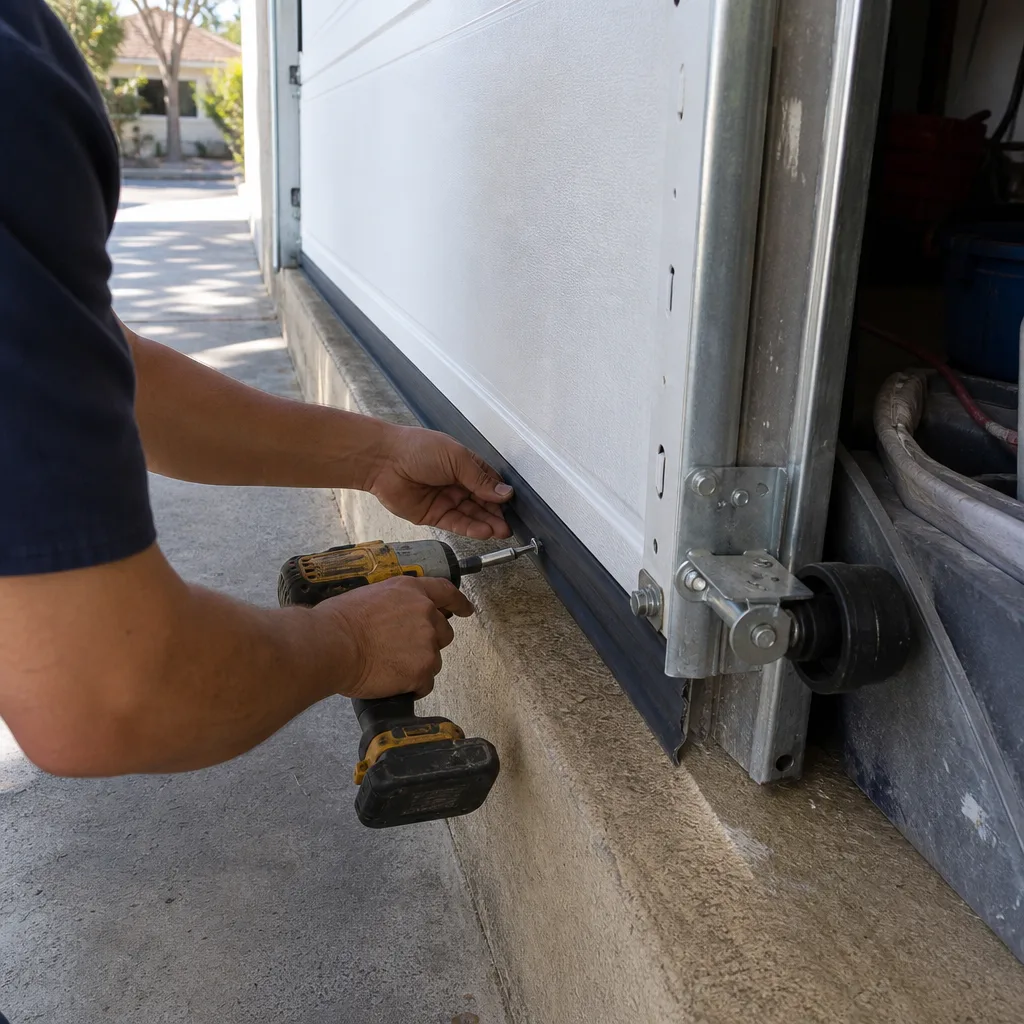
The line is not fuzzy. If the component is under tension – torsion springs, extension springs, cables, drums, bottom brackets – you call a professional. The medical bills from a spring failure start at $10,000 for a hand injury and go up from there, and no DIY savings justifies that roll of the dice. If the door fails the manual lift test, the springs are the problem, and that’s the professional category. If the door passes the manual lift test but the opener won’t run, that’s a motor or logic board issue, which is also professional territory unless you’ve confirmed a dead sensor with a multimeter. Servo Garage Doors Pasadena offers free estimates in Pasadena – call (213) 816-2483 and our team will get you a flat, written price before any work starts.
Frequently Asked Questions
You can realistically replace a bottom weatherseal, swap cracked hinges, realign safety sensors, and lubricate rollers and hinges. These are all low-tension, low-tool tasks that take 15 to 30 minutes each and don’t require touching any stored-energy component. If the part doesn’t store energy, doesn’t move under load, and doesn’t sit in the spring/cable path, it’s on the DIY list. Everything else is professional work.
A residential torsion spring holds 150 to 300 foot-pounds of torque, which is enough stored energy to launch a steel winding bar through drywall or crush the bones in a hand. The injury is not rare; it’s the mechanism of every serious DIY garage door accident. This is why the spring is wound with purpose-built bars, and why the professionals who do this work every day still treat it with respect. We recommend calling a professional for any spring work – in Pasadena, our team handles torsion spring replacement daily, and the parts arrive matched to your door’s actual weight.
In Pasadena, professional garage door repair typically costs $60 to $340 depending on the component. Small repairs like hinge and sensor replacement run $60 to $160. Torsion spring replacement runs $180 to $340 for a single spring including labor and the written warranty. Full spring system replacement on a two-spring door runs $280 to $475. Every estimate from Servo Garage Doors Pasadena is a flat, written price before any work starts – call (213) 816-2483 for the exact number on your repair.
Yes. Our Servo Garage Doors Pasadena home page has live 24/7 phone coverage, and emergency calls are answered by a real person, not a recording. We dispatch technicians to Pasadena and the surrounding foothill neighborhoods the same day for spring failures, cable snaps, and doors stuck open. You’ll get the technician’s name and an on-the-way text, not a callback window. Call (213) 816-2483 to get someone headed your way.
No. Clause 1 of The Haven Standard requires a flat, written price and written scope before any work begins, and if the technician finds something unexpected, the new price is quoted and agreed before the additional work starts. No surprises on the invoice. That’s the core of how we’ve operated in Pasadena since 2015, and it’s written into the standard we work to – not left to a handshake.
Yes. We service all eight major brands, including LiftMaster, Chamberlain, Genie, Clopay, Amarr, Wayne Dalton, Craftsman, and Raynor. Whether you have a Chamberlain opener from a 2015-era Pasadena build or a Craftsman door that’s been on the garage since the 90s, the parts and the repair procedure are different, and our technicians carry the parts for the brands we see most in Pasadena on every truck. For opener-specific questions, see our Garage Door Opener Repair & Installation in Pasadena page.
The Bottom Line
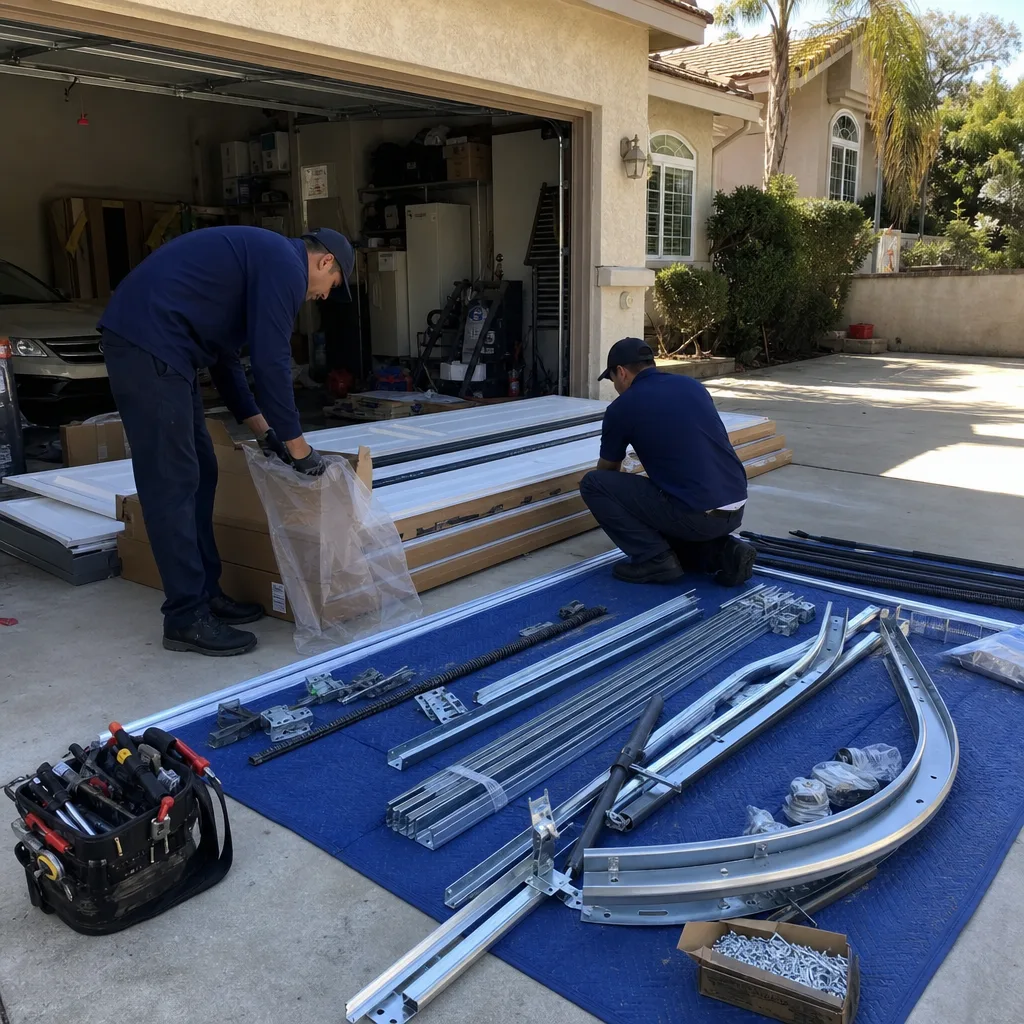
The DIY-versus-professional question has one correct answer per component, and the dividing line is stored energy. Weatherseals, hinges, and sensors are legitimate DIY work with real savings and no injury mechanism. Springs, cables, and drums are professional work, and the labor cost is justified by the written warranty, the specialized tools, and the fact that the risk of the DIY version is not hypothetical – it’s mechanical, calculable, and severe. The cheapest version of a professional torsion spring replacement in Pasadena is still less than the copay on the emergency room visit for the DIY version that went wrong. If you’re uncertain which side of the line your problem falls on, we’re glad to answer the phone at (213) 816-2483, look at the photos you send, and tell you straight. For Garage Door Installation in Pasadena and full-system replacement work, the same written-price rule applies, with the same documented record at the end.
Written by Marcus Deller, Owner at Servo Garage Doors Pasadena, serving Pasadena since 2015.